
Why 'Doomsday' by Derivakat Feels So Final
The meaning of Doomsday Derivakat comes down to one big idea: betrayal brings consequences, and those consequences feel like the end of the world. The song turns a broken bond into a full apocalyptic scene, using battle language, judgment imagery, and a sense of unstoppable punishment.
"Doomsday" - Derivakat
This is the day that everything will fall
A look of fear caught in the lightning
Loading lyrics...
Unable to load lyrics
We're unable to display the lyrics at this time. Please try again later.
Written by Katherine Lague, who performs as Derivakat, the song speaks in a dramatic, direct voice. It does not sound confused or sad. It sounds certain. From the start, the lyrics present collapse as inevitable, as if the target has already chosen their fate.
The Song Turns Betrayal Into Judgment Day
On the surface, the lyrics describe disaster: fear, fire, enemies, and no safe escape. But underneath that action, the emotional trigger is personal. The clearest clue is the line about how betrayal breeds revenge
. That phrase gives the whole song its engine.
The target of the song seems to be someone who broke trust. When the lyric says they turn your back on a friend
, it narrows the conflict from general destruction to a damaged relationship. The “doomsday” in the title is not just about chaos in a fantasy world. It is the moral fallout of disloyalty.
Interpretation: The song suggests that this person’s downfall is not random. It is framed as something they caused themselves.
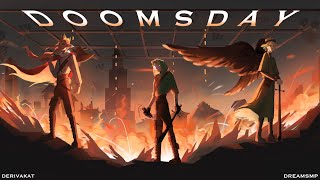
Watch the official Doomsday
music video
A Voice of Warning, Not Comfort
One reason the song feels intense is its point of view. The narrator speaks to “you” like a judge, rival, or witness. They are not offering rescue. They are announcing a verdict.
That comes through in phrases like your doomsday is calling
and no one is coming
. Both lines strip away hope. Instead of promising help, the song insists that the target must face what they created.
This is where the meaning of Doomsday Derivakat gets especially sharp. The song is not only angry. It is coldly final. The narrator sounds like someone who has already made peace with the outcome.
How the Lyrics Build a Story
The song loosely follows a clear emotional timeline:
- A collapse begins, and fear is everywhere.
- The target realizes they are trapped.
- The chorus declares that help will not arrive.
- The final section explains why: betrayal led to revenge and condemnation.
That structure matters. The verses create panic with images of lightning, wolves, crows, and hell from the sky. Then the chorus acts like a sentence being repeated. By the end, the song explains the cause of all that destruction.
Last defender, no surrender
Raise your shield and cry for help
But no one is coming
Those lines capture the song’s emotional center. Even resistance is allowed only to prove that resistance will fail.
Justice, Revenge, and the Blur Between Them
A key lyric asks, Is this justice?
and then answers it. That self-answer is important because it shows how the song thinks. There is no debate left in the narrator’s mind.
Still, listeners can read that moment in two ways.
Reading One: True punishment
Interpretation: The narrator believes the target deserves this fate. In this reading, the song is about accountability. Someone betrayed trust, and now they must face the result.
Reading Two: Revenge dressed as justice
Interpretation: The song may also show how anger justifies itself. By repeating that this is “justice,” the narrator could be trying to make revenge sound noble. That tension makes the song more interesting.
This ambiguity is one of the strongest parts of the writing. It leaves space for listeners to decide whether the speaker is righteous, bitter, or both.
The Symbols Make Everything Feel Larger
The imagery is heavy on war and apocalypse, but it serves the emotional message well. Shields, fire, enemy lines, wolves, and crows all suggest a world where trust has already broken down.
A few symbols stand out:
- Shield: defense that no longer works
- Fire and hell: pain that feels total
- Crows and wolves: danger closing in
- Judgment-day language: moral reckoning, not just bad luck
Because of that imagery, the song feels cinematic. It takes one act of betrayal and enlarges it until it seems world-ending.
Why the Sound Matters Too
Even without official production notes in the provided material, the song’s writing clearly aims for a dramatic, high-stakes sound. The repeated hook, forceful commands, and battle-ready wording suggest a tense, energetic arrangement rather than a soft or reflective one.
That likely helps explain why the song lands so strongly with listeners. The words are full of motion: raising shields, walking through fire, facing demise. A driving beat and bold vocal delivery would naturally reinforce that momentum.
In other words, the production style and lyric theme seem built to match. The song is meant to feel like a confrontation, not a diary entry.
The Bigger Takeaway Behind the Drama
The meaning of Doomsday Derivakat is bigger than simple destruction. The song is about what happens when trust collapses and nobody wants to forgive. Its world is extreme, but the feeling underneath it is familiar: hurt turning into judgment.
That is why the song connects. They use fantasy-sized images to describe a very human experience. Being betrayed can feel catastrophic, and “Doomsday” gives that feeling a loud, merciless form.
Final Verdict on “Doomsday”
Derivakat’s song presents betrayal as the first spark of apocalypse. The narrator watches the fallout, names it justice, and refuses to offer escape. That mix of personal anger and end-times imagery is what gives the track its punch.
This article offers an interpretation based on the lyrics and available song context. As with any art, listeners may hear different meanings in the same lines.








