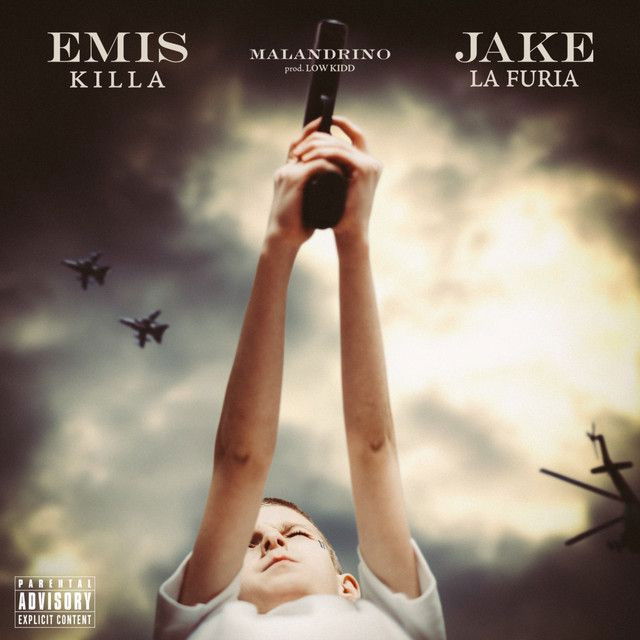
Why “Malandrino” Feels Like a Street-Movie Memory
The meaning of Malandrino Emis Killa, Jake la Furia starts with a simple idea: they are not just rapping about crime, they are rapping about how crime becomes a childhood dream, a neighborhood role, and then a personal brand. The song looks back at youth with adrenaline and style, but it keeps one eye on danger.
"Malandrino" - Emis Killa, Jake la Furia
Quando ero ancora un ragazzino (oh-oh, oh-oh)
Volevo fare il malandrino (oh-oh, oh-oh)
Loading lyrics...
Unable to load lyrics
We're unable to display the lyrics at this time. Please try again later.
That tension is what gives “Malandrino” its bite. It sounds proud, loud, and cinematic. At the same time, it shows how easy it is for kids to absorb a myth of toughness before they fully understand the cost.
The Core Idea Hiding in Plain Sight
At the center of the song is the repeated memory of wanting to be a street outlaw while still very young. When they say volevo fare il malandrino
, they are not just describing a job or a crime. They are naming an identity they learned early.
That matters because the chorus frames the whole track as memory. They place that dream in the world of cousins, scooters, packages, and neighborhood codes. Interpretation: the song suggests that “malandrino” is something a boy can inherit emotionally long before he earns it in real life.
The verses then complicate the fantasy. This world looks thrilling, but it also includes surveillance, police sirens, prison time, and constant suspicion. So the song works in two directions at once: it remembers the fantasy and exposes the pressure around it.
Watch the official Malandrino
music video
Childhood Turns Into Performance
One of the strongest parts of the song is how clearly it links youth and performance. The speaker remembers street life almost like dress-up, where image comes first and consequences arrive later. The line about being with a cousin and hiding goods under a scooter turns delinquency into a local ritual.
Then the song widens that small memory into a full neighborhood system. A phone call can make someone vanish. People pose, bluff, smuggle, and watch each other. When the lyrics mention ni-no ni-no
, the sound of sirens becomes part of childhood itself, almost like background music.
Interpretation: this is why the song feels more reflective than it first appears. They are not only boasting. They are showing how crime culture becomes normal so early that even school-age memories are already shaped by danger.
Cinema, Myth, and Street Self-Image
The song repeatedly compares its world to movies. References to Tarantino, The Godfather, Tony Montana, and Keyser Söze do more than add cool name-drops. They show how street identity is built through borrowed myths.
When they say life sembrava un film di Tarantino
, they turn their neighborhood into a stylized crime film. That comparison matters because movies flatten moral complexity. They make violence look sharp, memorable, and iconic.
In “Malandrino,” those references reveal a feedback loop:
- boys watch gangland mythology,
- they imitate its language and swagger,
- then real neighborhood life starts feeling like a movie script.
That is why the song feels both exciting and uneasy. The glamour is part of the trap.
What Emis Killa and Jake la Furia Each Bring
Emis Killa’s section leans hard into origin story. He focuses on school-age labeling, local reputation, and the way others already saw him as dangerous. That gives the song emotional shape: the “malandrino” image did not appear overnight.
Jake la Furia, by contrast, sounds like the veteran who survived the environment. His verse is packed with endurance. Phrases like sopravvissuto ai pericoli
shift the song from fantasy to proof of survival.
He also updates the timeline. He places himself before trap trends, before certain drug fashions, and after overdose. That makes his verse feel like a claim to authenticity. Interpretation: Jake is saying they are not playing gangster for aesthetics; they see themselves as older than the current rap cycle and tougher than its trends.
How the Hook Changes the Meaning
The hook is catchy, but it is also the song’s moral center. Every return to childhood resets the listener’s view of the verses. Without that hook, the track could sound like pure bravado.
With it, everything becomes memory. The boasts are reframed as part of a longer story about formation, belonging, and damage. Even the phrase balordi che ho ancora vicino
carries that double meaning: loyalty remains, but so does the social trap.
A brief lyric moment
Quando ero ancora un ragazzino
Volevo fare il malandrino
In just those two short lines, the song sums up its whole emotional engine: the dream starts young, and that dream keeps echoing into adulthood.
Why the Sound Matters as Much as the Words
Production-wise, “Malandrino” leans into force and repetition. The beat supports the song’s mob-movie aura with heavy low end, clipped rhythmic drive, and a chant-like chorus designed to hit fast. The repeated vocal pattern gives the hook the feel of a slogan, almost something a neighborhood could shout together.
That matters for meaning. The hard, marching energy makes the criminal persona sound communal, not private. They are not confessing alone in a room. They are performing identity in public.
The call-and-response ad-libs and blunt drum feel also mirror the lyrics’ world of crews, codes, and hierarchy. Even before a listener translates every line, the production sells toughness as a social atmosphere.
Final Reading: Pride With a Shadow Behind It
So what is the meaning of Malandrino Emis Killa, Jake la Furia? It is a song about how street mythology recruits the imagination early. It shows pride in survival and loyalty to place, but it also reveals how that identity grows out of pressure, imitation, and danger.
The song does not read like a clean warning, and it does not read like a clean celebration either. Its power comes from sitting in between. They make the outlaw image sound thrilling, then quietly remind listeners that the image was built around fear, prison, and the need to survive.
Disclaimer: This article offers interpretation based on the lyrics and publicly available song credits. Meaning can vary by listener, and only the artists can give a definitive intent.







