Why '1901' by Phoenix Still Feels Electric
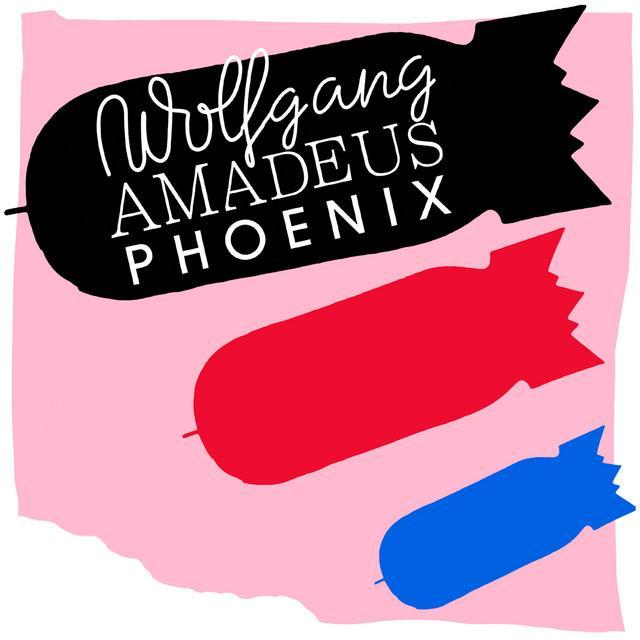
The meaning of 1901 Phoenix becomes clearer once they stop reading it as a literal story and hear it as a fantasy. Phoenix released the song on February 23, 2009, as the lead single from Wolfgang Amadeus Phoenix, and it became the band's American breakthrough. It later hit No. 1 on Billboard's Alternative Songs chart and turned into one of indie rock's defining singles of its era.
"1901" - Phoenix
Past and present, they don't matter
Now the future's sorted out
Loading lyrics...
Unable to load lyrics
We're unable to display the lyrics at this time. Please try again later.
More importantly for interpretation, singer Thomas Mars explained that the song imagines Paris in an earlier age: a dream of a city that felt more elegant, alive, and romantic. That idea gives the lyrics a center even when they seem cryptic.
A Fantasy of Paris, Not a Straight Plot
The simplest reading is also the strongest. Factually, Mars said, "Paris in 1901 was better than it is now. So the song is a fantasy about Paris." That comment has shaped how many listeners understand the track.
With that in mind, lines about time, drifting, and movement feel less random. When the song opens with thoughts "drifting away," it suggests a mind moving between memory and imagination. The next idea, that "past and present" do not matter, sounds like someone trying to escape ordinary time and step into a more perfect version of the city.
Interpretation: The song treats Paris almost like a lover. It is not just a place on a map. It is an object of desire, style, and longing.

Watch the official 1901
music video
How the Lyrics Build a Dream
A lot of the song's power comes from how it piles up images instead of giving a clean narrative. A phrase like elliptical pattern
suggests graceful motion, orbiting, and distance. It feels visual, almost cinematic.
Then there is the unusual jump from 1855-1901
. Rather than sounding like a diary entry, it points toward a historical mood. It frames the song inside an era of building, glamour, and ambition. When the lyric mentions a material tower
, many listeners hear a wink at Parisian architecture and the city's image as a monument to beauty and display.
Interpretation: The song admires that world but also doubts it. The line about things being "overrated" hints that beauty and fashion can be thrilling yet temporary. Phoenix seem drawn to spectacle while also seeing how quickly it fades.
The Chorus Turns Nostalgia Into Motion
If the verses are hazy, the chorus is immediate. The phrase twenty seconds 'til the last call
creates urgency. Suddenly the song is not only about the past. It is about the final moment before the night ends.
That shift matters. Nostalgia can feel passive, but the chorus feels active and alive. When they sing all summer long
, the song opens into a season of freedom, pleasure, and repetition. The feeling is not miracle-level destiny; in fact, the lyric says it is not a miracle
. That makes the emotion feel more human. It is chemistry, timing, and mood rather than fate.
So the chorus reframes the whole song: they are not worshipping history from a distance. They are trying to live inside its energy right now.
Sound First, Meaning Second—and Together
Part of the meaning of 1901 Phoenix lies in its production. The track was produced by Phoenix with Philippe Zdar, whose work helped sharpen the band's sleek, modern sound. Mars said the song came together quickly in idea form but took nearly a year to finish, which helps explain why it sounds spontaneous and carefully engineered at the same time.
The music mirrors the lyric's dream-state. The drums push forward with restless momentum. The guitars are clipped and springy. The synths brighten the edges and give the song a glossy, airborne feel. Critics often pointed to that mix of new wave polish and dance-rock drive as a big reason the track felt so fresh in 2009.
Interpretation: The arrangement makes the fantasy believable. Even if the words stay impressionistic, the music delivers certainty. It feels like running through city streets at night, convinced that the world is briefly more beautiful than usual.
Why It Connected So Strongly
The song's success was not an accident. It was first offered as a free download from the band's website before being pushed as a retail single, and it grew through blogs, live TV performances, and word of mouth. That rise matched the song itself: stylish, immediate, and built to spread.
In the U.S., "1901" became Phoenix's breakout and gave them a much larger audience. Reviews praised its catchiness and energy, while later retrospectives called it an ode to Belle Époque Paris. That response makes sense because the song works on two levels:
- as a danceable indie-rock anthem
- as a romanticized vision of a city and its past
- as a portrait of youth on the edge of the night
Two Strong Readings of the Song
There are at least two convincing ways to hear it.
Paris as the true subject
This is the reading most supported by Mars' own explanation. The shifting images, dates, and architectural hints all point back to an imagined Paris.
A relationship projected onto a city
Interpretation: The song can also sound like someone talking to a lover while blending that person with a place. The drifting girlfriend, the easy intimacy, and the last-call rush all make emotional sense as romance. In this reading, the city and the relationship become mirrors of each other.
The Lasting Meaning of 1901 Phoenix
What keeps the song alive is its balance of mystery and feeling. They never over-explain the scene. Instead, Phoenix give listeners fragments of time, beauty, history, and desire, then let the beat carry the emotion home.
That is why the meaning of 1901 Phoenix still lands: it is about longing for an ideal version of life, whether that ideal is a city, a season, a night out, or a person who seems to contain all three.
Disclaimer: This interpretation combines documented artist comments with close reading of the lyrics and sound. Some meanings remain open to listeners, and that ambiguity is part of the song's appeal.







