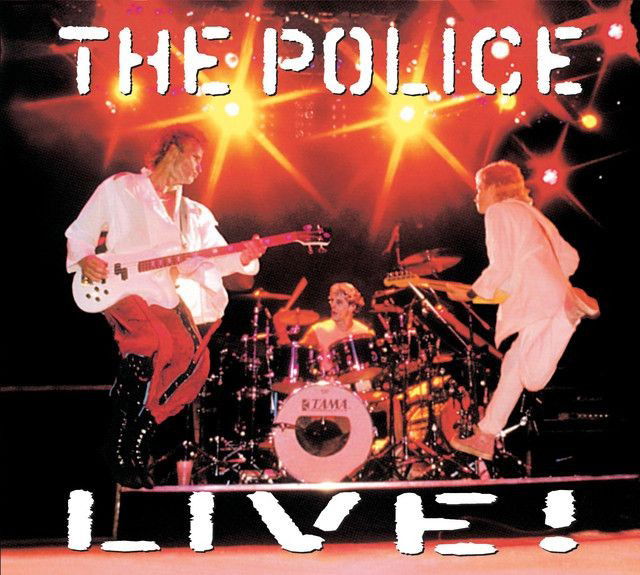
Why The Police Saw a Spiritual Crisis
The meaning of Spirits In The Material World The Police comes down to a sharp, uneasy idea: modern society has political systems, public language, and endless debate, yet people still feel trapped, divided, and spiritually empty. The song does not reject change. Instead, it suggests that external solutions alone cannot fix an inner human problem.
"Spirits In The Material World" - The Police
To our troubled evolution
Have no faith in constitution
Loading lyrics...
Unable to load lyrics
We're unable to display the lyrics at this time. Please try again later.
Released on Ghost in the Machine in 1981, the track became one of the album’s defining statements. According to Songfacts, Sting connected the song to the writings of Arthur Koestler, whose ideas also inspired the album title. That context matters because it points listeners toward a song about consciousness, conditioning, and what gets lost inside modern systems.
More Than Protest, Less Than Preaching
At first, the lyric sounds like a political complaint. It opens by dismissing easy faith in institutions, revolutions, and official structures. The key thought is clear: public systems may be necessary, but they are not enough.
That is why the line no political solution
lands so hard. The song is not saying politics never matters. In Sting’s own explanation, quoted by Songfacts, he argued that political progress is important, but recovery also requires a spiritual dimension. He defined that spiritual side not as religion, but as the ability to see beyond narrow conditioning.
Interpretation: The song is warning that a society can become technically organized while still being morally and emotionally lost.
Watch the official Spirits In The Material World
music video
The Chorus Turns the Idea Inward
The refrain gives the song its core image: spirits in the material world
. In plain terms, they present people as beings with inner depth living inside a world ruled by matter, systems, status, and control.
That phrase carries a double meaning. As Songfacts notes, “material” points both to the physical world and to materialism itself. So the chorus can be heard in two linked ways:
- Human beings are spiritual or inner selves living in physical bodies.
- Human beings are trapped in a culture obsessed with things, money, and power.
That is what makes the chorus memorable. It is philosophical, but also direct. They reduce a huge idea into one hook that sounds almost like a chant.
Leaders, Language, and Failure
The second verse sharpens the critique. It goes after authority figures who speak constantly but achieve little. When the song says leaders speak in ways that confine people, it suggests language itself can become a tool of control.
The short phrase so-called leaders
shows the distrust. Another crucial phrase, rhetoric of failure
, suggests that public speech can become circular: lots of promises, no real change. This fits Sting’s later comment that without a wider spiritual awareness, politics becomes exactly that—failed rhetoric rather than real healing.
Interpretation: The target is not one party or one country. The song is broader than that. It criticizes any system where power talks big, weak people suffer, and deeper human needs are ignored.
The Search for “Another Way”
By the final verse, the song moves from diagnosis to a question. If the answer cannot be bought, then what is left? The phrase another way
is small, but it opens the song outward.
Here, they do not offer a program or manifesto. That restraint is part of the point. The song is less interested in policy than in consciousness. It suggests that daily life, consumer habits, and political identities are too narrow to answer the biggest questions.
That also keeps the song relevant. Listeners in any era can hear it as a challenge to ask what they serve: comfort, ideology, possessions, or a larger sense of purpose.
How the Sound Carries the Message
One reason the song works so well is that the arrangement mirrors the theme. Songfacts describes it as having a reggae beat but being more synthesizer-driven than many Police songs. That mix matters.
The reggae pulse gives the track movement and tension, something bodily and earthly. But the keyboards and layered textures create a colder, more mechanical surface. Sting also said, via Songfacts, that the album used dense vocals, synths, and horn riffs to suggest something hidden trying to rise up from the subconscious.
That description fits the song perfectly. The groove feels grounded in the world, while the production seems to push upward, as if the “spirit” is trying to break through the machine.
Why Koestler’s Influence Matters
The album title Ghost in the Machine echoes Arthur Koestler’s work, and that influence helps explain the song’s language. Koestler wrote about higher human functions being restricted by larger systems, according to Songfacts. In that frame, the “spirits” are not cartoon ghosts. They are the parts of people capable of wisdom, imagination, and moral vision.
This makes the song feel less like a sermon and more like a warning. If people live only at the level of institutions, money, and reaction, they lose access to those higher capacities.
Why the Song Still Connects
The meaning of Spirits In The Material World The Police still lands because the tension it names has not gone away. People still live in systems that promise answers through policy, branding, technology, and consumption. Yet many still feel that something essential is missing.
The song’s lasting strength is its balance. It is political without becoming partisan, spiritual without becoming religious, and catchy without losing depth. They turn social criticism into a pop song that keeps asking one stubborn question: what if the real crisis is inside the way people think and live?
Disclaimer: This interpretation blends documented artist context with critical reading of the lyrics and sound. As with any song, listeners may hear different meanings in it.







