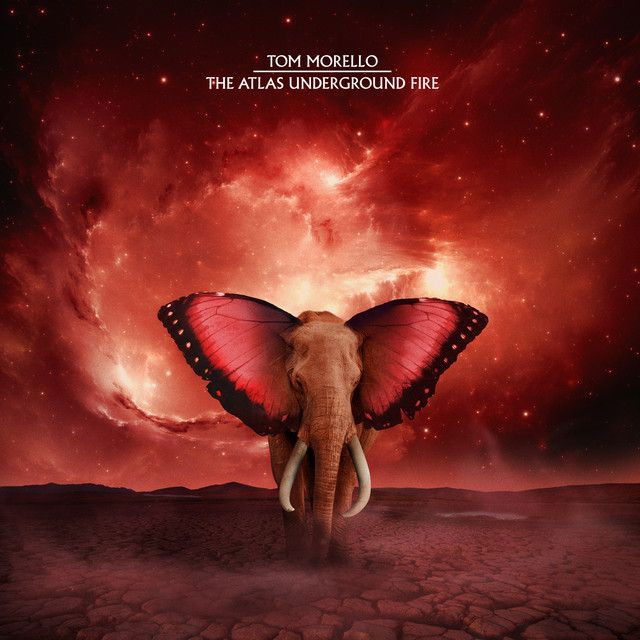
Why 'Naraka' Feels Like the End
The meaning of Naraka Tom Morello, Mike Posner comes into focus when listeners stop looking for a neat story and hear it as a descent. The song paints a broken world full of fire, wreckage, prayer, lust, and surrender. It sounds like an apocalypse, but it also sounds personal, as if they are walking through an inner hell that has started to feel familiar.
"Naraka" - Tom Morello ft. Mike Posner
I walked through a wall
Nothing could stop me
Loading lyrics...
Unable to load lyrics
We're unable to display the lyrics at this time. Please try again later.
That tension is the key: the song is not just about destruction. It is about how people survive destruction by making a home inside it.
A Hellscape That Feels Strangely Familiar
Factually, the title points listeners in the right direction. In Indian religions, Naraka refers to a hell realm or place of torment. Tom Morello discussed the track in the context of The Atlas Underground Fire, saying the team wanted something “spooky and powerful,” and that Mike Posner recorded vocals while in Nepal during his Everest journey, a setting that helped shape the song’s extreme atmosphere (American Songwriter).
That context matters because the song keeps pairing terror with transcendence. Early on, it opens with redemption
, but that feeling arrives in scenes of violence and collapse. A burning house, crying family, and storm prayers all suggest a world where salvation and disaster have become tangled together.
Interpretation: the song’s speaker may be trying to convince themselves that suffering has meaning. Calling the fall “redemption” sounds less like certainty and more like survival language.

Watch the official Naraka
music video
Broken Images, Linked by Descent
Rather than telling one clean narrative, the lyrics move in flashes. They jump from biblical names to ruined city images to sexual surrender. Yet the fragments connect around one idea: once the world breaks, moral lines break with it.
A few details stand out:
David and Saul
brings in a biblical struggle involving power, conflict, and legitimacy.house is on fire
gives the song domestic terror, not just abstract doom.keep himself warm
shows survival reduced to bare instinct.this is Naraka, baby
turns horror into recognition.I’m going down
makes the direction unmistakable.
These are not random shocks. They show a world where the sacred, the political, and the intimate are all collapsing together.
The Chorus Turns the Song Into a Choice
The repeated refrain matters because it strips away the dense imagery and leaves a simple motion: down. The verses are full of symbols, but the hook is plain and physical. They are descending, and they know it.
Interpretation: that descent can mean several things at once. It can suggest damnation, addiction, grief, lust, or a loss of social order. The power of the chorus is that it never narrows the fall to just one meaning.
There is also a dark calm in the way the song accepts this motion. Instead of fighting to climb out, the speaker often sounds almost at peace. When the lyric says Naraka feels like home, the song reaches its most disturbing idea: hell is not only pain. It is pain that has become normal.
Sex, Faith, and Ruin in the Same Frame
One of the song’s boldest moves is how it puts prayer and desire side by side. They pray through a storm, then later cling to beauty and sex at what feels like the end of the world. That contrast is not there for shock alone.
Interpretation: Morello and Posner may be showing the full range of human response to collapse. In crisis, people do not become purely noble or purely evil. They reach for God, for bodies, for memory, for any sign that they are still alive.
That is why the song feels so intense. It does not separate holiness from hunger. It lets both exist in the same ruined room.
This is truly the end
continued to descend
Those lines, brief as they are, capture the song’s emotional logic. Even intimacy cannot stop the fall. It only gives the fall a human face.
How the Sound Builds the Meaning
The production helps sell the song’s nightmare world. Morello explained that The Atlas Underground Fire was largely built during lockdown through remote collaboration, with much of his guitar work recorded on his phone and sent across the world (American Songwriter). He also described the album as a global network of collaborators held together by guitar.
That matters on “Naraka.” The track feels both handmade and unearthly. The guitar does not just decorate the beat; it acts like a force inside the environment. It scrapes, looms, and burns around Posner’s vocal, giving the song a metallic edge that fits images like ruined downtown towers and metal stabbing at the sky.
Posner’s delivery adds another layer. He sounds less like a hero than a witness caught inside the scene. That emotional restraint makes the horror stronger. Instead of oversinging the drama, they let the imagery and the sonic pressure do the work.
Why Everest Matters to the Song
One of the most striking facts about the track is Posner’s recording setting. Morello said Posner worked on vocals while in Nepal, summiting Mount Everest (American Songwriter). That real-world backdrop deepens the song’s themes.
Climbing Everest is often framed as triumph, endurance, and spiritual testing. “Naraka” twists that energy. Rather than sounding like a victory anthem, it sounds like the cost of pushing through extremity. Height and descent oddly meet each other here: a song linked to the world’s highest mountain becomes a song about going lower and lower.
Final Take on the Meaning
So, what is the meaning of Naraka Tom Morello, Mike Posner? At its core, the song seems to be about entering a state of ruin so completely that it starts to feel like truth, destiny, even home. Its images of fire, faith, violence, and desire all point toward a world where collapse is no longer a sudden event. It is the atmosphere they breathe.
That is what makes “Naraka” memorable. It is not just a song about hell. It is a song about recognition inside hell.
Disclaimer: This interpretation is based on the lyrics, recording context, and publicly available artist comments. As with most songs, meaning can remain open to personal reading.








