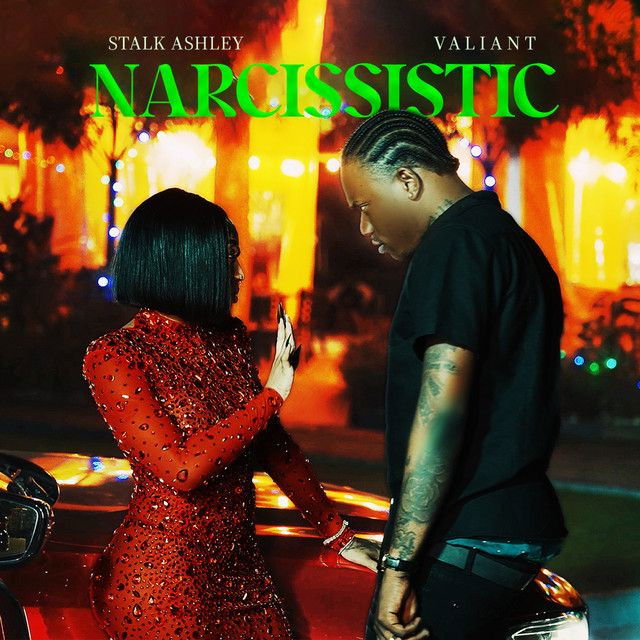
Narcissistic by Valiant, Stalk Ashley
They turn a messy breakup into a charged duet, where confession meets a hard boundary. For listeners in the U.S. curious about the meaning of Narcissistic Valiant, Stalk Ashley, this song frames a familiar argument: a partner cheats, then scrambles to fix what they broke. The twist is how plainly both voices own their positions—his regret, her self‑respect—and how the title flags the deeper issue: self‑centered love.
"Narcissistic" - Valiant, Stalk Ashley
You fuck a gyal and now she breeding
Yuh too insecure, you up inna yuh feelings
Loading lyrics...
Unable to load lyrics
We're unable to display the lyrics at this time. Please try again later.
The Hurt Beneath the Flex
At its core, the song is about accountability after betrayal. He opens stunned—me think me dreaming
—and quickly admits the fallout: now she breeding
. The shock and the pregnancy raise the stakes beyond a casual mistake.
She answers with clarity. She labels the relationship toxic, refuses to be dazzled by status, and says the heart he broke can’t be mended by gifts. The title, Narcissistic, frames his pattern: he centers his feelings, then pleads for control of the narrative.
Two Voices, Two Truths
The duet format matters. His verses sound like damage control: sorry, teary, and urgent, but also defensive. He keeps pointing to his emotions—you up inna yuh feelings
—as if her pain is an overreaction.
Her response is blunt. She rejects performative love—fuck love
—when love looks like control and repeat betrayal. She spells out boundaries: she won’t trade dignity for promised change, and she won’t be bought by diamonds or a ring. In this reading, the “narcissistic” tag isn’t a medical label; it’s a moral one about self‑absorption.
What the Story Shows (In Order)
- He cheats and admits it, then realizes there’s a pregnancy involved. He begs her to stay and tries to steer the breakup.
- She recaps a pattern: he rescued her from hurt, then “did the same thing.”
- He escalates the apologies. He shows up, calls nonstop, and dramatizes his tears to win sympathy.
- She names the harm—
you abuse it
—and exits with a final goodbye. Her decision flips the power from his pleading to her choice.
The Hook That Won’t Let Go
The chorus condenses the whole conflict into a looped confession and consequence:
Yo, me shouldn't fuck her
Me shoulda lowe her
Me lose such a good woman
fi a one night stand
That repetition feels like both honesty and an alibi. He admits the act, but saying it over and over risks becoming the performance—sorrow as strategy. The hook shows why the title stings: repeated apologies don’t equal change. She hears the loop and opts out.
Symbols, Slang, and Power Plays
Jamaican patois grounds the song’s realism. “Lowe her” means “leave her alone.” “Yard” is home; “Crown” likely references a luxury car model, a status symbol in dancehall scenes. These details sketch class and clout, the world he leans on to impress and persuade.
Food, sleep, and phone calls pop up as pressure points. He warns she’ll make him miserable if she leaves; he floods her phone to keep the door open. She declines the bribes—money, diamonds, a ring—because love “don’t cost a thing” when it’s real. The power flips when she treats attention and gifts as noise, not proof.
How the Sound Carries the Breakup
Musically, it rides a modern dancehall chassis: tight hi‑hats, heavy sub‑bass, and minor‑key synths. The beat leaves air around their voices so every jab and plea lands clearly. His lines often tumble in breathy, melodic runs, like a rush of excuses. Her delivery is colder and more clipped, which reads as resolve.
That contrast is the song’s engine. Call‑and‑response cadences feel like text bubbles in real time—his spiral, her boundary. Little delays and drops in the instrumental underline the tension, placing the listener between them as judge and witness.
Alternate Readings and Why It Hits Now
Interpretation: It can be heard as a classic cheating confessional with a modern twist, where the woman doesn’t just confront him—she walks. Another reading casts it as commentary on a cycle: idealize, betray, apologize, repeat. The title “Narcissistic” then marks the cycle itself, not just the cheater.
For U.S. listeners, the plainspoken patois and duet structure cut through culture and slang. Anyone who’s faced a hot‑and‑cold partner recognizes the patterns: sudden tears, grand gestures, late‑night calls, and that familiar plea to “just stay.” The meaning of Narcissistic Valiant, Stalk Ashley is less about shock and more about the cost of staying when someone keeps choosing themselves first.
Takeaway: Boundaries Beat Apologies
They stage a breakup where clarity wins. He confesses; she closes the door. The song’s sting isn’t the cheating alone—it’s how self‑centered love tries to turn pain into persuasion. By the last hook, the lesson is simple: accountability means change, not just words.
Disclaimer: This is an interpretive review based on the official lyrics and public context; individual listeners may reasonably hear other meanings.







