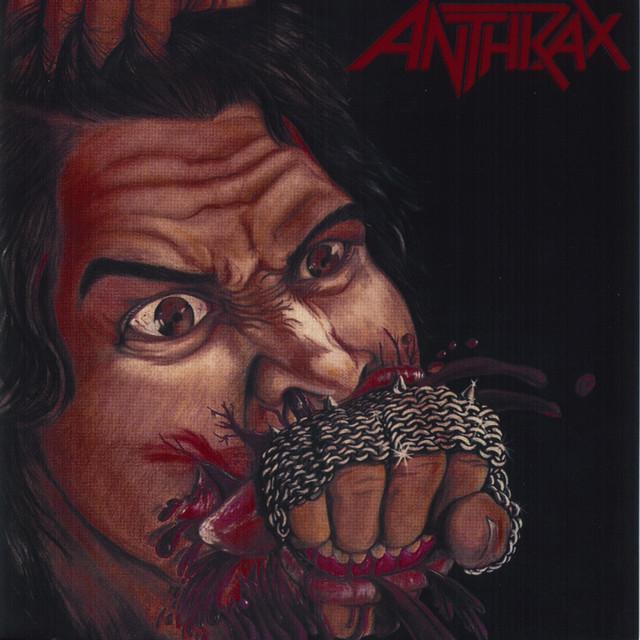
Panic by Anthrax: Chaos as Performance
The meaning of Panic Anthrax starts with motion. This is not a subtle song, and it does not try to be. Anthrax load the lyrics with speed, force, sex, danger, and stage-ready violence, making the track feel like a snapshot of a young metal band trying to turn raw energy into identity.
"Panic" - Anthrax
Reaching for the light
Loosing all control
Loading lyrics...
Unable to load lyrics
We're unable to display the lyrics at this time. Please try again later.
Rather than tell a clean story, they create a rush. The words pile up like commands and impacts. That matters, because the song’s real subject seems to be what happens when intensity becomes a lifestyle.
What This Song Seems to Be Chasing
At its core, “Panic” sounds like a song about losing control on purpose. The opening images push everything forward: Move it to the front
and Reaching for the light
. Those phrases suggest ambition, but they also sound physical, like a crowd surge or a band charging into a set.
From there, the lyrics keep jumping between struggle and pleasure. There are references to effort, desire, battle, and impact. That mix gives the song a reckless mood, as if they are saying that in metal culture, pain, excitement, and release can blur together.
Interpretation: the song is less about panic as fear and more about panic as overload. It captures the point where stimulation gets so intense that it feels dangerous and thrilling at the same time.

Watch the official Panic
music video
The Voice Inside the Noise
The narrator shifts between “I” and “we,” which is important. When the song says We are gonna kick
, it sounds collective. This is not a private confession. It feels like a group declaration, the kind of line built for rehearsal rooms, clubs, and fans packed near the stage.
But then the song turns inward with lines about losing control and losing the mind. That movement between group power and personal unraveling gives “Panic” some shape. They present metal as both a shared ritual and an individual meltdown.
A quick timeline of the song’s movement
- It begins with forward motion and physical effort.
- It shifts into lust, strain, and bodily overwhelm.
- It expands into violent imagery and survival language.
- It circles back to the same command-heavy drive.
- It ends in mental breakdown and shouted release.
That structure makes the song feel cyclical. The characters do not escape the chaos. They feed it.
How the Lyrics Build the Theme
One of the key phrases is Losing all control
. That idea appears early and returns in slightly different forms. It acts like the song’s center of gravity. Whether they are talking about sex, speed, performance, or conflict, everything leads back to overwhelm.
Another useful phrase is The battles never won
. That line gives the song a darker edge. Beneath the swagger, there is no real victory here. The struggle keeps going. The excitement is real, but so is the exhaustion.
The imagery also matters. Wheels spinning, walls breaking, guts churning, minds hazing, axes blazing: these are blunt images, but they work together. They make the world of the song feel mechanical, bodily, and destructive all at once.
Interpretation: this can be heard as a portrait of early heavy metal itself—always louder, faster, tougher, but never fully satisfied.
Sound First, Meaning Second
Anthrax emerged from the early 1980s New York metal scene, and the band is widely recognized as one of thrash metal’s key acts in later years. Their history as a band can be traced through standard references such as Britannica and AllMusic. Even in an early track like “Panic,” they were already leaning toward the speed, attack, and shouted urgency that would define their reputation.
The instrumentation carries much of the song’s meaning. Fast drumming, sharp riffing, and clipped vocal lines make everything feel crowded and unstable. There is little space to breathe. That is exactly why the song works: the arrangement enacts the same pressure the lyrics describe.
Instead of sounding polished or reflective, the track sounds driven. The guitars push forward like an engine. The rhythm section keeps things tense. The vocal delivery sounds less like storytelling and more like command, which fits the lyrics’ obsession with force.
Artist Context Helps Explain It
The songwriting credits given here—Scott Rosenfeld, Daniel Lilker, and Neil Turbin—place the song in Anthrax’s formative period. That matters because early metal songs often favored impact over nuance. Bands wanted songs that hit hard in clubs and established attitude fast.
So the meaning of Panic Anthrax is tied to that context. They were building a persona. The lyrics are full of exaggerated masculinity, confrontation, and motion because those were common tools in the era’s underground metal language.
That also explains why some lines now feel rough or simplistic. The song is chasing sensation more than precision.
Alternate Readings of “Panic”
There are at least two reasonable ways to hear the song:
Reading one: a pure performance anthem
In this reading, the song is about the live rush of metal. The “we” voice, the breaking-wall imagery, and the repetition all support that. It feels designed to stir a crowd and present chaos as a kind of freedom.
Reading two: a portrait of self-destruction
The darker language points this way. If they emphasize churn, haze, endless battle, and mental collapse, then the song becomes less triumphant. It starts to sound like a warning about people who only know how to live at full speed.
Both readings can fit, and that ambiguity gives the track more staying power than its blunt language first suggests.
Why “Panic” Still Makes Sense
The song may not be one of Anthrax’s most famous titles, but its core idea is easy to grasp. It captures the moment when drive turns into overload and group energy becomes personal disorientation. That is the clearest meaning of Panic Anthrax: chaos performed so intensely that it starts to feel like identity.
They do not offer a solution. They just turn the pressure up and let the song live there.
Disclaimer: This article offers an interpretation of the song based on its lyrics, musical style, and artist context. Meanings can vary by listener.








