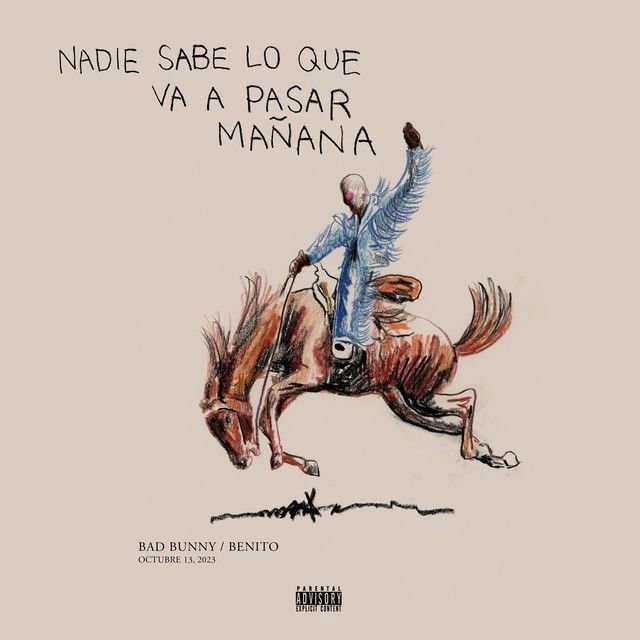
HIBIKI by Bad Bunny, Mora
They call it HIBIKI, but the first thing the track serves isn’t a drink—it’s the ache that follows a breakup. The narrator wanders through the night, chasing relief that never sticks. For listeners asking about the meaning of HIBIKI Bad Bunny, Mora, the song frames desire as dependency and shows how wealth and motion can’t quiet a heart stuck on repeat.
"HIBIKI" - Bad Bunny, Mora
Preguntándole a Dio' el por qué
No me levanto tocándote
Loading lyrics...
Unable to load lyrics
We're unable to display the lyrics at this time. Please try again later.
What Keeps Echoing After the Party Ends
HIBIKI is about missing someone so intensely that the world becomes a loop. The hook circles the image of the narrator out “bebiendo en la ciudad
.” They say life hasn’t been the same desde que tú no estás
, turning longing into a daily routine.
Interpretation: The whisky in the title points to both a brand and an idea—resonance. Emotions “ring” after the relationship ends, much like a glass hums after a tap. The pain lingers even as the night moves on.
Who’s Talking, and Who’s Being Chased?
The voice is first-person, confessing to a former lover. They admit a dependence that borders on compulsion, captured in the line te convertiste en mi vicio
. It’s not just romance; it’s habit.
They also show how tech becomes a stand-in for closeness—wanting to see them even por Apple Vision
. The screen offers proximity without presence, highlighting a modern kind of loneliness.
A Night in Three Acts
- Act 1: Restless city drift. They roam, drink, and scroll to distract themselves. The chorus repeats this aimless search.
- Act 2: Flash of luxury and speed. There’s a G-Wagon, cigarettes, and a sprint “a cien” across San Juan’s Teodoro Moscoso bridge. Status symbols appear, but they don’t fix the void.
- Act 3: Vulnerability. The mask drops with
me dejaste solo
and the admission that no one else matches the ex—no hay una que a ti se compare
. The bravado folds into a plea.
The Chorus’s Pull: Need, Not Want
The hook reframes the song as a cycle: he keeps going out, but not to have fun. He’s killing time because touch has become necessary, not optional. Interpretation: By repeating the city-night image, the chorus shows how distraction itself becomes a ritual. It’s a habit replacing a habit.
Symbols That Do the Heavy Lifting
- Whisky and brand names: Point to self-medication and luxury. Hibiki, a Japanese whisky, also means “echo,” boosting the idea that emotions reverberate.
- Cars and speed: The G-Wagon and highway sprint signal escape and control—but the feeling rides shotgun.
- Tech windows: The nod to vision tech underlines a desire to see without being seen—a half-connection that keeps the craving alive.
- Throwing phones and breaking rules: These flashes of chaos mark moments when the facade slips.
How the Sound Sells the Story
Production leans moody and restrained: somber keys, airy pads, and a trap-reggaeton pulse that never explodes. The low-end thumps like a heartbeat, steady but heavy. Bad Bunny’s delivery is husky and tired, often stretched across the beat, which emphasizes exhaustion. Mora’s lighter tone glides over the same groove, brightening the edges.
Interpretation: The arrangement keeps space around the vocals, letting the confessions breathe. Minimal drums and soft synths mirror the emptiness the narrator feels in crowded rooms. It’s danceable, but the mood stays blue.
What Makes This Collaboration Click
Mora shines where melody matters, threading sweet hooks through darker textures. Bad Bunny grounds the track with blunt, specific images. Together they show two angles of the same spiral—one silky and hopeful, one cracked and honest. That contrast helps explain the lasting meaning of HIBIKI Bad Bunny, Mora for many fans: heartbreak that moves the body while weighing on the mind.
Alternate Lenses Worth Considering
- Interpretation: Addiction allegory. Language around “vicio,” routine, and withdrawal frames the ex as a substance, with the city night as the dealer.
- Interpretation: Fame’s empty rooms. The flexes (cars, clothes, speed) feel like armor. The song suggests success magnifies loss rather than replacing it.
Final Takeaway You Can Feel
HIBIKI bottles the space between numb and needy. It’s the sound of someone who can buy the night—and still can’t buy back the one person who made it make sense. If the title hints at an echo, the last note is clear: some feelings don’t fade; they circle.
Disclaimer: This is one interpretation based on publicly available lyrics, context, and production. Individual experiences may lead to different readings.
Sources
- https://en.wikipedia.org/wiki/Nadie_Sabe_Lo_Que_Va_a_Pasar_Ma%C3%B1ana
- https://genius.com/Bad-bunny-and-mora-hibiki-lyrics
- https://whisky.suntory.com/en/global/our-brands/hibiki
- https://en.wikipedia.org/wiki/Teodoro_Moscoso_Bridge
- https://www.rollingstone.com/music/music-album-reviews/bad-bunny-nadie-sabe-lo-que-va-a-pasar-manana-album-review-1234855427/
- https://en.wikipedia.org/wiki/Mora_(singer)
- https://www.apple.com/apple-vision-pro/








