
Why 'TV Party' by Black Flag Still Bites
The meaning of TV Party Black Flag becomes clearer the longer they lean into the joke. On the surface, it sounds like a goofy punk singalong about hanging out, drinking beer, and watching favorite shows. Underneath, it is a sharp satire about boredom, media addiction, and the choice to hide from real life.
"TV Party" - Black Flag
TV party tonight
TV party tonight
Loading lyrics...
Unable to load lyrics
We're unable to display the lyrics at this time. Please try again later.
Black Flag released the TV Party EP in July 1982 through SST, and the title track had already appeared in an earlier form on Damaged in 1981. According to reference material on the release, the EP cut was recorded in March 1982, produced by Black Flag with Ed Barton, and built around a slower tempo and hand claps that made it feel looser and more communal than much of the band’s hardcore work. That lighter sound matters because the song’s critique lands through humor, not pure rage.
A Party That Is Not Really a Party
The main idea is simple: the song turns inactivity into a fake celebration. The chant of TV party tonight
sounds excited, but the excitement is hollow. They are not going anywhere, not doing anything, and not even talking much. The “party” is just people parked in front of a screen.
That irony drives the whole song. When the narrator says they have nothing better to do
, Black Flag are not praising a carefree night in. They are exposing a kind of cultural drift, where entertainment fills the space that used to hold curiosity, conversation, or action.
Interpretation: The song is about more than television itself. It is about passivity. TV is the symbol, but the target is a mindset that accepts numb routine as pleasure.
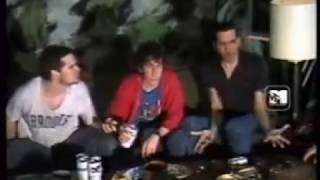
Watch the official TV Party
music video
How the Lyrics Build the Satire
The verses keep raising the stakes in a funny but bleak way. First, the group gathers to drink and watch shows. Then they make it clear they do not want to discuss anything else. Soon, the outside world feels too scary, and television becomes the only safe space.
A key line of thought appears when they are dedicated to our favorite shows
. That wording sounds like loyalty or devotion. Black Flag use that language to make fandom seem almost religious, as if the screen now organizes daily life.
The named programs are important too. References to shows like Dallas, Hill Street Blues, and Saturday Night Live place the song firmly in early 1980s America. But the deeper point is timeless: pop culture becomes social glue when people have little else to say.
Don't even bother to use my brain
There's nothing left in it
That is the song’s bluntest joke, and also its darkest. It suggests that endless passive viewing does not just fill time. It can flatten thought itself.
The Twist at the End Says Everything
The funniest moment comes when the TV breaks. Suddenly, the whole structure collapses. Without the set, they are left with beer, silence, and panic. The question becomes: what do they do now, and what can they even talk about?
This ending reveals the real dependency at the center of the song. The group has built its night, and maybe its identity, around a machine. Once that machine fails, the emptiness underneath is impossible to ignore.
Interpretation: The broken TV is more than a plot gag. It acts like a stress test. Remove the screen, and the song asks whether there was ever a real party there at all.
Why the Sound Makes the Message Hit Harder
Part of what makes “TV Party” memorable is that it does not sound preachy. Sources on the EP note that the 1982 version is slower than the earlier recording and includes hand claps. Chuck Dukowski’s bass helps drive the groove, while Henry Rollins leads with a chant that feels part sneer, part locker-room singalong.
That musical setup matters. Instead of attacking the listener with speed alone, Black Flag make the song catchy, repetitive, and easy to yell along with. The audience is invited into the joke before they fully notice they may also be the target.
AllMusic described the track as both “cutting and funny,” which fits the song well. It laughs at its characters, but it also recognizes how familiar they are. Many people know the comfort of staying in, tuning out, and calling it enough.
Artist Context Helps Explain the Tone
Black Flag are often remembered for intensity, alienation, and confrontation. That is why “TV Party” stands out in their catalog. Greg Ginn reportedly said the song was a satire of people who watch TV and party at home, calling it a common social “sickness” in Los Angeles. Henry Rollins also framed it as being about people who live in a TV-shaped world.
Those comments support the reading that this is not just a novelty track. It is a social critique delivered through parody. Even its relative lightness has a purpose: by sounding fun, the song mirrors the seductive ease of the lifestyle it attacks.
Why the Song Still Feels Current
The details are dated in the best way. The show titles belong to a specific era, and that gives the song texture. But the core idea has aged very little. Swap broadcast TV for streaming, social feeds, or endless scrolling, and the pattern is easy to recognize.
That is why the meaning of TV Party Black Flag still lands today. The song asks what happens when entertainment stops being a break and becomes a way of avoiding life. It also asks what is left when the screen goes dark.
Final Take on Black Flag's Joke
“TV Party” works because Black Flag keep the message simple, loud, and funny. They present a room full of people who call boredom a celebration and call habit a good time. The joke is catchy, but the point is uneasy.
Interpretation disclaimer: This reading separates documented facts about the song’s release and comments from broader interpretation. Like most satire, “TV Party” can support more than one meaning for different listeners.








