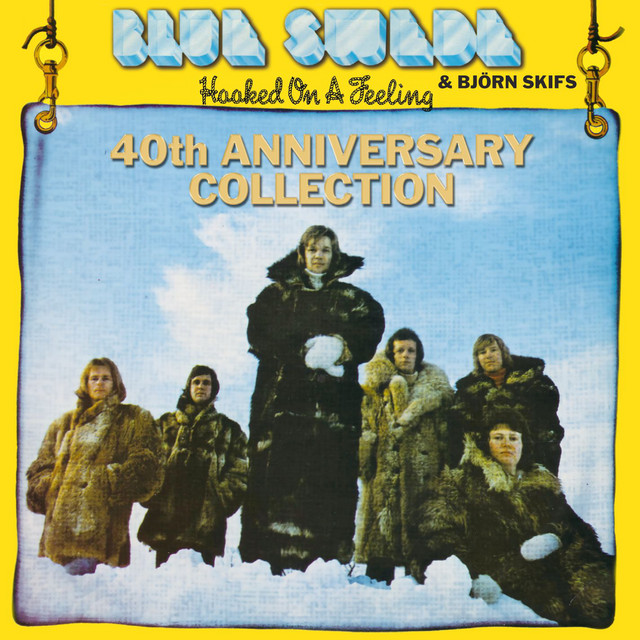
Why 'Hooked On a Feeling' Feels So Big
The meaning of Hooked On A Feeling Blue Swede, Björn Skifs starts with a very simple idea: they are singing about the dizzy, almost out-of-control thrill of falling in love. But the reason the song still lands is not just the lyric. It is the way Blue Swede turns that feeling into a full-body event.
"Hooked On A Feeling" - Blue Swede, Björn Skifs
Ooga-chaka ooga-ooga
Ooga-chaka ooga-ooga
Loading lyrics...
Unable to load lyrics
We're unable to display the lyrics at this time. Please try again later.
Written by Mark James and first recorded by B. J. Thomas in 1968, the song was inspired by James's feelings for his childhood sweetheart. Blue Swede's 1973 cover, produced by Bengt Palmers, became the best-known version and reached No. 1 on the Billboard Hot 100 in 1974. That made it a major pop breakthrough for the Swedish group and for lead singer Björn Skifs.
A Love Song About Losing Control
At its core, the song is about romantic excitement that feels stronger than reason. The speaker is not calmly describing a relationship. They are overwhelmed by it. Early lines like I can't stop this feeling
make that clear right away.
The emotion is intense, but it is also innocent in a pop-song way. The speaker believes touch, closeness, and private moments mean something deeper. When the chorus arrives with hooked on a feeling
and high on believing
, the song links love with physical and emotional lift. They are not just happy; they feel carried away.
Interpretation: The key word is not only “hooked.” It is “believing.” The song suggests that love can run on hope as much as proof. The singer seems less certain that the other person truly loves them than they are eager to believe it.

Watch the official Hooked On A Feeling
music video
The Chorus Turns Desire Into Certainty
The smartest thing the song does is repeat one emotional leap: attraction becomes conviction. The verses describe physical closeness and craving. Then the chorus upgrades that rush into a belief that the relationship is mutual.
That matters because it adds vulnerability. The speaker is confident on the surface, but the line you're in love with me
sounds almost like self-persuasion. They are trying to make a wish feel real.
I'm hooked on a feeling
I'm high on believing
That you're in love with me
Those lines are catchy because they compress the whole story. Desire becomes hope, and hope becomes a kind of emotional intoxication.
Why the Images Are So Simple
This is not a song built on complex poetry. Its images are basic: touch, sweetness, thirst, being “all right.” That simplicity is part of why it works.
Phrases such as sweet as candy
and references to being thirsty turn love into appetite. The song treats attraction like a craving that keeps returning. It is not subtle, but it is effective. Everyone understands the feeling of wanting more of something that feels good.
There is also a playful exaggeration in the lyric. Blue Swede sings about being affected, almost infected, by love. In the original Mark James/B. J. Thomas version, some lines leaned more heavily into addiction language. Blue Swede changed those lines, likely to avoid a stronger drug-reference reading, while keeping the same basic idea of romantic obsession.
The 'Ooga-Chaka' Intro Is the Real Masterstroke
A big part of the song's meaning comes from the arrangement. Blue Swede's version is famous for the opening chant, which was not in Mark James's original song. That intro came from Jonathan King's 1971 cover, and Blue Swede adopted it for their hit version.
Factually, the chant helps explain why this recording became so huge. Critics at the time noticed it immediately; Record World said the opening hook would have buyers asking for the “oogah chugga” record. That is exactly what happened.
Interpretation: The chant sounds primitive, comic, and unstoppable all at once. It turns private desire into a public celebration. Before the love story even begins, the track already feels like a pulse, a stomp, a crowd chant. That is why the song feels bigger than its lyric on the page.
How Blue Swede's Sound Changes the Song
Blue Swede's recording uses bright brass, organ, guitar, steady drums, and Björn Skifs's full-throated lead vocal. The lineup also included bass, electric piano, tenor saxophone, trumpet, and group backing vocals, which gives the record a thick, party-like texture.
That matters because the lyric alone could have stayed small and personal. Instead, the production blows it up. The horns make desire sound triumphant. The organ adds bounce. The backing vocals make the singer's feelings sound shared, almost communal.
Compared with B. J. Thomas's original, which had a smoother late-1960s pop-soul feel, Blue Swede's take is more theatrical and extroverted. It is less about quiet longing and more about emotional explosion.
Why Pop Culture Kept Reviving It
The song has lasted because its feeling is instantly readable. It returned to public attention through Reservoir Dogs, the Ally McBeal “dancing baby” era, and especially Guardians of the Galaxy, where its brass-heavy energy fit a playful retro mood.
Those uses did not change the lyric's core meaning, but they did widen its emotional range. Modern listeners often hear it as joyful, funny, and nostalgic at the same time. That layered afterlife helps explain why a straightforward love song can still feel fresh.
The Lasting Meaning of the Song
So what is the meaning of Hooked On A Feeling Blue Swede, Björn Skifs? Most simply, it is about being swept up by attraction so strongly that hope feels like proof. The singer wants love, feels love, and decides that love must be there.
Blue Swede's genius was turning that common feeling into a giant pop moment. The chant, the brass, and Björn Skifs's performance make infatuation sound like a parade.
That is why the song lasts: it captures the thrilling, slightly irrational moment when desire becomes belief.
Disclaimer: This interpretation separates documented facts about the song's writing, recording, and release from critical reading of its lyrics and emotional meaning.






