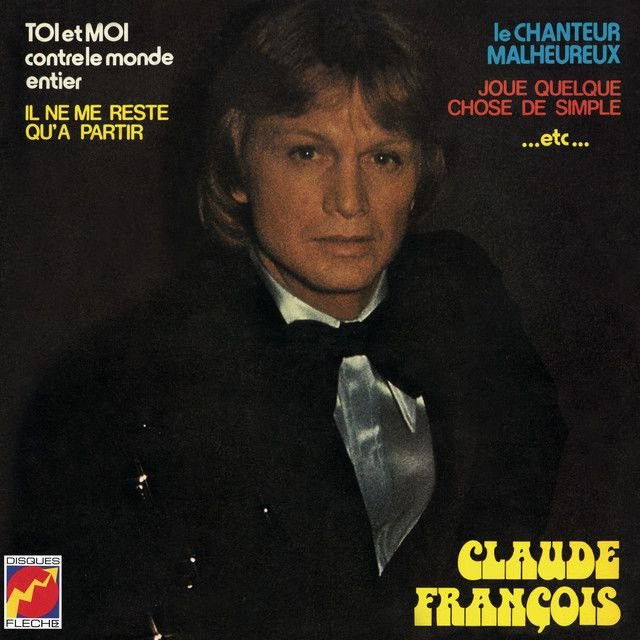
Toi et moi contre le monde entier by Claude Franois
The meaning of Toi et moi contre le monde entier Claude Franois is both simple and moving: it is a song about a parent and child forming a private bond strong enough to face sadness, time, and the outside world. Rather than romantic love, this track speaks in the language of family loyalty. It turns everyday tenderness into something almost epic.
"Toi et moi contre le monde entier" - Claude François
Tu es la réussite que je n'attendais pas
Nous deux c'est une histoire d'homme, ne vas pas le dire à ta mère
Loading lyrics...
Unable to load lyrics
We're unable to display the lyrics at this time. Please try again later.
Claude Franois was one of the biggest stars in French pop, known for emotional delivery and polished variety arrangements. The song followed a major mid-1970s period for him, coming after the huge success of Le t�e9l�e9phone pleure, which sold more than a million copies and became his best-selling record, according to French reference material on the single and its chart life. That success helps explain why this later song feels so direct and cinematic: Franois knew how to make private feeling sound universal.
A Father-Son Story at the Center
At its core, the song appears to be addressed from a father to his son. Early on, the narrator notices resemblance and surprise in the childs existence, almost as if parenthood arrived as an emotional revelation. When they sing about shared features and call the child an unexpected success, the message is not pride alone. It is wonder.
The line built around toi et moi
sets the whole emotional frame. They are not just related; they are allies. The song presents family love as a small team standing against grief, confusion, and the pressure of the world.

Watch the official Toi et moi contre le monde entier
music video
How the Lyrics Move Through Time
One of the songs strongest features is its timeline. It does not stay in one emotional moment. Instead, it moves through three stages:
- recognition of the child,
- admission of past distance,
- acceptance that the child will eventually leave.
That middle stage matters most. The narrator openly says they did not always know how to love well, and the two did not always understand each other. This makes the song richer than a simple tribute. It is about love that had to grow.
Later, the child becomes not just a son but almost a companion. The phrase tu deviens mon ami
changes the relationship. The parent still protects, but now they also admire the young man emerging in front of them.
The Chorus Turns Love Into a Shield
The chorus is what makes the song unforgettable. In paraphrase, it says that when the two are together, fear loses its power. The repeated claim that they stand against the whole world is exaggerated on purpose. That exaggeration sounds like the emotional truth of family: when someone truly understands their sadness, the rest of life feels less threatening.
A short phrase like contre le monde entier
gives the song its anthem quality. But the meaning is intimate, not political. The world here is not a literal enemy. It stands for loneliness, growing pains, and the future itself.
The song also says the child understands the speakers sadness. That detail is striking. Usually, a parent comforts a child. Here, comfort moves both ways. This mutual understanding is why the song feels deeper than simple protection.
Toys, Battles, and Childhood Imagination
The recurring images of soldats de bois
and armies are not about real war. They turn childrens play into a symbol of courage. A child with toy soldiers can imagine winning anything. In the song, those games become emotional rehearsal for life.
Interpretation: the battles represent inner fears more than outer conflict. When the narrator says they no longer fear anything, that confidence seems to come from shared love, not actual victory. Childhood imagination becomes a defense against pain.
There is also a gentle sadness in these images. Toys belong to a phase that will pass. The song knows that. It treasures childhood while already looking ahead to the day the child leaves home.
Why the Farewell Feeling Hurts
The most affecting part of the lyric is its awareness of time. The parent imagines the moment the child departs, as many do quand on a vingt ans
. That future separation is normal, but the song treats it as emotionally huge.
Here is the songs one brief multi-line moment worth highlighting because it captures memory and support in a compact way:
Moi seul �e0 tes c�f4t�e9s
comprenant tes tristesses
These lines, in paraphrase, show the parent imagining a past that the child may one day look back on with tears. The idea is not possession. It is remembrance. The parent hopes the child will carry this bond into adult life.
How the Sound Carries the Meaning
Musically, this is classic French variety pop: melodic, warm, and dramatic without being harsh. Franois often worked in a style that balanced radio-friendly hooks with orchestral emotion, and that matters here. The arrangement gives the song lift, so a private family message feels large enough for a stage.
The likely effect of the instrumentation is important to the interpretation. Soft verses fit confession and memory. A fuller chorus creates the feeling of a vow. Franoiss voice, known for its clear emotional push in his major hits, helps sell both tenderness and resolve.
A Broader Reading of the Song
There is a clear surface meaning, but there is also room for a second reading.
Interpretation: beyond fatherhood, the song may also express Claude Franoiss concern with legacy. A child who resembles him, outgrows him, and survives him becomes a way of thinking about what remains after fame. In that sense, the song is about love, but also about continuity.
That reading fits the way the lyric joins pride and vulnerability. It is not only celebrating the child. It is also admitting that the adult needs this bond too.
Why It Still Connects
For U.S. listeners discovering French pop, this song stands out because its feeling is easy to recognize even across language. The meaning of Toi et moi contre le monde entier Claude Franois rests on a universal idea: family love can feel like a secret alliance, especially when life is uncertain.
Its lasting power comes from the mix of honesty and grandeur. It admits imperfect parenting, honors childhood imagination, and faces separation without losing warmth. That is why the song still lands.
Disclaimer: This article offers a lyric-based interpretation shaped by available songwriting credits and artist context. Meaning can vary from listener to listener.







