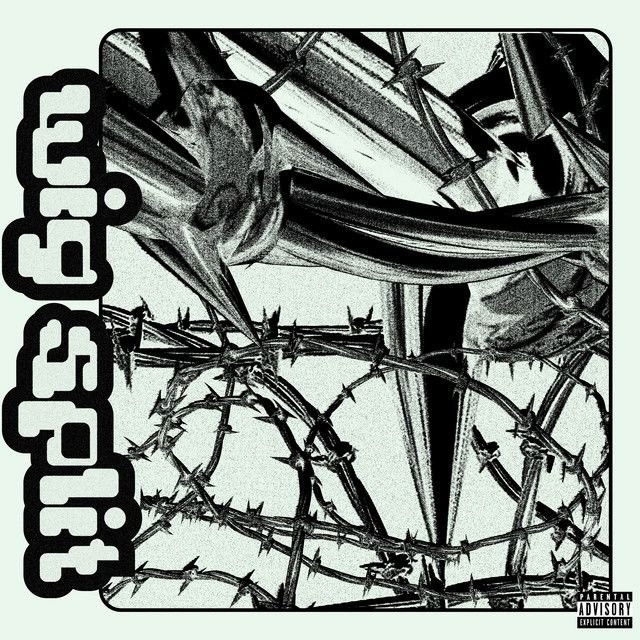
Why "Wig Split" Feels More Broken Than Tough
The meaning of Wig Split Pouya, Denzel Curry is not just simple aggression. On the surface, the song sounds like a hard-edged threat track built on intimidation, street talk, and violent boasts. But under that surface, it also reveals something less stable: drug use, overthinking, emotional numbness, and a sense that the rappers are pushing themselves toward collapse.
"Wig Split" - Pouya, Denzel Curry
Fuck with me, get your wig pulled back
Steady swervin' off a Xanax that I put inside the shack, shack
Loading lyrics...
Unable to load lyrics
We're unable to display the lyrics at this time. Please try again later.
That tension is what gives the song its force. They do not just sound angry. They sound cornered, wired, and detached at the same time.
A Threat Song With a Cracked Center
The hook is the first clue. When they repeat wig pulled back
and steady swervin'
, the song links violence with intoxication. The threat is not presented as clean control. It is wrapped in impairment, recklessness, and bad decisions.
Interpretation: This matters because the chorus does two jobs at once. It warns outsiders not to test them, but it also shows that the speakers are not in a healthy or steady state. Their danger comes partly from instability.
The phrase off a Xanax
strengthens that reading. Instead of sounding proud in a clear, victorious way, the song feels chemically blurred. That makes the aggression feel more chaotic than heroic.
Pouya’s Verse: Swagger Fighting Emptiness
Pouya opens with luxury and freedom, but he quickly undercuts both. He mentions driving, hookups, and status, yet those images are shadowed by indecision and self-disgust. He admits he is overthinking and wonders whether he wants company at all.
That shift is important. A lesser reading would say the verse is only about sex, money, and flexing. But the emotional movement suggests more. He talks like someone surrounded by options who still feels stuck.
One of the darkest moments is when he says he is dyin' slowly
. That line turns the song inward. Suddenly, the enemy is not just another person. The enemy is also his own habits, his own mind, and the numb cycle he keeps repeating.
Denzel Curry’s Verse: Precision, Pride, and Pressure
Denzel Curry enters with more discipline and bite. Where Pouya sounds scattered, Curry sounds sharpened. His verse is packed with battle-ready images, warnings, and athletic comparisons. He treats confrontation like a test of rank.
Even so, the meaning does not become simple. He is not just bragging about power. He is also showing how quickly talk turns into escalation. When he says talkin' like a witness
, the lyric suggests a world where speech itself can trigger danger.
That idea runs through his whole verse. Reputation matters. Respect matters. Survival depends on staying alert. In that setting, violence becomes less like random rage and more like a code of response.
Interpretation: Curry’s verse can be heard as the song’s most controlled mask. He sounds dominant, but that control may itself be a survival strategy in a world defined by threat.
The Real Story Hidden in the Sequence
The song works almost like a short spiral. Its emotional timeline looks like this:
- The hook sets a mood of retaliation and intoxication.
- Pouya moves into loneliness, lust, and self-destructive thinking.
- The hook returns, making the threat feel even more unstable.
- Curry answers with discipline, retaliation, and hardened pride.
- The ending leaves no real relief, only more tension.
That structure matters for the meaning of Wig Split Pouya, Denzel Curry because it shows two versions of masculine toughness. One is sloppy and hurting. The other is focused and dangerous. Both are trapped in the same emotional climate.
Violent Imagery as Emotional Language
The song is full of gun talk, body imagery, and punishments. None of that is subtle. But it helps to ask what those images are doing beyond shock value.
In many rap songs, violence can act like emotional shorthand. Here, it expresses distrust, pride, fear of humiliation, and the need to seize control before someone else does. In other words, the threats are not only physical. They are social and psychological.
A brief passage captures the mood:
Don't get your wig split
point and shoot
I don't need no hypeman
Even in those short lines, the song connects retaliation, readiness, and independence. They want to sound untouchable, but the insistence itself hints at pressure. Truly safe people rarely need to say they are this dangerous.
How the Production Carries the Meaning
The beat, introduced with the producer tag hit 'em with the heat
, supports that unstable energy. The production feels lean, hot, and confrontational. Hard drums and a sparse, menacing backdrop leave lots of room for each threat to land.
That sonic space is important. A busier instrumental might make the song feel celebratory. This one feels claustrophobic instead. The empty pockets in the beat let their voices sound more exposed, which fits the lyrics about paranoia, drug use, and quick retaliation.
Their deliveries also matter. Pouya often sounds slippery and frayed, while Curry attacks the rhythm with more precision. That contrast turns the track into a duet of two different kinds of collapse: one internal, one external.
Final Take: Toughness as a Sign of Damage
The strongest reading of the song is that it treats toughness less as victory than as damage control. Its characters boast, threaten, and posture, but they also reveal dependence, despair, and emotional fatigue.
So the meaning of Wig Split Pouya, Denzel Curry lies in that mix. It is a violent song, yes, but also a portrait of minds under pressure, using menace to cover fragility.
Disclaimer: This interpretation is based on the lyrics, performance, and production, and other listeners may hear the song differently.









