Why 'Heading Out to the Highway' Still Hits
The meaning of Heading Out to the Highway Judas Priest comes down to one big idea: freedom with responsibility. This is not just a driving song or a biker anthem, even though it clearly uses road imagery. It is a song about taking the wheel of their own life, making choices, living with risk, and refusing to let the crowd decide the route.
"Heading Out to the Highway" - Judas Priest
Well I've said it before and I'll say it again
You get nothing for nothing, expect it when
Loading lyrics...
Unable to load lyrics
We're unable to display the lyrics at this time. Please try again later.
Judas Priest released the song in 1981 on Point of Entry, with Rob Halford, K. K. Downing, and Glenn Tipton credited as writers and Tom Allom as producer. It became the band’s first single to crack the US Mainstream Rock Top 10, peaking at No. 10, which shows how strongly its message and hook connected with American rock listeners in that moment. Wikipedia notes that it was released in May 1981, and Songfacts preserves Halford’s own explanation of the song’s theme.
The Highway Is Life, Not Just a Road
At the center of the song is a simple metaphor: life is a highway. Halford said the song is about freedom, control, and determination, explaining that being behind the wheel feels like being in charge of one’s own life. That artist comment matters because it confirms what the lyrics strongly suggest: the road is not only a place, but a mindset.
The opening verses push against passivity. When the song warns about backseat driving
, it is not only talking about a car. It points to people who criticize, advise, or control without actually taking responsibility. The line about having no hands on the wheel sharpens that idea. They are saying that spectators are often loud, but they are not the ones living the consequences.
That leads into the chorus, where heading out to the highway
sounds like a break for independence. The move is outward, but also inward. They are claiming agency.
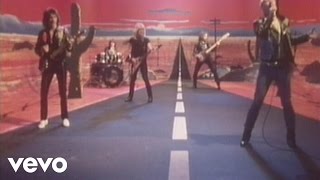
Watch the official Heading Out to the Highway
music video
A Song About Choice, Risk, and Recovery
One reason the lyrics work so well is that they do not pretend freedom is easy. The song says they can do it my way
, but it also admits the chance of failure. That is why the phrase take a chance before I fall
matters so much. It is brave, but not careless.
The verses keep returning to choice. Left or right, right turn or wrong turn, curve or strain: all of these images make life sound active and unpredictable. The message is not that they will always choose correctly. The message is that choosing for themselves is better than drifting with the crowd.
The key message in plain terms
The song’s argument can be summed up in three parts:
- Following the crowd can cost them their voice.
- Making their own choice may lead to mistakes.
- Mistakes are survivable if they keep moving and rebuild.
That third point is one of the song’s strongest ideas. It says there are still miles ahead to fix things. Later, it adds that everybody breaks down sooner or later. That makes the song more mature than a simple rebellion anthem. It is not saying they are invincible. It is saying they can recover.
How the Chorus Turns Motion Into Meaning
The chorus is catchy because it is direct, but it also carries the whole theme. The highway becomes a symbol of self-rule. They are not asking for permission, and they are not waiting for perfect certainty.
I got nothing to lose at all
I'm gonna do it my way
Those lines are not really about having zero consequences. Interpretation: they sound more like emotional resolve. In other words, they have reached the point where standing still feels worse than risking a fall. That is why the chorus feels so uplifting. It turns anxiety into momentum.
The Sound Makes the Message Feel Open
Musically, the song helps sell that freedom. Judas Priest were already known for sharper, more aggressive heavy metal, but this track has a more relaxed, rolling groove. That does not make it soft. It makes it spacious.
The opening riff gives the song immediate motion, like an engine catching. The twin guitars of Glenn Tipton and K. K. Downing do not trap the track; they stretch it out. Dave Holland’s drums keep things steady rather than frantic, which fits the theme of control. Halford’s vocal is forceful, but he sounds less like a screamer here and more like a guide pushing forward.
A brief critical note from PopMatters, quoted on Wikipedia, praised the song’s more relaxed groove and optimism. That feels right. The production leaves room for air, which makes the song feel like open road rather than closed walls.
Context Around the Band Matters Too
This song landed at an interesting moment for Judas Priest. It followed British Steel and appeared on Point of Entry, an album associated with a slightly more accessible sound. Songfacts also notes that the album was recorded in Ibiza, and that context may help explain why this track feels sunnier and looser than some of the band’s harder-edged material.
Their leather-and-motorcycle image also shaped how listeners heard the song. Because Judas Priest already looked and moved like road warriors, a song about the highway naturally felt bigger than its lyrics alone. The imagery fit the band’s identity, but the song lasts because the message is broader than style.
Final Turn: Why the Song Endures
The meaning of Heading Out to the Highway Judas Priest is enduring because it balances confidence with realism. They do not promise a perfect life. They promise motion, courage, and the right to choose.
Interpretation: at its heart, the song says adulthood means taking the wheel, even when the road is uncertain. That idea still lands because almost everyone knows the feeling of wanting out, wanting control, and hoping they can fix things if they go wrong.
That is why this track remains more than a road song. It is a compact anthem for self-determination.
Disclaimer: This interpretation blends documented artist comments with close reading of the lyrics and sound. Meaning can remain personal, and listeners may hear different shades in the song.








