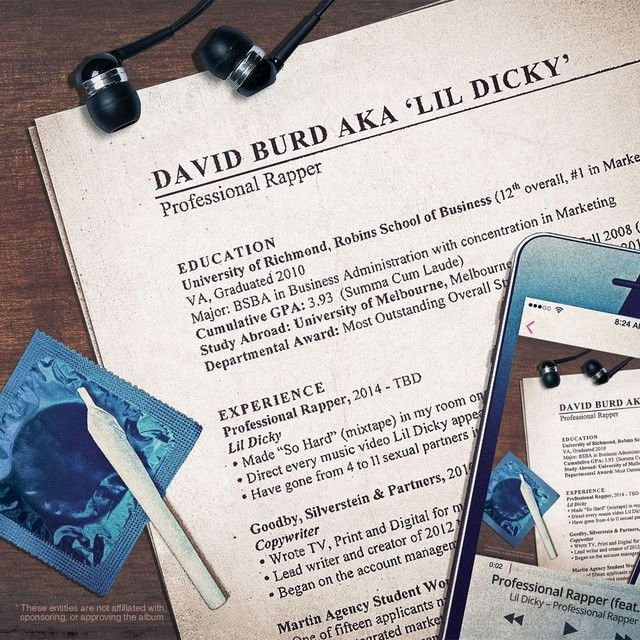
Why 'Professional Rapper' Is Lil Dicky's Thesis
The meaning of Professional Rapper Lil Dicky, Snoop Dogg starts with a smart joke: what if becoming a rapper worked like applying for an office job? That setup turns the song into more than a comedy track. It becomes a mission statement.
"Professional Rapper" - Lil Dicky ft. Snoop Dogg
Hi, my name's Dave Burd, I have an appointment today
It's probably under 'Lil Dicky,' actually
Loading lyrics...
Unable to load lyrics
We're unable to display the lyrics at this time. Please try again later.
Released on July 31, 2015, as the title track and fourth single from Lil Dicky’s debut album, the song features Snoop Dogg and was produced by Stan Lane. It also became a commercial success, reaching No. 1 on Billboard’s Comedy Digital Tracks chart and later earning Platinum certification in the United States. Those facts matter because they show the song was not just a skit-like novelty; it broke through in a real way. See Wikipedia, Billboard, and the RIAA.
A Job Interview Disguised as a Rap Song
At the most basic level, the track presents Lil Dicky as an applicant trying to convince Snoop Dogg to hire him as a "professional rapper." That framing lets the song ask serious questions in a playful way:
- What makes someone authentic in rap?
- Does a nontraditional background weaken an artist’s voice?
- Can comedy and skill exist together?
- Is changing the genre arrogant, or necessary?
Lil Dicky enters the room as Dave Burd first, then corrects the staff to his rap name. That small move matters. It shows the split between the regular person and the performer. The whole song lives in that tension.
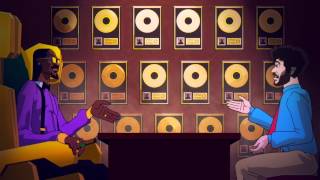
Watch the official Professional Rapper
music video
The Real Conflict Is Credibility
The song’s funniest moments often point to its deepest theme: credibility. Lil Dicky admits he came from comfort, not chaos. He talks about suburban life, school pressure, and even using Bar Mitzvah money
to help start his rap path. In rap, where struggle stories often carry cultural weight, that is a risky confession.
But the song does not hide from that problem. It leans into it. Snoop’s questions push him to explain why he deserves space in the genre anyway. Lil Dicky’s answer is not that he lived the same story as everyone else. His answer is that he wants this badly, knows he is different, and thinks difference can be an asset.
Interpretation: This is the heart of the song. It argues that authenticity does not have to mean having the same biography as other rappers. It can also mean telling the truth about who they are.
Comedy Is the Method, Not the Message
One of the most important lines of thought in the track comes when Lil Dicky basically says his angle is to do rap differently. He sees a lane for funny type rap
, but he does not present humor as a gimmick. He presents it as his honest voice.
That is why the song works. He is not joking because he cannot rap. He jokes while also showing technical skill. Mid-song, he speeds up and stacks internal rhymes to prove he can really perform. Snoop even cuts him off because the point has been made.
So when Snoop challenges him, the issue is no longer raw ability. It is whether wit, awkwardness, and self-awareness can belong in a genre that often values hardness and confidence.
Snoop Dogg as Gatekeeper and Co-Sign
Snoop Dogg’s role is crucial. He is not just a feature; he is the industry, the culture, and the old guard in one character. His calm but skeptical presence gives the song stakes.
When he pushes back, he sounds like someone defending rap’s traditions. When Lil Dicky says he wants to do things his own way, Snoop answers from experience: the old methods already work. That clash makes the song bigger than one artist. It becomes a debate between innovation and tradition.
In the end, Snoop does not fully surrender, but he gives Lil Dicky a shot. That matters symbolically. The song imagines acceptance not as instant praise, but as conditional access earned through nerve, talent, and persistence.
How the Sound Supports the Story
The production is understated, which is exactly the right choice. Rather than a huge chorus or dramatic beat switch, the instrumental stays loose and conversational. That leaves room for timing, pauses, and character.
Because the beat does not crowd the vocals, listeners focus on the interview format. The song almost feels like theater over hip-hop drums. That stripped-back style helps every exchange land, from the awkward politeness to the brash confidence.
There is also a meta joke in the hook section. Snoop asks Lil Dicky to come up with one on the spot, and the result is weak. That moment is funny, but it also humanizes him. For all his ambition, he is still unfinished. He wants to be great, but he is still learning how.
I just wanna do it my wayturn the whole game sideways
Those brief lines sum up the song’s larger purpose: not simply joining rap, but bending its expectations.
Why the Song Still Connects
Part of the lasting appeal is that the song understands insecurity. Even while Lil Dicky boasts, they also sound nervous, overeager, and aware of how unusual they seem. That mix makes the character feel human.
The animated music video reinforces that concept by turning the interview into a visual comedy piece, while also placing Lil Dicky among rap icons during his speech about greatness, as noted by Wikipedia. The image is aspirational and funny at once, which is exactly his brand.
Final Take on the Song’s Meaning
The meaning of Professional Rapper Lil Dicky, Snoop Dogg is about asking for permission and challenging the idea that permission is needed at all. It is a song about earning a place in hip-hop while also arguing that the rules of entry are too narrow.
Interpretation: At its core, the track says an artist can be strange, privileged, funny, self-conscious, and still be real if they tell the truth well enough. That is why the song feels like Lil Dicky’s thesis statement. It explains not just who they are, but how they plan to survive in rap by refusing to sound like anyone else.
Disclaimer: This interpretation is based on the song’s lyrics, performance, and public release context. Meaning can vary from listener to listener.








