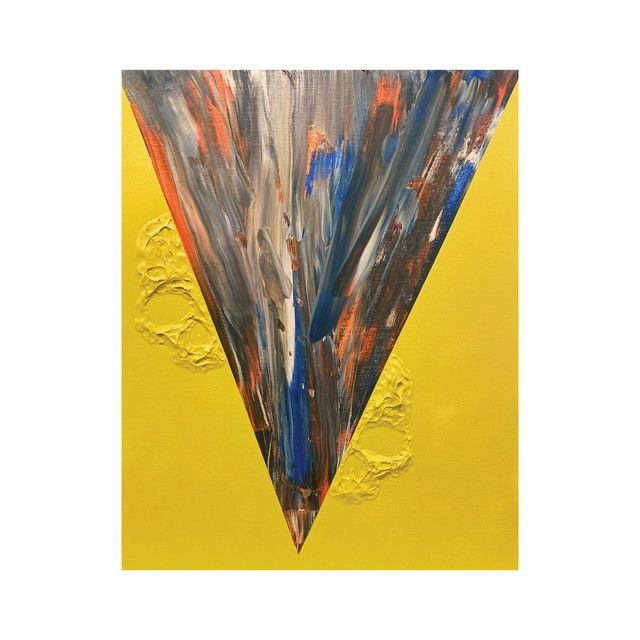
AUTOBOTO by Lupe Fiasco, Nayirah
The meaning of AUTOBOTO Lupe Fiasco, Nayirah centers on survival through skill. The song sounds like a victory lap, but it is also a defense statement. Lupe Fiasco frames himself as someone moving through danger, judgment, and confusion by staying mentally quick, lyrically flexible, and emotionally controlled.
"AUTOBOTO" - Lupe Fiasco, Nayirah
Ain't nothing to it, ain't nothing to it (yeah, yeah, yeah, yeah)
Welcome back, you feel me (yeah, yeah, yeah, yeah)
Loading lyrics...
Unable to load lyrics
We're unable to display the lyrics at this time. Please try again later.
Rather than telling one simple story, the track stacks images of courtrooms, streets, floods, cars, and ghosts. Together, those images suggest a mind under pressure that still refuses to lose control.
A Hook About Motion, Control, and Pressure
The chorus gives the song its core idea. When Lupe says I defend myself in court
, he turns rap into a trial. He is not just performing; he is arguing for his own value. The next phrase, this is sport
, changes the mood. That courtroom is also an arena.
That dual image matters. The speaker feels judged, but they also feel ready. The line signals from the source
suggests instinct, inspiration, or even spiritual guidance. Then twist and I contort
shows adaptability. They survive because they can bend without breaking.
The Porsche image completes the thought. Just feel like I'm a Porsche
and the repeated Carrera reference point to speed, design, and elite control. Interpretation: the car is less about luxury than precision. Lupe presents himself as a machine built for high-pressure movement.
Watch the official AUTOBOTO
music video
The Verses Turn Brag Rap Into Social Mapping
One reason the song feels dense is that Lupe moves from self-mythology to social commentary very fast. He starts with ego and athletic language, then jumps into weather and disaster images. Rising seas, mud, and floods suggest systems bigger than any one person.
Interpretation: those flood images may symbolize social collapse, state power, or the way violence spreads beyond local control. When he asks how someone survives those waves, he seems to be saying that small, familiar street tools are useless against larger forces.
That idea becomes sharper in the Chicago section. Lupe references neighborhood separation and gang identity in a way that feels lived-in rather than decorative. He points to how people are sorted by blocks and affiliations, then contrasts those divisions with a wider awareness of power.
This is classic Lupe Fiasco. Across his career, he has often mixed wordplay with social analysis, from Food & Liquor to later concept-heavy work documented by labels and music press such as Atlantic Records and The FADER. In this track, that habit appears in compressed form.
Identity Keeps Splitting and Multiplying
The second verse gets even more unstable. It moves through threats, memory, image-making, and authorship. References to hair, cameras, and headshots blur violence and performance. A “headshot” can suggest murder, photography, branding, or a viral image.
That ambiguity is the point. Lupe seems interested in how a rapper becomes both a real person and a public object. The song keeps asking who is speaking, who is writing, and who gets credit. When he mentions ghostwriting and not knowing who wrote those
, it sounds like identity itself is slipping.
Interpretation: this could be read as a comment on rap industry labor. It may also be a deeper line about artistic fragmentation, where the public persona grows so large that even the artist feels split from it.
Why Nayirah Matters to the Song
Nayirah helps the record feel smoother and more dreamlike. Her presence makes the repeated hook sound less harsh and more hypnotic. That matters because the song is full of conflict, yet it rarely sounds chaotic.
Instead, the refrain glides. That glide reinforces the idea of motion under control. If Lupe’s verses are the sharp turns, Nayirah helps create the road beneath them.
How the Production Carries the Meaning
The production supports the song’s themes of repetition, velocity, and focus. The beat loops with a clean, sleek feel that matches the Porsche metaphor. It does not overwhelm the lyrics; it gives them a lane.
The repeated vocal pattern around Carrera almost works like a spinning wheel. It creates circular motion, making the listener feel the same return-and-push that the lyrics describe. Court, sport, source, contort, Porsche: even the rhyme chain feels engineered.
Lupe has long been praised for technical writing and layered rhyme construction by critics including Pitchfork and Rolling Stone. Here, the rhyme scheme is one of the meaning-making tools. The listener hears flexibility before they fully decode it.
The Best Way to Read AUTOBOTO
The simplest reading is that the song is about lyrical mastery under pressure. Lupe portrays himself as agile enough to beat legal, cultural, and artistic challenges.
A deeper reading is that the track shows how modern identity gets tested by larger systems: the justice system, street politics, the music industry, and public image. In that view, the hook is not just a flex. It is a survival method.
Final Take
For most listeners, the meaning of AUTOBOTO Lupe Fiasco, Nayirah comes down to one idea: they survive by staying mobile in mind and language. The song turns speed into philosophy.
Its flashy surfaces matter, but the deeper point is discipline. Lupe does not present defense as weakness. They make it sound like art.
Disclaimer: This article offers an interpretation of the song based on its lyrics, performance, and available artist context. Meanings can vary from listener to listener.








