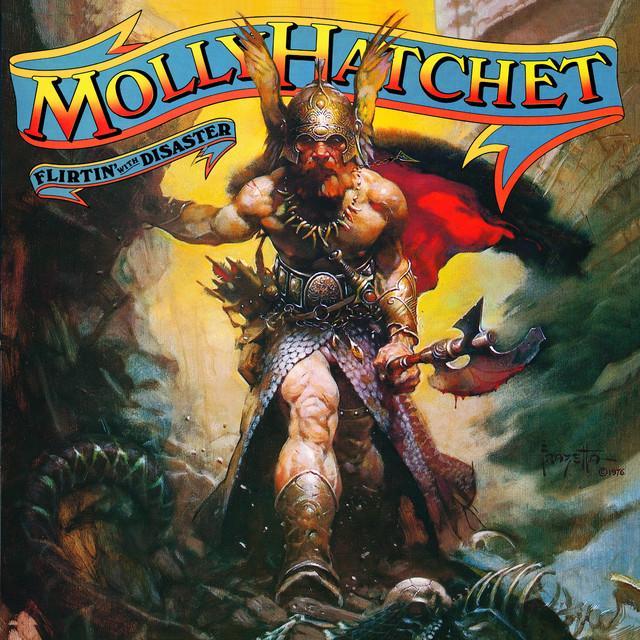
Why 'Flirtin' with Disaster' Still Hits Hard
The meaning of Flirtin' with Disaster Molly Hatchet comes down to one sharp idea: they turn reckless motion into both a thrill and a warning. The song sounds like freedom at full speed, but the words keep hinting that this ride could end badly.
"Flirtin' with Disaster" - Molly Hatchet
I'm flirtin' with disaster
I've got the pedal to the floor
Loading lyrics...
Unable to load lyrics
We're unable to display the lyrics at this time. Please try again later.
Released in 1979 as the title track from Molly Hatchet's second album, it became the band's best-known song and reached No. 42 on the Billboard Hot 100 in 1980. It was produced by Tom Werman, and its hard, three-guitar sound helped define the band's place in Southern rock and hard rock. These facts are widely documented by reference sources and music histories, including Songfacts and Wikipedia.
A Fast Song About Losing Control
At the most basic level, the narrator is moving through life too quickly to think clearly. Early lines describe a person with the accelerator down and no real brake. When they say pedal to the floor
, the image is simple: they are committed to speed, even if speed is the problem.
But this is not just a car song or a road song. The track connects motion with emotional collapse. The speaker admits they are out of resources and close to ruin, even using the phrase self destruction
. That matters because it shifts the song from fun rebellion to a more serious confession.
Watch the official Flirtin' with Disaster
music video
From One Person's Trouble to Everybody's Problem
One reason the song lasts is that it does not stay private for long. It starts with an individual voice, then expands into a broader complaint about how people live. The chorus moves from "I" to "we," which makes the danger feel social, not just personal.
When the band circles back to flirtin' with disaster
, they are naming a pattern, not a one-time mistake. They also point to all of this corruption
, which suggests a world already off balance. In that sense, the song is not only about one burned-out traveler; it is also about a culture that mistakes speed for purpose.
Interpretation: This is why the hook feels bigger than a party anthem. They are saying people often know a path is harmful and still keep taking it.
The Road Images Do the Heavy Lifting
The song's imagery is plain, but effective. Roads, speed, heavy weight, and gambling all point to pressure and choice. The line about a lonesome road
makes the speaker seem isolated, even while the band sounds huge and communal.
That contrast is important. The music feels confident, but the narrator sounds tired and unsure. They are moving forward, yet they do not know what they are chasing. Later, the song says the band has its sights ahead but is not sure what it is after. That is one of the smartest details in the lyric: ambition without clarity.
A brief map of the song's story
- The speaker begins in motion and already near trouble.
- They admit emotional and moral exhaustion.
- The chorus widens the issue into a shared human habit.
- Touring life appears as a real-world example of excess.
- The ending leaves them still trapped in the pattern.
Band Context Makes the Lyrics Clearer
Songfacts notes that the lyrics reflected Molly Hatchet's sudden fame, heavy touring, and the excess surrounding the band after its Platinum-selling debut. That context fits the words very well. The references to moving from town to town and being unable to slow down sound like life on the road, but also like life spinning out emotionally.
This does not mean every line is literal autobiography. Still, the background helps explain why the song feels lived-in rather than invented. Molly Hatchet came from Jacksonville, Florida, a scene also tied to Lynyrd Skynyrd, and their identity mixed Southern grit with louder hard-rock force. In that setting, a song about speed, pressure, and consequences makes perfect sense.
Why the Sound Feels So Dangerous
The production is a big part of the song's meaning. Tom Werman reportedly recognized it as a hit, and the final recording leans into momentum. The triple-guitar setup creates a thick, rushing sound, while the drums push everything forward without much space to breathe.
Danny Joe Brown's vocal helps too. He does not sing like someone calmly reflecting on mistakes. He sounds like someone living inside them. That rough delivery makes the warning believable.
Interpretation: The genius of the track is that it makes danger sound exciting. The listener feels the rush first, then hears the cost underneath it.
When we gamble with our time
We choose our destiny
Those two lines are the song's clearest statement of responsibility. After all the motion and swagger, they land on choice. People may live in a broken system, but they still help shape their futures by what they chase and what they ignore.
More Than a Biker-Bar Anthem
Because the song is loud, catchy, and often used in movies, TV, and games, it can be easy to hear it as pure attitude. But the meaning of Flirtin' with Disaster Molly Hatchet is more layered than that. It celebrates the energy of living hard while also exposing how empty that energy can become.
That tension is why the song still works. It understands that recklessness often feels powerful before it feels tragic. Molly Hatchet never hide the thrill, but they also never hide the warning.
In the end, the track is about choosing speed over reflection until the choice starts choosing for them. That is what gives the song its bite.
Disclaimer: This interpretation separates documented facts about the song's release and context from critical reading of its lyrics, and reasonable listeners may hear different shades of meaning.









