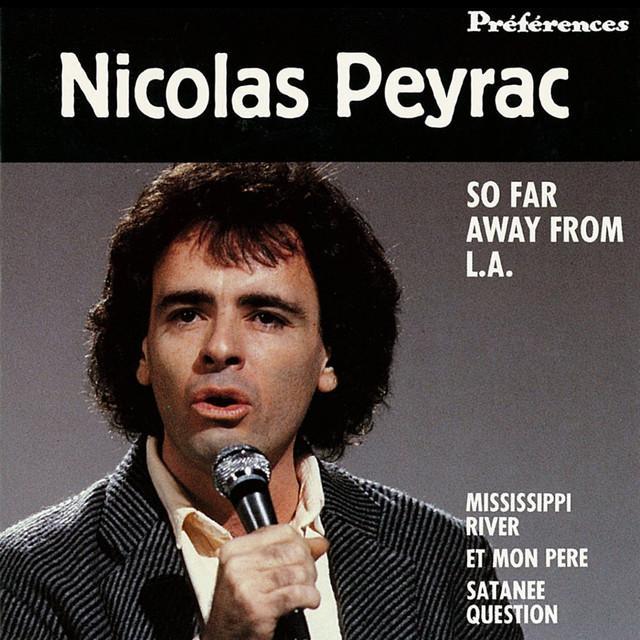
Et mon père by Nicolas Peyrac
The meaning of Et mon père Nicolas Peyrac comes through as a loving, slightly bittersweet look at an earlier generation. The song does not just describe a father. It builds a whole world around him: dance halls, café life, prewar and postwar culture, romance with more restraint, and music made before charts ruled everything.
"Et mon père" - Nicolas Peyrac
1. Quand vous dan-siez, en ce temps-là
Pas be-soin de pé-dal' wa wa
Loading lyrics...
Unable to load lyrics
We're unable to display the lyrics at this time. Please try again later.
At heart, the song asks what was gained and lost as society changed. Nicolas Peyrac uses his father as the emotional anchor, turning history into something personal.
A Father as a Doorway to the Past
The central idea is simple: the singer imagines the time when his father first arrived in adult life. Each verse paints a slice of that era, then circles back to the line about the father having just arrived. That repetition matters because it keeps history grounded in family memory rather than abstract nostalgia.
Interpretation: the father is both a real parent and a symbol of a generation. He stands for ordinary people who entered a world that still had, as the lyric suggests, some humanity
. The song admires that world, but it does not fully idealize it.
Instead, Peyrac mixes tenderness with irony. He smiles at old styles, old manners, and old artistic scenes, while also hinting that modern life has become faster, shallower, and more commercial.

Watch the official Et mon père
music video
Three Worlds the Song Compares
Each verse compares then and now in a different area:
- Dancing and nightlife — older music is shown as less fashionable but still full of energy.
- Love and courtship — relationships seem slower, more careful, and more serious.
- Singing and success — songs once needed patience, endurance, and real substance.
That structure makes the song feel almost cinematic. It moves from the dance floor, to private romance, to the music industry itself.
The opening images are lively. Peyrac points to a time before trend-driven sounds like bossa nova
or effects pedals defined cool. Instead, there is a rougher, more local atmosphere: dance circles, deep cellars, and an old upright piano. The scene may be less polished, but it feels alive.
Romance, Restraint, and Social Change
The second verse shifts from public culture to intimacy. Peyrac describes a period when couples touched du bout des doigts
—only at the fingertips—and when sex carried higher stakes. This is partly social history and partly commentary.
Interpretation: the song is not arguing that the past was morally pure. It is saying that desire once came with more patience, more risk, and perhaps more emotional weight. By contrast, the modern world is sketched as quick, transactional, and theatrical.
That idea appears in the verse's dry humor. Peyrac makes fun of modern seduction as all talk and little depth. The joke keeps the song from becoming preachy. They are hearing criticism, but in a playful register.
Culture References That Build Meaning
One of the richest parts of the song is its list of cultural names. Aragon and Sartre place the father's world inside French literary and political life. Trenet, Brassens, Bécaud, and Brel evoke a tradition of chanson where words mattered as much as melody.
These names are not random. They show a period when art, politics, and everyday conversation mixed in cafés and cabarets. Even a quick mention of the Café de Flore
helps create that image of a city where ideas and personalities crossed paths.
For American listeners, this matters because the song works like a memory map. If someone knows every reference, the song deepens. If not, the basic feeling still lands: the father entered a world of talk, art, and character.
How the Sound Carries the Message
Even from the lyric alone, the likely production style is clear. The repeated mention of a vieux piano
points toward chanson roots: piano-led storytelling, strong vocal phrasing, and arrangement choices that serve the words.
That matters for the meaning of Et mon père Nicolas Peyrac. A reflective song about memory would lose force in an overly glossy setting. The implied sonic world is intimate and human-scaled, matching the lyric's praise for a less mechanized culture.
Interpretation: if the arrangement leans warm and melodic, that warmth reinforces the song's core belief that memory lives in texture—voices, rooms, instruments, and habits—not just dates and events.
Is the Song Nostalgic or Critical?
The best answer is both. The song clearly prefers some values from the father's era: patience, craft, conversation, and emotional seriousness. In the music verse, Peyrac suggests that songs once took des années
to build a career, and that artists needed guts, not just market timing.
But the lyric also includes wit and exaggeration. That keeps the speaker from sounding like someone simply complaining that everything used to be better. They seem more interested in what modern life forgot.
A Personal Story Hidden Inside History
The most touching moment is the self-aware one: the father plants the seed that will become the child, who later sings about him. That line turns a social portrait into a family loop. The son exists because of that older world, even as he stands apart from it.
So the song's real power is not in saying the past was golden. It is in showing how identity is inherited. A father arrives in one era, a son sings in another, and the song becomes their meeting place.
Why the Song Still Connects
What keeps this track meaningful is its balance. It is affectionate without being naïve, funny without being cold, and critical without sounding cruel. They can hear a son trying to understand what shaped him before he was born.
In that sense, the song is about more than one father. It is about generational memory itself—how people inherit values, habits, and losses from a time they never lived through.
Disclaimer: This interpretation is based on the lyrics provided and common critical reading practices. As with any song, listeners may hear meanings that differ from this reading.







