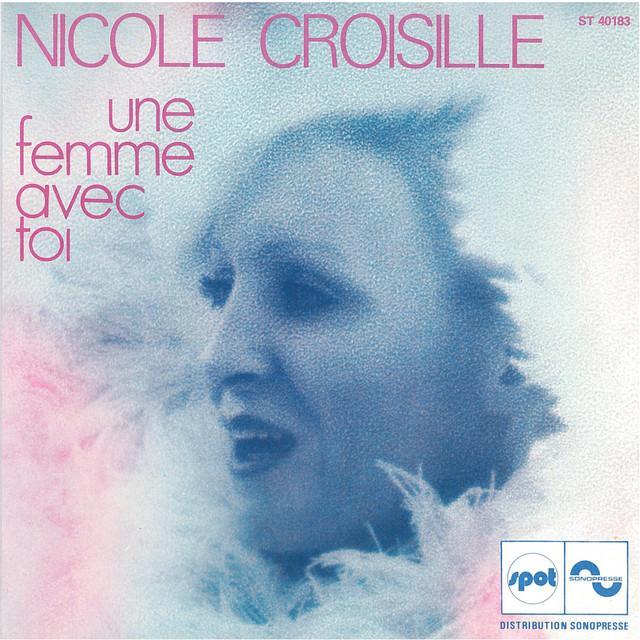
Why ‘Une femme avec toi’ Feels Transformative
The meaning of Une femme avec toi Nicole Croisille comes into focus quickly: this is not just a song about romance, but about becoming more fully oneself through love. In the lyric, the speaker looks back on empty social glamour, then contrasts it with a relationship that feels alive, generous, and real. What changes is not only their partner. What changes is their sense of identity.
"Une femme avec toi" - Nicole Croisille
Des hommes un peu bizarres
Aussi légers
Loading lyrics...
Unable to load lyrics
We're unable to display the lyrics at this time. Please try again later.
Nicole Croisille recorded the song in 1975 for the album Femme. According to widely cited discographic information, the track is credited to Fred Ferrari and Vito Pallavicini, with a French adaptation by Pierre Delanoë, and it became part of the run of 1970s songs that shaped Croisille’s public image as a singer of emotional, adult pop. Source
From glitter to emptiness
The song opens by describing a world of stylish but insubstantial men. The singer remembers people who seemed sophisticated, yet emotionally hollow. One of the sharpest images is the idea of men as light as cigar ash, and of parties that look grand but are really flimsy. When the lyric refers to châteaux de paille
, it suggests fake splendor: a life built on show, not substance.
That matters because the song’s love story begins in disappointment. Before meeting the beloved, the speaker is not simply single. They are stuck in a “golden desert,” surrounded by luxury without emotional nourishment. This contrast sets up the song’s real subject: the difference between performance and truth.
Watch the official Une femme avec toi
music video
The turning point is aliveness
When the beloved appears, the lyric changes temperature. The others are described as burying themselves in lifeless routines, while this person is unmistakably vibrant. The key phrase is tu étais vivant
. In plain terms, the speaker falls for someone whose energy cuts through the deadness around them.
The song strengthens that idea with childlike and almost mythic images. The beloved sings comme chante un enfant
, which suggests openness rather than calculation. Later, the lyric reaches for older, dreamlike imagery: white horses, a serious face, a bright smile, and a path toward light. None of these details are realistic in a strict sense. They work as emotional symbols.
Interpretation: these images make the lover seem both earthly and idealized. They are not just attractive. They represent a way out of spiritual boredom.
What the chorus really means
The chorus is simple, repetitive, and powerful. By repeating Une femme avec toi
, the song frames love as a state of recognition. The speaker is not saying they became a woman in some literal biological way. They are saying that, with this partner, they finally feel fully present in their own desire, tenderness, and self-worth.
That is why the refrain lands so strongly. The verses tell a story of false surroundings and loneliness. The chorus gives the emotional result: with this person, identity stops feeling abstract. It becomes embodied.
For American listeners, this is an important nuance in the meaning of Une femme avec toi Nicole Croisille. In English, the title can sound merely romantic. In context, it is closer to: “With you, I feel fully myself as a woman.”
A portrait of masculinity without aggression
Another striking part of the lyric is how it defines the beloved man. He is joyful, sensual, and kind. The repeated comparison to someone happy at the thought of love and wine frames masculinity as pleasure without cruelty. The lyric later makes the point even more clearly by praising him for being a man and being gentle, someone who knows how to make life beautiful.
That detail matters. The song does not celebrate domination. It celebrates tenderness. The beloved’s appeal lies in vitality and care, not power games.
Femme
Une femme
Avec toi
In this brief refrain, the song turns a private confession into an anthem-like statement. The repetition feels less like argument and more like revelation.
How the sound supports the message
Croisille’s 1970s recordings often live in a space between chanson, orchestral pop, and adult contemporary drama, and this song fits that world. Even without over-reading the arrangement, listeners can hear how the sweeping melody and emphatic chorus help sell the emotional transformation. The verses tend to move with storytelling clarity, while the refrain opens outward, sounding more declarative and more physical.
Croisille’s vocal style is crucial here. She was known not only as a singer but also as a dancer, mime artist, and screen performer, and that dramatic background helped shape her interpretive power. Source In this performance, they do not sound detached. They sound like someone moving from memory into certainty.
Why the song still resonates
Part of the song’s staying power is that it understands a common adult feeling: being surrounded by excitement yet feeling untouched by it. The lyric rejects fashionable emptiness and chooses emotional substance instead. That arc still feels fresh.
There is also a cultural layer. Une femme avec toi appeared on Croisille’s 1975 album Femme, and even the album title highlights questions of womanhood, identity, and intimacy. Source The song fits that frame perfectly. It is sensual, but its deepest message is inward: real love helps the speaker step into a truer self.
Final takeaway
The meaning of Une femme avec toi Nicole Croisille is about more than passion. It is about leaving behind a decorative but empty world and finding a bond that feels alive, kind, and clarifying. Through that relationship, the speaker does not disappear into love. They become more fully themselves.
Disclaimer: This interpretation is based on the published lyrics, recording context, and Nicole Croisille’s career era. As with any song, listeners may hear meanings that go beyond or differ from this reading.







