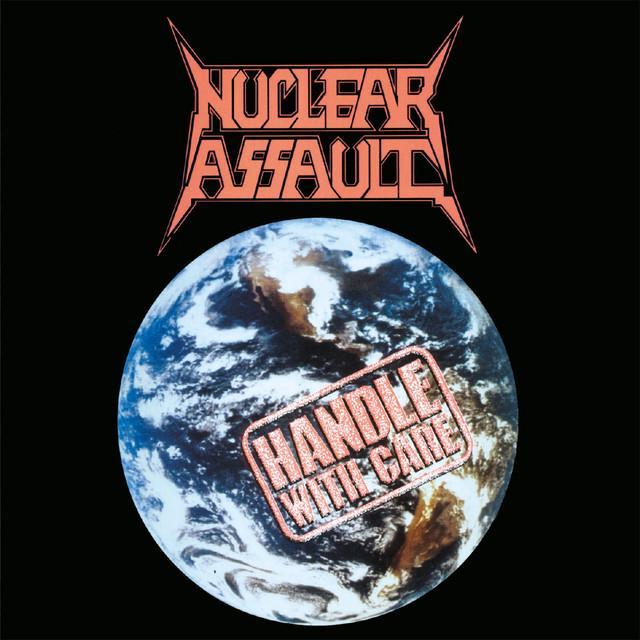
New Song by Nuclear Assault
Nuclear Assault were a key band in East Coast thrash, forming in New York City in 1984 and helping define the genre’s fast, political edge. Their catalog often mixed speed with social criticism, a pattern noted in overviews of the band’s history and output. That background matters for the meaning of New Song Nuclear Assault, because this track is not vague or abstract. It is a blunt protest against racism, double standards, and the kind of closed thinking that turns prejudice into policy.
"New Song" - Nuclear Assault
Shut tight, new ideas, they just always get passed by
Prejudice, living in their thoughts and deeds
Loading lyrics...
Unable to load lyrics
We're unable to display the lyrics at this time. Please try again later.
A Thrash Song With a Clear Moral Target
At its core, the song attacks bigotry. The opening idea compares some minds to Closed books
, suggesting people who refuse to learn, listen, or change. From there, the lyric moves quickly from private bias to public harm.
They describe prejudice as something that lives in both thoughts and actions. In plain terms, the song argues that intolerance is not just an opinion. It shapes how people treat others, who gets dignity, and who gets pushed aside.
That directness fits Nuclear Assault’s place in American thrash. The band emerged from the same 1980s scene that prized speed, anger, and political bite, and they became one of the best-known East Coast acts alongside bands like Overkill and Anthrax. Their history shows a long run of aggressive, socially alert music, from Game Over to later releases and reunions.

Watch the official New Song
music video
How the Verses Build the Argument
The song’s first verse sets up the problem as stubborn ignorance. New ideas are dismissed, and other people’s needs are ignored. That framing is important because it says racism begins with refusal: refusal to see others fully, refusal to rethink old beliefs, and refusal to share power fairly.
The next section sharpens the accusation. When the lyric says double standard's OK
, it is not endorsing that view. It is throwing the excuse back in the face of the person who believes it. The reply — this is insane
— gives the song its moral center.
Interpretation: The repeated challenge makes the speaker sound less like a storyteller and more like a witness confronting someone directly. The second-person address creates tension, as if the song is aimed at a racist individual but also at a wider culture that tolerates unfairness.
Fists, Lists, and the Language of Exclusion
One of the song’s sharpest images is the question about what someone has in their hand, followed by another one of your lists
. That detail suggests classification, gatekeeping, and the sorting of human beings into approved and disapproved groups.
It is a simple image, but it does a lot of work. A fist implies force or threat. A list implies bureaucracy, rules, and systems. Put together, they suggest that prejudice can be both violent and organized.
That is why the song feels bigger than an argument between two people. It points toward broader systems of exclusion: who gets hired, who belongs, who is treated as fully American, and who is not.
The Song’s Most Explicit Political Message
The third verse leaves little room for doubt. It rejects the idea that there is No place in this country
for equality’s enemies and then connects racist thinking to Nazi ideology and to slower-moving, everyday forms of American bigotry.
This is the most forceful part of the lyric because it names the tradition the song is fighting. Instead of treating racism as a minor social flaw, the song places it in a historical line of violent exclusion and authoritarian belief.
Interpretation: That move gives the track a warning function. They are not only condemning prejudice in the present. They are reminding listeners that such thinking has a history and that history should have discredited it long ago.
How the Sound Carries the Meaning
Even without a detailed production credit sheet in the provided context, the song’s rock and thrash setting matters. Nuclear Assault built their reputation on sharp riffs, fast tempos, and a hard-edged attack, especially during the band’s peak years in the late 1980s. Albums like Survive and Handle with Care helped establish them commercially and artistically.
That style supports this lyric well. Fast, tense music makes the message feel urgent rather than academic. Short, repeated lines hit like slogans shouted in frustration. In a thrash context, the anger is not decorative. It underlines the song’s refusal to be polite about injustice.
Glenn Evans, credited here as the writer, was the band’s longtime drummer and part of the classic lineup. That is worth noting because the song’s rhythm-first drive likely benefits from a writer who understands how percussive repetition can hammer home an argument.
Why the Chorus Matters So Much
The chorus returns again and again to the same complaint: some people defend unfair treatment, and the speaker rejects it completely. That repetition gives the track a protest-song structure.
Rather than developing a complicated plot, the song keeps circling one ethical truth. Equal treatment should not be optional. If someone needs a double standard to protect their worldview, the song says that worldview is already broken.
This is a big part of the meaning of New Song Nuclear Assault. The track is not searching for ambiguity. It is using repetition to make a simple principle impossible to miss.
Final Take on the Meaning
The meaning of “New Song” by Nuclear Assault is a furious rejection of racism, white identity politics, and exclusionary thinking. Its images of shut minds, fists, and lists show how prejudice moves from belief into action. Its repeated attack on a double standard
turns the song into a demand for equal human worth.
In that sense, the song works as both social criticism and moral confrontation. They are not asking listeners to admire the writing from a distance. They are pushing them to choose a side.
Disclaimer: This interpretation is based on the provided lyrics, established facts about Nuclear Assault’s history, and the song’s language and tone. As with any song, listeners may hear additional meanings that differ from this reading.








