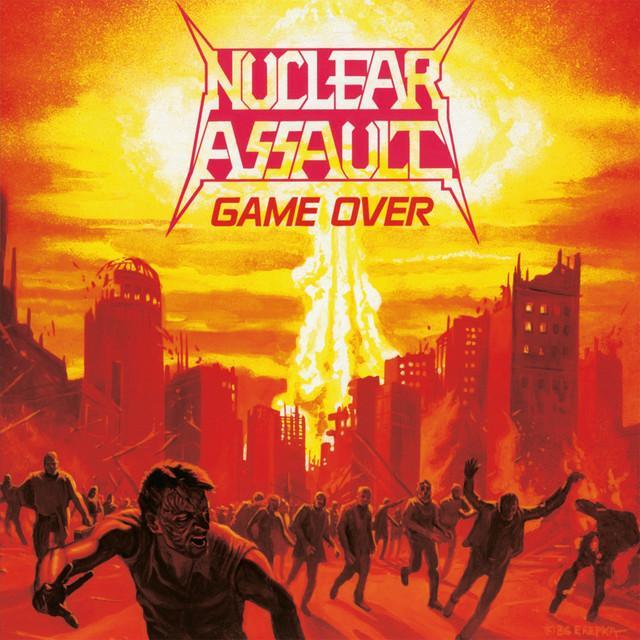
Why 'Radiation Sickness' Feels So Merciless
The meaning of Radiation Sickness Nuclear Assault is brutally clear: this is a song about what comes after the bomb, not the blast itself. Many war songs focus on explosions, combat, or revenge. This one is colder. It imagines the awful stretch of time when the survivors realize they are not safe after all.
"Radiation Sickness" - Nuclear Assault
Has ruined your world
Flags of death
Loading lyrics...
Unable to load lyrics
We're unable to display the lyrics at this time. Please try again later.
Nuclear Assault were one of the key East Coast thrash bands of the 1980s, formed in New York City in 1984 and led by members including John Connelly, Dan Lilker, and Glenn Evans, according to the band history summarized by Wikipedia. That background matters because thrash often turns political fear into speed, noise, and shock. In this song, the band use that style to turn nuclear anxiety into something immediate and physical.
A Post-Apocalypse With No Escape
At its core, the song describes a world already destroyed. The opening idea is that destruction has already won, and the listener is left inside the ruins. When the lyric says ruined your world
, it is not speaking in metaphor first. It points to total collapse: home, order, safety, and future all gone at once.
From there, the song sharpens its real horror. The survivor has made it through the first wave, but that survival becomes meaningless. The line you've survived
quickly flips into doom. The song’s cruel message is simple: living through the attack only leads to a slower death afterward.
Interpretation: That twist is what gives the song its emotional punch. Nuclear Assault are not just describing death. They are describing false hope.

Watch the official Radiation Sickness
music video
The Lyrics Turn the Listener Into the Victim
One of the most effective choices in the song is its point of view. It keeps addressing you
, which puts the listener inside the scene. Instead of hearing about strangers in a disaster, they are made to crawl through the remains of what used to be home.
That detail matters. The lyrics mention movement through halls and shelters, but these are not places of comfort. They are spaces of panic, decay, and failed protection. Even when the song says shelter deep
, it does not offer relief. The next idea wipes that hope away by insisting there is no rescue.
Run and hide
There's no help
You will die
This is the only real instruction the song gives, and it is deeply ironic. It tells people what to do, then says it will not matter. That contradiction makes the chorus feel like a death sentence, not advice.
Fear, Rot, and Lead Walls
The imagery stays physical and ugly. The body is not just threatened; it is already failing. References to flesh rotting and pain lasting for the rest of life push the song away from action-movie disaster and toward body horror. Radiation is invisible, but the lyrics make its effects gruesomely visible.
The image of people hiding behind lead walls is especially strong. Lead suggests science, protection, and emergency planning. But in the song, even that feels desperate and temporary. The people are not saved citizens in secure bunkers. They are trapped creatures delaying the inevitable.
Interpretation: The song may be read as a criticism of civil-defense fantasies. It suggests that once nuclear destruction starts, technical solutions and shelter plans can become tragic illusions.
Why the Repetition Matters So Much
Thrash metal often uses repetition for impact, but here it does more than create a hook. It recreates panic. The repeated warnings feel like sirens, emergency broadcasts, or a mind stuck on one terrible fact.
Later, the chant-like ending reduces language almost to pure terror. That move fits the subject. In a true catastrophe, thought becomes basic: hide, hurt, die. The song’s simple vocabulary is part of its power, because it sounds like a person whose world has shrunk to instinct.
This is also where Glenn Evans’ writing credit matters from the provided context. As drummer and songwriter, he would understand how rhythm can shape meaning. The words hit hard partly because they are built for attack: short lines, harsh stops, and repeatable phrases.
How the Sound Supports the Meaning
Even without diving into full production notes, the style of Nuclear Assault helps explain the song. The band came from the American thrash scene, a genre known for fast tempos, aggressive riffing, and shouted urgency. Their commercial peak came with Survive (1988) and Handle with Care (1989), both charting on the Billboard 200, as noted in the same Wikipedia entry. That era is important because the band often matched social anxiety with relentless momentum.
In a song like this, listeners can expect sharp guitar attacks, pounding drums, and vocals that sound more like a warning than a confession. That matters to the meaning of Radiation Sickness Nuclear Assault because the music does not soften the message. It drives it forward like an incoming threat.
The likely effect is claustrophobic. Fast thrash usually feels explosive, but this song’s subject makes speed feel inescapable, as if death is rushing closer no matter where the victim runs.
A Nuclear Warning, Not Just a Horror Story
There is a surface-level reading of the song as pure apocalypse fiction. It definitely works that way. The images are vivid, the stakes are extreme, and the language is cinematic.
But there is also a stronger reading. Interpretation: the song works as a warning about nuclear war and the fantasy that anyone really “wins” it. The bomb does not end with impact. Its damage lingers in bodies, buildings, and minds. By focusing on radiation sickness instead of military victory, Nuclear Assault strip away any heroic frame.
That is why the song still lands. It is not about glory, strategy, or even battle. It is about the slow truth that follows mass destruction.
The Lasting Meaning
In the end, the meaning of Radiation Sickness Nuclear Assault is the horror of surviving into hopelessness. The song says the worst part of catastrophe may be the aftermath, when people discover that hiding is not healing and survival is not rescue.
That is what makes the track so merciless. It does not ask whether the world can be saved. It shows what it feels like when that question has already been answered.
Disclaimer: This interpretation is based on the lyrics provided, the band’s historical context, and the conventions of thrash metal. Meaning can remain open to different listener readings.








