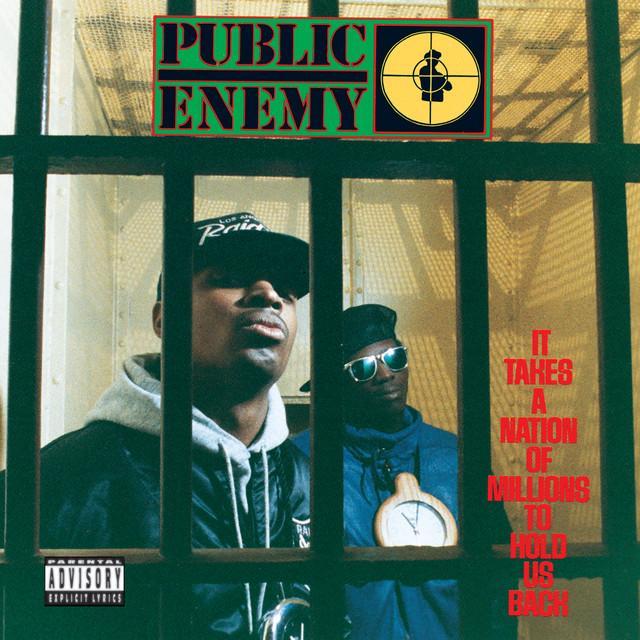
Why Public Enemy Said Don't Believe the Hype
Public Enemy’s 1988 single is more than a rap anthem. The meaning of Don't Believe The Hype Public Enemy is a direct challenge to the stories that media, critics, and radio were telling about the group.
"Don't Believe The Hype" - Public Enemy
Caught you lookin' for the same thing
It's a new thing, check out this I bring
Loading lyrics...
Unable to load lyrics
We're unable to display the lyrics at this time. Please try again later.
Released in June 1988 on It Takes a Nation of Millions to Hold Us Back, the track became one of the clearest mission statements of Public Enemy’s career. Factually, it arrived during a moment when the group was facing backlash and suspicion from parts of the press and music industry. Chuck D later said the song was influenced in part by Noam Chomsky’s ideas about mass media and propaganda. It also followed criticism around Public Enemy’s early records and image.
A Warning Hidden Inside a Hit
At its core, the song tells listeners to question public narratives. Public Enemy are not only defending themselves. They are teaching a broader lesson: the loudest version of a story is not always the truest one.
When Chuck D repeats Don’t believe the hype
, he is talking about more than gossip. He means the machinery around fame, scandal, and politics that can turn people into symbols. In the song, they argue that the media can label someone dangerous, criminal, or extreme before the audience ever hears the full message.
That is why lines about being called a criminal or enemy matter. The group present themselves as misunderstood figures whose politics are being flattened into fear. Interpretation: the song works as both self-defense and a media-literacy lesson.
Watch the official Don't Believe The Hype
music video
Why the Group Felt Misread
Public Enemy emerged at a time when hip-hop was still being treated cautiously by many gatekeepers. Their militant style, pro-Black language, and confrontational name made some commentators react before listening closely.
In the song, Chuck D pushes back on that quick judgment. He says he is not a racist
and frames the group’s work as education as much as performance. That matters because one of the song’s biggest themes is distortion: critics hear anger and miss purpose.
Research around the song points to specific media tension. It has been connected to dismissive coverage from radio and the press, including criticism after “Public Enemy No. 1.” Chuck D also later linked the track to Manufacturing Consent, showing that the song was built from a serious idea about how public opinion gets shaped.
The Verses Turn Image Into Argument
One reason the track still feels sharp is that its verses move fast between personal defense and system-level critique. Chuck D does not only say that journalists got his group wrong. He suggests that false stories are part of a wider pattern.
He attacks false media
and calls out writers who reduce complex art into easy labels. He also points to radio programming that would play rap late at night but avoid it in daytime slots, implying that institutions wanted the music’s energy without fully embracing its message.
A Brief Lyric Snapshot
The song’s most pointed media complaint appears in this short passage:
In the daytime the radio's scared of me
They can't come on and play me in primetime
The idea is clear even without the full verse. Public Enemy felt accepted only in limited spaces, as if mainstream platforms wanted control over when and how their voice could be heard.
The Sound Makes the Message Hit Harder
The production is a huge part of the song’s meaning. Built by the Bomb Squad, the track layers hard drums, siren-like horns, scratches, and a crowded sonic attack. Facts commonly cited about the production include samples from Melvin Bliss’s “Synthetic Substitution” and James Brown’s “Escape-Ism.”
That sound is not polished in a smooth, radio-friendly way. It is dense and forceful. Interpretation: the beat sounds like information overload turned into resistance. Instead of escaping noise, Public Enemy weaponize it.
This matters for the meaning of Don't Believe The Hype Public Enemy because the music mirrors the lyrics. The group are surrounded by pressure, headlines, and static, so the track answers back with volume, urgency, and control.
More Than a Diss Track
It would be easy to hear the song as a simple attack on critics. But it is broader than that. The hook has lasted for decades because it applies to politics, celebrity culture, and everyday news consumption.
When Chuck D refers to being a public enemy
, he turns a label into a challenge. If society treats outspoken Black artists as threats, then the problem may not be the artists. It may be the system that fears what they expose.
That is why the song remains relevant. In later comments, Chuck D described modern life as a disinformation age, which connects neatly back to this record’s core warning. The song asks listeners to slow down, check motives, and think before accepting the official version.
Why the Message Still Lands
Part of the song’s legacy comes from timing. It Takes a Nation of Millions to Hold Us Back became one of rap’s landmark albums, reaching No. 1 on Billboard’s Top R&B/Hip-Hop Albums and later earning platinum certification. But the track’s staying power comes from its clarity.
Public Enemy turn frustration into a public lesson:
- media attention is not the same as truth
- controversy can be manufactured
- strong political art is often simplified by outsiders
- listeners have a duty to think critically
In that sense, the song is both of 1988 and far ahead of it. Its warning about hype now fits cable news, viral posts, and online outrage just as easily as old-school press coverage.
Final Take on the Song’s Core Meaning
The meaning of Don't Believe The Hype Public Enemy is about refusing manipulation. Public Enemy defend their name, challenge hostile coverage, and teach skepticism as a survival skill.
Their message is simple but not shallow: institutions can sell a story about people before those people get to define themselves. The song urges listeners to resist that shortcut and look deeper.
Disclaimer: This interpretation blends documented context with critical reading of the lyrics and sound. As with any song, some meanings remain open to the listener.







