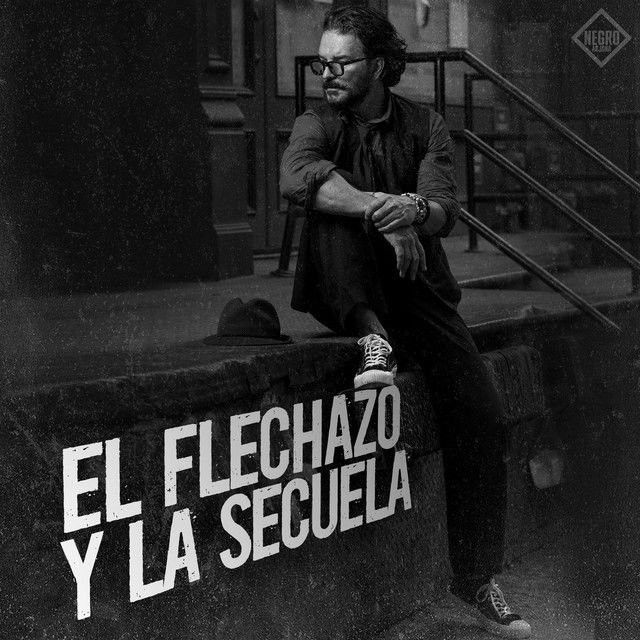
El Flechazo y la Secuela by Ricardo Arjona
The meaning of El Flechazo y la Secuela Ricardo Arjona centers on a sudden romantic impact and the emotional damage that comes after it. The title says almost everything: flechazo is the lightning strike of instant attraction, while secuela is the aftereffect, the scar, the thing that stays.
"El Flechazo y la Secuela" - Ricardo Arjona
Y ese vestido de gasa dibujaba todo
Yo que nunca tuve nada iba en estampida
Loading lyrics...
Unable to load lyrics
We're unable to display the lyrics at this time. Please try again later.
Ricardo Arjona has long built songs from sharp images, irony, and plainspoken heartbreak. On his official site, his catalog shows how often he writes about desire mixed with regret. This song fits that pattern, but it feels especially compact and direct. It tells the story of someone who fell fast, loved deeply, and was left with only fragments.
The Love Story Ends Almost Before It Starts
At the start, the song paints a vivid scene. The narrator sees the woman in a striking, almost cinematic way, noticing details that make the attraction feel immediate and overwhelming. He is not cautious. He is already running toward emotion before he understands what it will cost.
That is why one of the most revealing phrases is me enamoré enseguida
. In plain English, he fell in love right away. This is not a slow-burn relationship song. It is about emotional speed, about how desire can outrun wisdom.
Just as important, the narrator frames himself as someone lacking security or stability. He says, in effect, that he had little to offer except feeling and imagination. That creates a gap between what he wants and what he thinks he deserves.

Watch the official El Flechazo y la Secuela
music video
A Speaker Who Wants More Than He Was Given
One of the song’s strongest tensions is between a brief connection and a huge emotional response. The narrator admits he may have been just one night, but he wanted permanence. He did not want a passing encounter; he wanted a life.
That imbalance drives the whole lyric. He receives only el beso que me diste a medias
, a half-given kiss, but treats it like evidence of a much larger bond. The image suggests hesitation, incompleteness, or mixed signals. He got enough affection to remain attached, but not enough to build a real relationship.
Interpretation: Arjona often writes characters who confuse intensity with destiny. Here, the narrator may be sincere, but he may also be trapped by his own idealism. He turns a partial moment into a lasting wound.
Why the Chorus Hurts So Much
The chorus distills the song’s emotional logic. The narrator says he is left with El flechazo y la secuela
. In other words, he still carries both the thrill and the damage. The rush of attraction was real, but so is the aftermath.
This is what makes the song stronger than a simple breakup ballad. It is not only about losing someone. It is about how a beginning can injure them more than an ending. The memory of the first spark becomes inseparable from the pain that follows.
Y ahora solo tengo
el beso que me diste a medias
El flechazo y la secuela
Those lines work because they reduce the relationship to a few remains: one incomplete kiss, one instant of impact, and one long emotional consequence.
Power, Memory, and the Rules of Uneven Love
In another key section, the narrator admits that she won every battle sin mover un dedo
. He, by contrast, lost everything by investing all he had. That image turns romance into war, but not in a dramatic or macho way. It shows emotional imbalance.
Then comes one of the song’s clearest ideas: in stories of two people, the one who loves less often has more power. That is a hard truth in many Arjona songs. Love is not always equal, and vulnerability does not guarantee reward.
The line te quiero todavía
makes the point even sadder. He does not speak from fresh anger. He speaks from ongoing attachment. The relationship may be over or never fully formed, but the feeling remains alive.
The Imagery Turns Desire Into Myth
Arjona fills the lyric with unusual images: a flower in her hair, clouds, moonlight, rare creatures, impossible gestures. These details matter because they show how the narrator sees her. She is not just a person to him. She becomes strange, beautiful, and almost unreal.
Interpretation: When he describes her as rare or unreachable, he may be revealing more about his own obsession than about her actual personality. He builds a myth around her, and that myth keeps him stuck.
This matters for the meaning of El Flechazo y la Secuela Ricardo Arjona because the song is not only about heartbreak. It is about imagination after heartbreak. He keeps enlarging the memory instead of shrinking it.
How the Music Supports the Lyrics
Arjona’s discography overview shows how often he blends Latin pop with singer-songwriter storytelling. In this song, the likely effect is emotional closeness rather than grand drama: a steady tempo, melodic phrasing, and a vocal delivery that lets the words carry the pain.
That matters because the lyric is full of big feelings, but the structure is controlled. The melody does not need to shout. It circles the wound. The repeated chorus acts like memory itself, returning to the same point because the narrator cannot move past it.
The Big Takeaway From the Song
At its core, this is a song about what happens when one person experiences a brief romantic encounter as life-changing, while the other may not. The result is not just disappointment. It is emotional residue: longing, replayed memories, and love that refuses to fade.
That is why the title is so effective. The arrow is the beginning. The sequel is the pain. Arjona turns that contrast into a simple but memorable idea: sometimes the fastest love leaves the longest shadow.
Disclaimer: This interpretation is based on the lyrics, performance, and known artistic context. As with any song, listeners may hear different meanings in the details.







