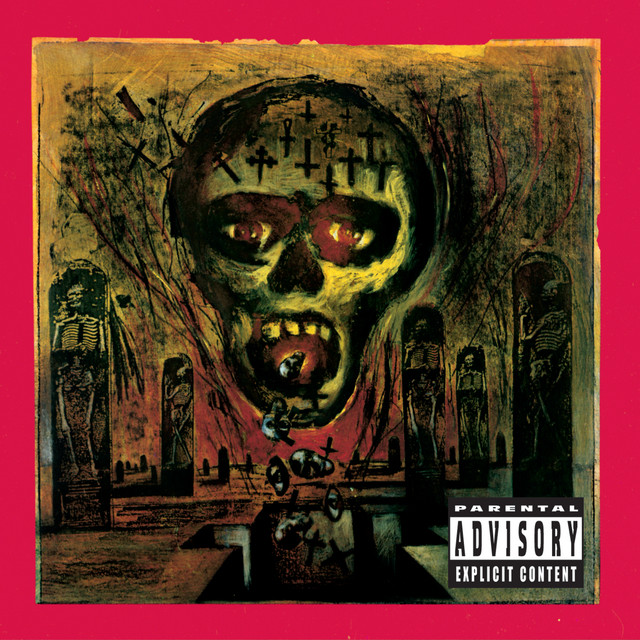
War Ensemble by Slayer
Slayer’s “War Ensemble” hits like a detonation, but the shock is not empty. The song uses violent language, military imagery, and relentless speed to show how war can swallow human feeling. For readers searching for the meaning of War Ensemble Slayer, the clearest answer is this: they present war as a machine of propaganda, strategy, and slaughter, where survival replaces morality.
"War Ensemble" - Slayer
Burial to be
Bones shining by the night
Loading lyrics...
Unable to load lyrics
We're unable to display the lyrics at this time. Please try again later.
The track opens Seasons in the Abyss, released in 1990, and it was written by Jeff Hanneman and Tom Araya. Those credits are widely documented in official album listings and music databases, while the album itself marked a major moment in Slayer’s career as they pushed their thrash sound into a darker, more focused form.
A Song About War as System, Not Heroism
At its core, “War Ensemble” is not about a noble battlefield. It is about organized violence. The lyrics move through propaganda, military tactics, death counts, and psychological manipulation. Even the title suggests a group performance, as if war is a giant production with many players acting in sync.
That idea appears right away with propaganda war ensemble
. In plain terms, the song links combat with messaging and control. War is not just guns and bombs. It is also the stories nations tell to justify what they do.
Another key line is campaign of elimination
. That phrase strips away any romance and makes war sound like a cold program. People become targets, and victory becomes an administrative goal. The lyrics keep returning to this loss of humanity.

Watch the official War Ensemble
music video
The Voice Inside the Battlefield
The song shifts between a broad view of war and a chilling combat voice. When the chorus lands, it becomes much more personal and ugly.
The sport is war, total war
When the end is a slaughter
This is the song’s harshest idea. Interpretation: they are not saying war really is a sport in any healthy sense. They seem to be exposing the twisted mindset that treats killing like competition. That reading gets even darker with How many people I can kill?
, which reduces human life to a score.
In that moment, the song sounds less like a report and more like a possessed point of view. The speaker becomes the product of militarized thinking. That is what makes the chorus so disturbing.
How the Verses Build a World of Control
The verses read almost like battlefield commands. They mention reserve forces, front lines, bombardment, breakthrough, and attrition. Step by step, the song shows war as planning and pressure, not just random chaos.
One important phrase is twisted psychology
. That idea ties the whole song together. The damage is physical, but it is also mental. War changes language, judgment, and emotion. It teaches people to think in terms of elimination, submission, and numbers.
The image of bodies and bones in the opening lines also matters. Instead of celebrating bravery, the song starts with death already present. That choice tells listeners what kind of world they are entering.
Why the Sound Matters So Much
A big part of the meaning of War Ensemble Slayer comes from how it sounds. The song is famously fast and precise, driven by hard-picked riffs, rapid double-bass drumming, and shouted vocals. Produced by Rick Rubin, whose work with Slayer helped sharpen their attack in this era, the recording is lean rather than muddy. That clarity makes every riff hit with military force.
Factual context: “War Ensemble” appears on Seasons in the Abyss, the band’s fifth studio album, released in 1990. Rick Rubin is credited as producer on the album, alongside Slayer.
Interpretation: the music mirrors the subject. The tight rhythm section feels like marching discipline, while the guitar leads feel like sirens or aerial strikes. Araya’s delivery is especially important because he does not sound sorrowful or reflective. He sounds urgent, commanding, almost consumed by the violence he describes.
That keeps the song from becoming a distant anti-war statement. It throws listeners into the machinery.
History in the Background
Slayer often wrote about warfare, death, and the darkest parts of history, especially through Jeff Hanneman’s interest in military themes. That does not automatically mean endorsement. In heavy metal, especially thrash, extreme imagery is often used to confront horror head-on rather than soften it.
In “War Ensemble,” there are hints of large-scale European conflict, including a reference to the Rhine. The song does not tell one neat historical story from start to finish. Instead, it blends modern and older images of conflict into one continuous nightmare. That broad approach makes the message bigger: war keeps repeating because the mindset behind it keeps repeating.
Two Strong Ways to Read It
A soldier’s-eye descent
Interpretation: one reading is that the song enters the mind of a fighter who has been reshaped by war. In this view, the chorus shows moral collapse. Killing becomes measurable achievement, and identity dissolves into mission.
A critique of war culture
Interpretation: another reading is that the song attacks the institutions around war, especially propaganda, strategy talk, and public support. In this view, the song is about how systems make mass death feel normal, even successful.
Both readings work because the lyrics move between personal violence and large-scale organization.
Why “War Ensemble” Still Hits
The song remains powerful because it does not offer comfort. It makes war sound efficient, addictive, and horrifying at once. For anyone asking about the meaning of War Ensemble Slayer, the track’s lasting point is that war destroys more than bodies. It twists thought, language, and values until slaughter can be mistaken for victory.
That is why the song still feels so intense decades later. It is not just loud. It is a portrait of what happens when violence becomes a system.
Disclaimer: This interpretation separates documented facts from critical reading. Like many metal songs, “War Ensemble” invites more than one meaning, and listeners may hear its imagery differently.






