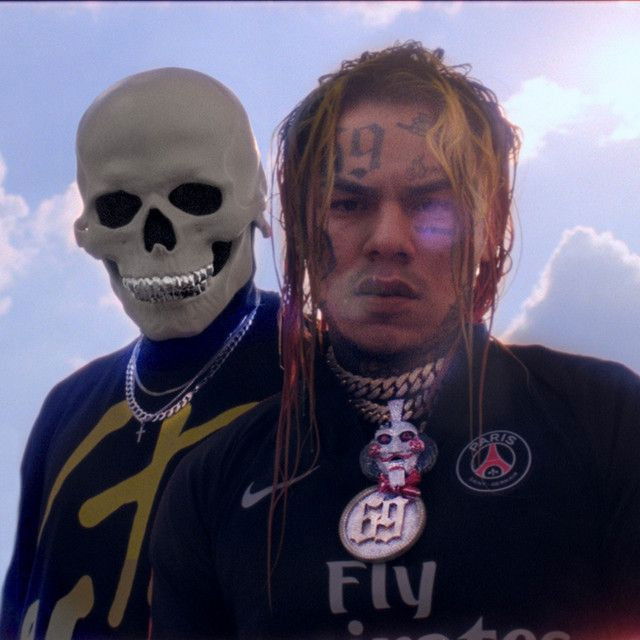
Aulos Reloaded Turns Bragging Into Pure Spectacle
The meaning of Aulos Reloaded Vladimir Cauchemar, 6ix9ine starts with one simple idea: this is not a deep confessional song. It is a performance of chaos, ego, and intimidation. The track uses repetition, blunt flexing, and a pounding beat to build a cartoonishly aggressive persona.
"Aulos Reloaded" - Vladimir Cauchemar, 6ix9ine
I wanted her, she ain't want me, ooh
Now she want me, I don't want her, ooh
Loading lyrics...
Unable to load lyrics
We're unable to display the lyrics at this time. Please try again later.
That matters because both artists arrive with strong identities. 6ix9ine, born Daniel Hernandez, became known for confrontational rap and controversy, while Vladimir Cauchemar built a recognizably theatrical electronic style around masked imagery and bold woodwind hooks. Those credits are reflected in the song’s writing attribution to Hernandez and Guillaume Brière. In that sense, the track feels less like storytelling and more like a staged collision of personas.
The Core Message Hides in Plain Sight
At its center, the song treats relationships, money, and violence as status symbols. The hook reduces romance to a power game: first he wanted someone, then she wanted him, and now he rejects her. When the lyric says I wanted her
and then flips the situation, the point is not heartbreak. It is control.
The same pattern runs through the rest of the track. Calls are only welcome if they bring profit, as heard in if it ain't money
. Women are described as disposable, rivals as targets, and wealth as proof of importance. The song keeps moving from desire to dismissal, from attention to contempt.
Interpretation: The emotional center is emptiness disguised as dominance. The speaker keeps proving power because power is the only value the song allows.

Watch the official Aulos Reloaded
music video
A Persona Built to Shock
Bravado as a Mask
6ix9ine’s verses rely on extreme exaggeration. He calls himself the greatest rapper alive
, flaunts cash, and throws out threats with almost comic force. This kind of writing is common in hardcore rap performance, where escalation itself becomes the point.
Rather than asking listeners to believe every detail, the song asks them to feel the force of the character. The voice is designed to be provocative, vulgar, and impossible to ignore. That is why the repeated language sounds more like a chant than a conversation.
Women, Enemies, and Status
The lyrics group everything into a hierarchy. Women are treated as trophies, enemies as weak, and money as the final judge of value. A phrase like Big bank, chase bank
does not add narrative detail, but it does reinforce the song’s obsession with visible wealth.
This is one reason the track can feel intentionally shallow. It narrows life down to cash, sex, and retaliation. That flattening is part of the aesthetic.
Why the Hook Matters More Than the Verse
The chorus is the cleanest clue to the song’s meaning. It repeats a reversal: desire is only interesting when it can be turned into rejection. Instead of seeking love, the speaker seeks the upper hand.
That idea also connects to the line don't call me
. Communication is framed as a transaction. If there is no money, there is no reason to engage. The hook, then, is not just catchy filler. It summarizes the song’s worldview: relationships matter only when they confirm status.
Now she want me
I don't want her
Those two short lines contain the whole emotional logic of the track. Wanting is weak; refusing is power.
The Sound Makes the Meaning Louder
Production is crucial to understanding the meaning of Aulos Reloaded Vladimir Cauchemar, 6ix9ine. Vladimir Cauchemar is known for combining electronic festival energy with eerie melodic leads, often inspired by ancient reed sounds associated with the “aulos” idea in his branding. Here, the instrumental gives the song a ritualistic and explosive feel rather than a street-level realism.
The beat does three things at once:
- It turns repetition into hypnosis.
- It makes the threats feel larger than life.
- It frames 6ix9ine’s delivery as spectacle, not subtle confession.
When the production drops back and then surges again, it creates the feeling of a crowd-ready anthem. That is why the song lands more like an event than a diary entry. Even ugly lines are packaged for maximum adrenaline.
Two Useful Ways to Read the Track
Interpretation 1: A Pure Flex Record
The most direct reading is that the song is exactly what it sounds like: a boast-heavy, vulgar, antagonistic flex track. In this reading, every line serves one purpose—make the speaker sound richer, meaner, and less reachable than everyone else.
Interpretation 2: A Hollow Portrait of Excess
A second reading is more critical. The constant repetition of money, sex, and violence may show how narrow this persona really is. The song never slows down enough to reveal a fuller self, which can make the performance feel intentionally empty. That emptiness may be the point, or it may simply be a byproduct of the style.
Both readings can be true at once. The song sells aggression, but it also reveals how repetitive and thin that aggression becomes.
Why It Still Connects With Listeners
Songs like this often work because they offer intensity without complexity. Listeners do not come for emotional nuance. They come for energy, attitude, and release. Vladimir Cauchemar supplies the theatrical beat; 6ix9ine supplies the unruly voice.
For some listeners, that combination is exciting. For others, it feels exhausting or juvenile. Either reaction makes sense, because the track is built to provoke a strong response rather than invite careful sympathy.
Final Take on the Song’s Meaning
The meaning of Aulos Reloaded Vladimir Cauchemar, 6ix9ine is less about a story than a stance. It turns rejection, wealth, sex, and menace into one loud display of dominance. The hook gives that display its clearest message: in this world, control matters more than connection.
That said, song meaning is always part fact and part interpretation. This reading is based on the lyrics, performance style, and production choices, and other listeners may hear the track differently.








