Why Aaron Lewis Says Everybody Reaches for God
The meaning of Everybody Talks To God Aaron Lewis comes through a simple setup: one person says grace in a diner, another mocks the act, and the song turns that clash into a larger claim about belief, pain, and human need. Rather than sounding abstract, it stays grounded in ordinary life.
"Everybody Talks To God" - Aaron Lewis
When the man in the next booth said, "Don't you watch TV?"
Don't you know that God's a myth, I hate to see you waste your breath
Loading lyrics...
Unable to load lyrics
We're unable to display the lyrics at this time. Please try again later.
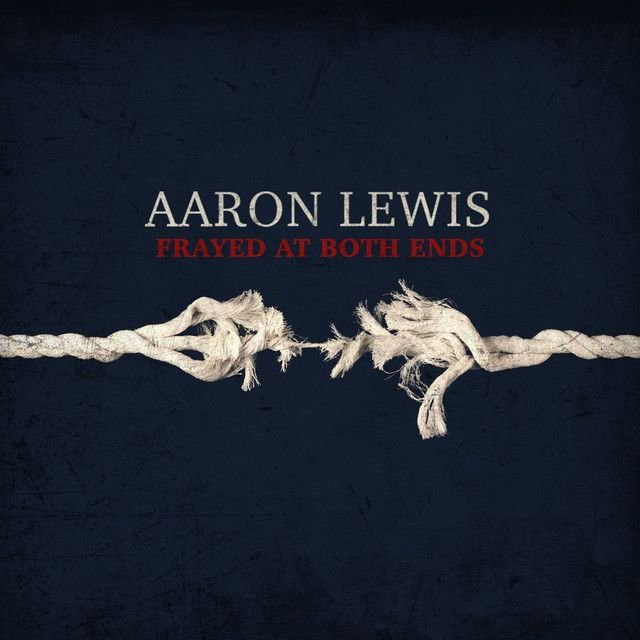
Aaron Lewis released "Everybody Talks to God" on Jan. 14, 2022, ahead of Frayed at Both Ends, which arrived on Jan. 28, 2022. Lewis is known both as the frontman of Staind and as a solo country artist, and coverage around the release described the track as an evangelical acoustic song tied to his country period. The songwriting credits go to Chris Wallin and Craig Monday.
A Diner Scene With a Bigger Point
The song opens with a very American image: a man praying over a meal while someone nearby challenges him. That setting matters. It places faith in public, in the middle of everyday routine, not in church.
The skeptic dismisses prayer as pointless, and the believer answers without raising the temperature. Instead of arguing over evidence, he suggests there will come a time when even the doubter will speak to God. That response shapes the entire song.
Interpretation: The scene is not really about winning a debate. It is about showing how belief and disbelief both get tested when life becomes hard enough.

Watch the official Everybody Talks To God
music video
What the Chorus Claims
The chorus is the key to the song’s message. It moves from one diner booth to universal situations: work, weather, death, gratitude, and grief. In other words, it says people reach upward in both blessing and pain.
A few short phrases show that range: prayin' for the rain
, at the gravesite
, and thank Him
or blame Him
. The song’s logic is clear. Whether people are asking for help or accusing heaven after a loss, they are still addressing God.
That leads to the title line, everybody talks to God
. The song does not present that as a soft possibility. It presents it as a certainty.
Storytelling, Not Just Preaching
One reason the song works for listeners is its narrative shape. It does not begin with a thesis statement. It begins with an encounter.
Here is the rough timeline:
- A praying man says grace over lunch.
- A skeptic mocks the act of prayer.
- The believer calmly answers that a day will come.
- The skeptic leaves without a comeback.
- The praying man still prays for him.
- The final turn hints the exchange affected the skeptic after he drove away.
That last beat matters a lot. The line about two red lights down the road
suggests the conversation lingers after the public argument ends. The song wants listeners to believe that truth can take effect quietly and later.
Faith, Pride, and Human Limits
The strongest idea in the song is not really about religion as theory. It is about what happens when control runs out.
The chorus uses two strong images: a farmer needing rain and a mourner at a funeral. Those are situations where human effort hits a wall. A farmer can work hard and still depend on weather. A grieving person can love deeply and still lose someone.
Interpretation: The song argues that crisis strips away pride. In that reading, prayer is less about perfect doctrine than about what people do when they finally face their limits.
That is why the contrast between thanks and blame is so important. The song says both reactions still admit a relationship. Gratitude speaks to God kindly; grief speaks to God angrily. But both are still speech directed upward.
How Aaron Lewis' Style Shapes the Message
The production helps the theme land. This is a spare country recording, led by acoustic textures and a straightforward vocal. There is little in the arrangement to distract from the words.
That simplicity makes the song feel like testimony told across a table. Lewis often sings in a rough, weathered tone, and here that vocal quality adds conviction. He does not sound polished or distant. He sounds certain.
That matters because the song could have felt heavy-handed in a bigger arrangement. Instead, the stripped-down sound keeps it conversational. It plays like a witness statement from someone who believes ordinary life keeps proving the same point.
The Aaron Lewis Context
Context also matters. By 2022, Lewis had built a solo country identity apart from Staind, and Frayed at Both Ends was presented as an album about how people actually live through pressure, disappointment, love, and endurance. In that frame, this song fits naturally.
It also arrived during a period when Lewis was often discussed for outspoken political views as much as music. That public image can affect how listeners hear the track. Some may hear it as heartfelt conviction; others may hear it as part of a broader culture-war posture.
Still, within the song itself, the focus remains personal rather than political. Its central conflict is not left versus right. It is belief versus denial, staged through a brief encounter between strangers.
Final Meaning: A Song About the Moment People Break Open
So what is the meaning of Everybody Talks To God Aaron Lewis? Most directly, the song says every person will eventually address God, whether in prayer, gratitude, anger, grief, or final reckoning.
Interpretation: A broader reading is that the song is about the human instinct to reach beyond oneself when life gets too large to manage alone. Even listeners who do not share the theology can recognize the emotional truth in that impulse.
In the end, the song makes its case through plain storytelling, church-country simplicity, and a chorus built around life’s hardest moments. It suggests that faith is not only found in Sunday worship. It appears in fields, funeral homes, diner booths, and red lights down the road.
Disclaimer: This interpretation blends factual release context with critical reading. Song meaning can vary by listener, and not every audience member will hear the message the same way.








