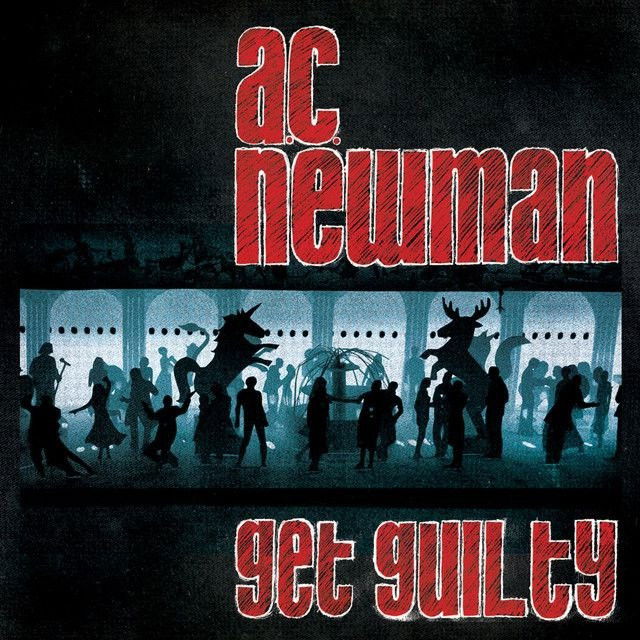
Prophets by A.C. Newman
Why This Song Feels So Uneasy
The meaning of Prophets A.C. Newman seems to center on overload: too many voices, too much certainty, and one person trying not to disappear inside the noise. The speaker is not a heroic rebel. They sound hesitant, observant, and emotionally split.
"Prophets" - A.C. Newman
Myself with the rabble that stood on a mound
Hip shot thinking but not out loud
Loading lyrics...
Unable to load lyrics
We're unable to display the lyrics at this time. Please try again later.
That is what gives the song its tension. Instead of celebrating conviction, it watches a scene where certainty has become crowded and suspicious. When the narrator says there are too many prophets here
, the line does not sound inspired. It sounds exhausted.
Watch the official Prophets
music video
A.C. Newman’s Usual Strength: Bright Music, Knotted Thoughts
A.C. Newman, also known as Carl Newman, is widely known as a principal songwriter for The New Pornographers, a band praised for power-pop craft and layered melodies; that background is well documented in major artist bios and label materials.
That context matters here. Their writing often pairs catchy structure with abstract language, so a song can feel immediate even when its images are slippery. "Prophets" fits that pattern. The lyrics are not a literal story as much as a mental state rendered in scenes: a mound, a wall, a forest, daylight.
Factual note: the lyric credit provided here names Carl Allan Newman as the writer.
The Narrator Stands Close, But Not Fully In
One key phrase is silent partner
. Before and after that phrase, the song suggests someone involved in events but not fully speaking up. They are present with the crowd, yet they do not belong to it in a confident way.
That makes the song feel like an account of compromised participation. The narrator is not outside the system judging it from safety. They are inside it, quiet, and aware of their own passivity. When they mention the rabble
and later say I was behind it
, the idea seems to be that they have helped sustain a situation they do not trust.
Interpretation: this could describe politics, art scenes, media culture, or even personal relationships where dominant personalities claim authority and everyone else falls into line.
The Real Conflict Is Internal
The clearest emotional clue comes when the song says I am divided
. That line turns the song inward. Up to that point, the prophets seem like an external problem. Then the listener hears that the crowd has created a split inside the speaker.
The line about heart and song deepens that split. In plain terms, the narrator seems torn between private feeling and public expression. Their inner life may be sincere, but putting it into language—or into a role within a group—changes it.
This is a strong reason the song feels sad rather than angry. It is not only about false leaders. It is also about what happens to a person who stays quiet too long and starts to lose a stable sense of self.
What the Images Suggest
The imagery moves from darkness to daylight, but it is not a simple victory arc. The speaker takes in the sound of the dark
, carries something over the wall
, and later recalls a forbidden part of the forest.
Those images suggest secrecy, border-crossing, and fear. A wall hints at separation; a forest hints at confusion or danger; daylight hints at recognition. By the end, they are no longer hidden in the woods. They can see more clearly now, and what they see is not comforting. There are still too many prophets.
Interpretation: the move into day may represent clarity without peace. Seeing the truth does not solve the problem; it simply ends denial.
Why the Repetition Matters So Much
The repeated count of one by one
, along with stacked on zero
, changes the song’s atmosphere. Instead of sounding spiritual, it sounds procedural, even mechanical. People or ideas appear in sequence, lined up and reduced.
That counting can be read a few ways:
- as a crowd forming around empty certainty
- as ideologies piling onto a hollow base
- as individuals losing identity in a system
The phrase stacked on zero
is especially sharp. Interpretation: it suggests accumulation without substance. Lots of claims, little foundation.
How the Sound Likely Carries the Meaning
Even without diving into full studio credits, Newman’s body of work makes one thing likely: melody is doing crucial emotional work. Their songs often use brisk, clean arrangements to carry lyrics that are more anxious than the surface first suggests.
That matters for the meaning of Prophets A.C. Newman. A bright or propulsive musical setting would make the song’s uncertainty hit harder, because the structure keeps moving while the narrator stays psychologically stuck. Repetition in the hook would also mirror social pressure: voices and patterns keep returning until they feel inescapable.
A Few Strong Readings of “Prophets”
There is no single confirmed meaning in the lyrics alone, so the best approach is to separate fact from inference.
Reading One: A critique of loud certainty
The strongest reading is that the song questions people who claim moral or intellectual authority. “Prophets” are not holy figures here; they are competing voices demanding belief.
Reading Two: An artist trapped between honesty and performance
Because the song contrasts heart and song, it can also sound like a writer wondering whether art clarifies truth or joins the noise.
Reading Three: A personal awakening
The forest-to-daylight movement may show someone leaving denial and seeing the crowd clearly for the first time.
The Takeaway
What makes "Prophets" compelling is its refusal to offer a clean answer. The song captures the feeling of standing among confident voices while becoming less sure of one’s own. Its power comes from that mix of social critique and private fracture.
For most listeners, the meaning of Prophets A.C. Newman will come down to this: too much certainty can make a person go silent, and silence can split them in two.
Disclaimer: This interpretation is based on the lyrics provided and publicly known artist context. As with most songs, meaning can remain open and may differ from the writer’s private intent.








