Why 'Hand in My Pocket' Feels So Human
The meaning of Hand in My Pocket Alanis Morissette starts with a simple truth: growing up often feels messy, mixed, and unfinished. Rather than pretending life makes sense, the song embraces contradiction. Its speaker is pulled in opposite directions, yet still keeps moving.
"Hand in My Pocket" - Alanis Morissette
I'm short but I'm healthy, yeah
I'm high but I'm grounded, I'm sane but I'm overwhelmed
Loading lyrics...
Unable to load lyrics
We're unable to display the lyrics at this time. Please try again later.
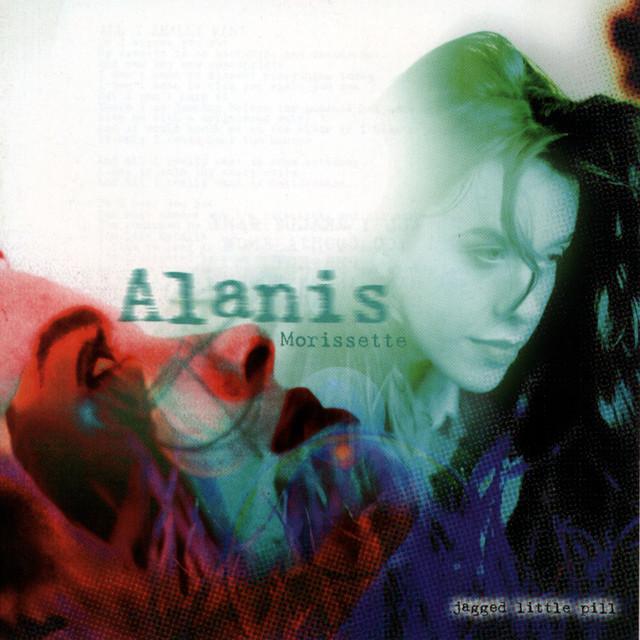
Released in 1995 as a single from Jagged Little Pill, the track was written by Alanis Morissette and Glen Ballard, and produced by Ballard. It became a major radio hit, reaching No. 1 on U.S. Modern Rock and No. 1 in Canada. Those facts matter because the song's honesty clearly met a wide audience at exactly the right moment.[1][2]
A Song About Contradiction, Not Confusion
At the heart of the song is a long list of paired opposites. The speaker can be broke and upbeat, overwhelmed and stable, unsure and still hopeful. That is why the lyrics feel so recognizable. They do not describe a neat identity; they describe a real one.
This is the key interpretation: Morissette is not saying the speaker is hypocritical or inconsistent. They are saying a person can contain several truths at once. Phrases like I'm broke but I'm happy
and I'm high but I'm grounded
show emotional complexity, not chaos.
The repeated conclusion is just as important. Each verse circles back to the idea that things will probably be okay, even without total certainty. When the song admits I haven't got it all figured out
, it sounds less like failure than self-acceptance.

Watch the official Hand in My Pocket
music video
The Pocket Image That Holds the Whole Song
The title image is what makes the song memorable. One hand stays tucked away, while the other reaches out into the world. That second hand keeps changing: it waves, smokes, plays, signals peace, or hails help.
Interpretation: the pocket suggests reserve, anxiety, or self-protection. The other hand suggests action. Together, they create a picture of someone who is not fully comfortable but refuses to shut down.
That is why one hand in my pocket
works so well as a symbol. It captures half-confidence. The speaker is not swaggering through life, but they are not frozen either. They are awkward, active, and still participating.
How the Verses Build a Portrait of Young Adulthood
The verses read almost like snapshots from early adulthood. There is money stress, underpaid work, restless energy, apology, humor, and flashes of self-belief. The speaker keeps shifting between emotional states because daily life keeps forcing those shifts.
One useful way to read the song is as a portrait of being young in public. The speaker has to perform competence while privately feeling unfinished. That tension appears in contrasts like young and underpaid
and sad but I'm laughing
.
The song never resolves these tensions with a big lesson. Instead, it normalizes them. That may be why so many listeners hear it as comforting. It says instability is not proof that someone is broken. It may just mean they are alive and still becoming themselves.
Why the Sound Feels Loose but Steady
The production supports that message beautifully. According to reference material on the song, it sits in G major at around 92 BPM, giving it a midtempo, grounded feel.[1] The groove is not rushed, but it is never sleepy either.
Critics at the time noticed the mix of edge and ease. Cash Box praised the track's harmonica, and Morissette plays that part herself.[1] That detail matters because the harmonica adds a casual, almost roadside looseness, while the guitars and bass keep the song anchored in radio-friendly rock.
There is also a slight push-pull in Morissette's vocal delivery. She sounds conversational in one moment, then sharp and emphatic in the next. That performance style mirrors the lyric's contradictions. The song sounds like someone talking themselves through a day they have not mastered yet.
Context From Alanis Morissette's Breakthrough Era
Jagged Little Pill turned Morissette into one of the defining voices of the 1990s, and this song helped shape that image. Glen Ballard told Rolling Stone that Morissette wanted work that felt "authentic" and came from her heart.[1] That brief comment helps explain why the song still lands: it does not sound designed to look cool. It sounds lived-in.
It also showed another side of Morissette's writing. While songs like "You Oughta Know" delivered open fury, "Hand in My Pocket" channeled uncertainty into wit and rhythm. The result is gentler, but not softer. It still insists on truth.
The black-and-white video, filmed in Brooklyn during a parade setting, adds to that feeling of being both inside and outside the world around them.[1] Morissette moves through a public space, yet still seems privately absorbed, which suits the song's emotional split.
Why the Chorus Still Feels Reassuring
The chorus does not promise control. It offers endurance. That is a big reason the song has lasted. Instead of selling confidence as perfection, it presents confidence as motion.
"And what it all comes down to
Is that everything's gonna be fine"
Even here, the reassurance is modest. The speaker does not claim deep wisdom. They simply keep choosing to believe tomorrow is manageable. That is a much more relatable kind of hope.
The Lasting Meaning of the Song
The meaning of Hand in My Pocket Alanis Morissette is that adulthood often feels unresolved, and that is normal. The song turns mixed feelings into a survival skill. A person can be nervous, flawed, and uncertain, and still be kind, funny, brave, and functional.
That is why the song still speaks to listeners in the United States and beyond. It offers not a perfect self, but a usable one.
Disclaimer: This interpretation combines documented facts about the song with informed reading of its lyrics and sound. Meaning can vary from listener to listener.









