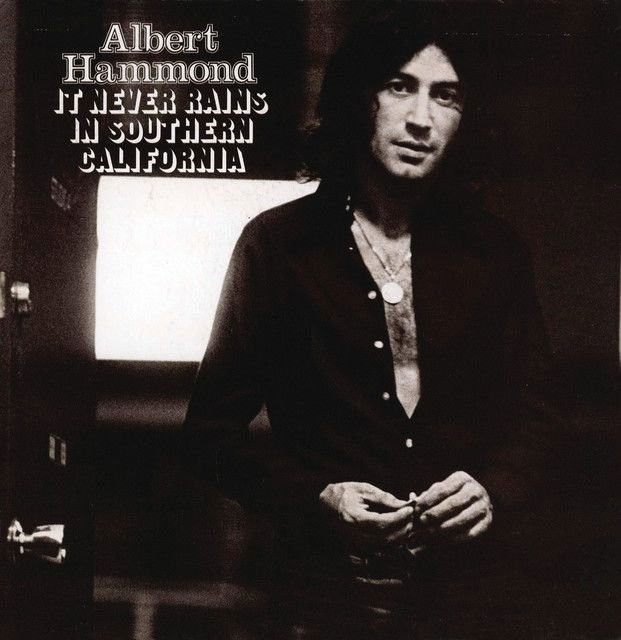
Why Albert Hammond's California Dream Still Hurts
The meaning of It Never Rains in Southern California Albert Hammond comes down to a sharp contrast: a bright dream on the surface, and disappointment underneath. Albert Hammond's 1972 hit sounds breezy at first, but its story is about failure, homesickness, and the pressure to hide bad news from the people back home.
"It Never Rains in Southern California" - Albert Hammond
Didn't think before deciding what to do
Oh, that talk of opportunities, TV breaks and movies
Loading lyrics...
Unable to load lyrics
We're unable to display the lyrics at this time. Please try again later.
Released as the title track of Hammond's debut album in 1972, the song became his signature hit, reaching No. 5 on the Billboard Hot 100 and No. 2 on the Adult Contemporary chart. It was written by Albert Hammond and Mike Hazlewood, and produced by Hammond and Don Altfeld.
The sunny myth hiding a hard fall
At the center of the song is a familiar American fantasy: move west, find fame, and become somebody. The opening image of a westbound 747
captures that leap of faith. The narrator does not seem fully prepared; they are carried more by hope than by a plan.
Very quickly, the song reveals that the dream has collapsed. Instead of success, they end up out of work
, mentally overwhelmed, and short on money. The lyric does not need many details to make the point. This is a story about someone who bought into glamorous promises and then found ordinary hardship.
Interpretation: The song is not attacking ambition itself. It is warning about myths sold by popular culture, especially the idea that talent and desire automatically lead to success.

Watch the official It Never Rains in Southern California
music video
Why the chorus matters so much
The famous hook is easy to sing, but it is also the song's cleverest idea. When the chorus says it never rains
and then answers with it pours, man, it pours
, it flips a postcard image of California into a metaphor for emotional and financial collapse.
On one level, the line jokes about weather. On a deeper level, it suggests that places marketed as perfect often hide brutal realities. Southern California stands in for Hollywood, entertainment culture, and the wider promise of reinvention.
That contrast is why the chorus has lasted. They hear something catchy, but they also hear the sting of bad timing, bad luck, and public fantasy crashing into private truth.
A narrator trapped between pride and shame
One of the song's strongest ideas is not poverty by itself, but embarrassment. The narrator does not simply suffer; they want to control the story of that suffering. They ask someone to tell the folks back home they nearly made it
, while also begging them not to reveal the full situation.
That makes the song more human than a simple cautionary tale. Many people can handle disappointment. What is harder is admitting disappointment to family, friends, or anyone who believed in them.
Will you tell the folks back homeI nearly made it?Please don't tell 'em how you found me
This is the emotional center of the song. The speaker is trying to save face, even while asking for help.
The real-life roots behind the story
Part of what gives the song its force is that it came from lived experience. According to American Songwriter, Hammond and Hazlewood based it partly on Hammond's own low points while trying to build a music career, though Hazlewood changed the setting to Southern California so the story would connect more directly with American listeners. That detail matters because it shows the song is not just about one city; it is about the universal gap between hope and outcome.
The track also had a stronger impact than some around Hammond expected. In the same report, Hammond recalled that other artists had dismissed the song before Columbia's Clive Davis heard it and recognized its potential. That confidence proved right when the single became a major international hit.
How the sound softens the blow
Musically, the song belongs to early-1970s soft rock, and that choice is crucial to its meaning. The arrangement is smooth, melodic, and welcoming rather than bleak. Reportedly, the recording featured Los Angeles session players associated with the Wrecking Crew, with Michael Omartian on piano.
That polished sound creates irony. If the music had been dark and heavy, the message would feel obvious. Instead, the gentle groove and clear melody make the sadness sneak up on the listener. They hear comfort first, then the desperation in the words.
Why that contrast works
- The melody feels open and travel-ready.
- The rhythm stays calm, even when the story worsens.
- Hammond's vocal sounds weary but not theatrical.
Together, those choices make the song feel believable. It sounds like someone trying to keep composure while their life is slipping.
Why the song still connects
The meaning of It Never Rains in Southern California Albert Hammond still resonates because the dream it describes never went away. People still move to major cities for art, media, status, and reinvention. They still feel pressure to look successful before they are secure.
The song also works beyond Hollywood. Its real subject is the private cost of chasing any big promise. That is why listeners who have never been to California can still recognize themselves in it.
Final takeaway
Albert Hammond's hit endures because it wraps a painful truth in an easy melody: dreams can inspire people, but they can also isolate them. The song's California image is less about weather than about illusion, pride, and the moment a person realizes they cannot keep pretending.
This article offers an interpretation based on the lyrics, recording context, and reported background; like many great songs, it can support more than one reading.








