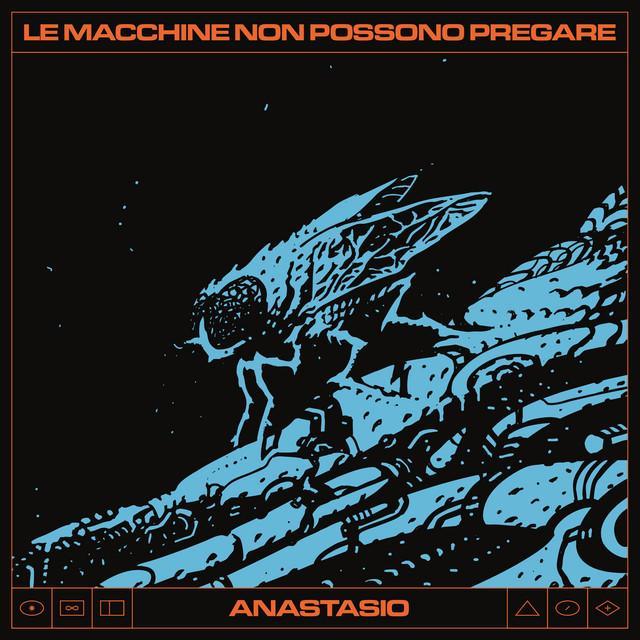
Why "Ipocrita fratello" Hits So Hard
The meaning of Ipocrita fratello Anastasio starts with a hard idea: people do not simply become themselves. They are shaped, trained, sold identities, and pushed into social roles so early that those roles can feel natural.
"Ipocrita fratello" - Anastasio
Mi divertivo come un primitivo
Non c'era niente a parte l'attimo presente
Loading lyrics...
Unable to load lyrics
We're unable to display the lyrics at this time. Please try again later.
Anastasio turns that idea into a tense, confrontational rap. The song sounds like a rant, but it is more organized than that. It moves from childhood innocence to media conditioning, then to a wider attack on political tribes, and finally to a challenge aimed at the listener. By the end, the song says hypocrisy is not just out there. It is shared.
A Song About Manufactured Identity
At the start, the speaker remembers childhood as a freer state. They describe a time ruled by instinct and immediate experience, before institutions and screens taught them how to see the world. That memory matters because it creates the song’s central contrast: natural life versus programmed life.
From there, the lyrics become more aggressive. The speaker says they were hit by outside forces, including television culture, sexual messaging, and education systems that claim to civilize while also limiting thought. When Anastasio mentions being bombardato di frequenze Mediaset
, the point is larger than one broadcaster. He is talking about mass media as a machine that enters the mind and rewires desire.
Interpretation: the song is not saying education or media are always evil. It argues that both can become tools of control when they stop helping people think and start telling them what to want.
The Real Enemy Is the Role
The chorus gives the song its clearest message. It tells the listener to cambiati la maschera
and apri le prigioni
. Before and after those short phrases, the meaning is plain: identity has become a prison, and escape requires reinvention.
This is why the song keeps returning to masks, prisons, jailers, and embalmers. These images all suggest stillness. A role is not just a label; it is something that freezes a living person into a fixed shape. In that sense, hypocrisy is not only pretending. It is surviving inside a false version of the self.
Fuggi, cambiati la maschera
apri le prigioni
That brief hook works like a manifesto. It is urgent, physical, and simple enough to cut through the dense verses.
Beyond Left and Right, Roots and Progress
One of the song’s sharpest sections attacks false oppositions. Anastasio mocks people who talk about progress as if it were automatically good, but he also mocks people obsessed with roots and tradition. He sees both camps as trapped in slogans.
The tree image explains his position. A tree grows downward and upward at the same time. That means a healthy identity needs memory and growth, roots and change. So when the song rejects both “traditionalists” and “futurists,” it is rejecting rigid camps rather than rejecting history or the future themselves.
This part expands the meaning of Ipocrita fratello Anastasio beyond personal psychology. The song becomes a critique of modern public life, where factions hand out scripts and ask people to perform them.
Why the Listener Gets Pulled In
The most powerful twist is in the ending. The speaker stops sounding like a lone rebel and starts addressing the audience directly. They say, in effect, that the listener is also trapped, also inconsistent, also implicated. The phrase Ipocrita... fratello
is an insult and a gesture of solidarity at once.
That balance matters. If the song only attacked others, it would feel self-righteous. Instead, it admits that everyone lives inside these systems. Even the artist, who tries to wake people up, is speaking through media and performance.
Interpretation: “brother” softens the accusation without weakening it. The song suggests shared captivity, not moral superiority.
Sound, Delivery, and Pressure
Anastasio is known in Italy for dense, theatrical rap writing and a style shaped by spoken-word intensity as much as hip-hop rhythm. His public breakthrough came through X Factor Italia, a fact documented by Sky Italia, and that background helps explain the song’s dramatic control.
On the page, these lyrics are packed with images: screens, cyclopses, insects, hackers, masks, and prisons. In performance, that density becomes pressure. The delivery feels breathless and forceful, like thoughts arriving faster than society can process them.
Even without detailed production credits available here, the song’s likely effect is clear from the writing: a tense, modern rap framework supports the argument. The beat gives the verses a marching structure, while the repeated chorus acts like a command. That contrast between complex verse and blunt refrain mirrors the theme itself: confusion in the world, clarity in the call to resist it.
The Key Symbols Decoded
Several recurring images carry the song’s meaning:
- The screen: a symbol of conditioning and passive absorption.
- The mask: identity as performance, but also as a tool one can remake.
- The prison: social roles that trap living people in dead forms.
- The tree: balanced growth, against extremist either-or thinking.
- The “pixel impazzito”: the unpredictable person who breaks the system.
That last image is especially important. The song believes control systems fear disorder. A person who cannot be neatly classified becomes dangerous to them.
Final Take on the Song’s Message
In the end, the meaning of Ipocrita fratello Anastasio is about resisting mental colonization. It argues that modern identity is built under pressure from media, ideology, and social expectation, and that freedom begins when people question the roles they have been handed.
What makes the song hit so hard is its refusal to flatter the listener. It does not say they are already authentic. It says they may need to shed one skin after another before they get close.
Disclaimer: This article offers an interpretation of the song based on its lyrics and public artist context. Meaning can remain open, and different listeners may hear it differently.








