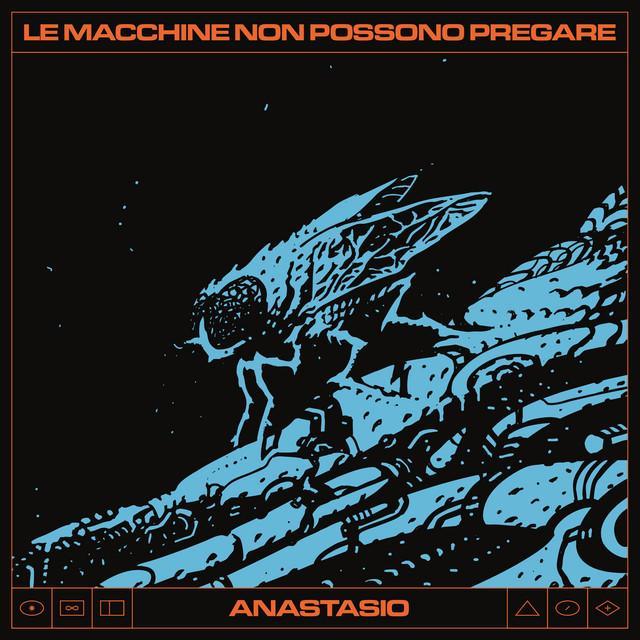
Why Anastasio's "La pioggia" Feels Apocalyptic
The meaning of La pioggia Anastasio becomes clear once they hear how the song balances ruin with hope. It paints a scorched world of trash, dead systems, and broken sight, then waits for rain to do what people could not: clean, reveal, and restart.
"La pioggia" - Anastasio
Caddero i nani
Uh, kaputt
Loading lyrics...
Unable to load lyrics
We're unable to display the lyrics at this time. Please try again later.
Anastasio is known in Italy for dense, literary writing and politically charged rap-rock energy, a reputation established after his rise on X Factor Italia and later releases documented by major Italian media and his label pages. Those facts matter because “La pioggia” sounds like a writer pushing beyond realism into allegory. The song was written by Marco Anastasio and Gianmarco Caruso, as provided in the song’s credits.
A ruined world, not just a sad mood
On the surface, the lyrics describe catastrophe. Giants shrink, waste burns, black smoke rises, and people move south through the night. The world feels post-human, or at least post-certainty. Its landscape is full of wreckage, and the old hierarchies have collapsed.
But this is more than scene-setting. Interpretation: the disaster imagery also reflects moral failure. When the song mentions burning garbage mountains and a damaged planet, it suggests that people are living inside the consequences of their own systems. The collapse is environmental, political, and spiritual at once.
A few short phrases show that double meaning: montagne di rifiuti in fiamme
and morì di verità
. In context, the first points to material ruin, while the second hints that truth itself can destroy illusions. That gives the song its harsh edge: seeing clearly hurts before it heals.
Why the chorus changes everything
The verses are crowded with grotesque images, but the chorus opens a path forward. Rain is not just weather here. It becomes a healing force that enters cracks, washes eyes, calms thirst, and removes false identities.
The key phrases are compact and powerful: lava le palpebre
, scioglierà le maschere
, and pronti per rinascere
. Together, they turn the song’s message away from pure doom. First comes sight, then honesty, then rebirth.
That sequence matters. The song does not imagine salvation as comfort. It imagines it as exposure. People must lose their masks before they can begin again. Interpretation: in that sense, rain stands for truth as much as mercy.
Blindness, myth, and broken technology
One of the most striking details is the mix of ancient myth and futuristic wreckage. Polyphemus and Ulysses appear beside spaceships, circuits, and techno-wizards. That collision makes the song feel outside normal time.
The myth reference is especially telling. In the lyric, sight is returned only to become unbearable. The sun burns the circuits; truth kills. Anastasio seems to ask whether modern people, like tragic figures in myth, are unprepared for real vision. They want knowledge, but cannot survive its full force.
Then come the machines and spacecraft. Some are abandoned, covered in thorns; others flee humanity. Interpretation: technology in “La pioggia” is not a clean solution. It looks exhausted, complicit, or detached. Even the phrase dolore delle macchine
blurs the line between human suffering and mechanical systems. The world people built now seems to ache along with them.
A collective voice in the middle of collapse
Another important part of the meaning of La pioggia Anastasio is the pronoun choice. The song keeps returning to “we.” They migrate, they look up, they wait for rain. That gives the track a communal feeling rather than a private confession.
This shared voice makes the song broader and more political. It is not about one broken heart. It is about a damaged civilization trying to cross a night landscape together. The repeated destination, the land where the sun seems to “shipwreck” in their eyes, sounds both beautiful and dangerous.
Interpretation: that promised land may not be a literal place. It may be a state of awakened perception, where people can finally face light without turning away.
How the sound supports the lyrics
Even without quoting much, listeners can hear how the music carries the message. Anastasio often performs with a tense, spoken intensity that keeps one foot in rap and the other in theatrical rock. That style fits “La pioggia” perfectly: the verses feel like visions being reported in real time, while the chorus expands into something more open and almost hymnal.
The likely effect of the production is contrast. Dark, driving verses match the images of smoke, waste, and migration. Then the hook lifts emotionally, giving the rain a larger, cleansing presence. In songs like this, arrangement matters as much as wording. The music lets apocalypse breathe, then lets hope arrive.
The strongest reading of the ending
By the end, rain finally comes. That changes the song from prophecy to release. Yet the ending does not sound easy or neatly happy. Rebirth comes only after stripping away illusion.
That is why the final image stays with listeners. The song keeps looking toward a place flooded with light, but it never forgets what had to burn before that moment. “La pioggia” suggests that renewal is possible, though only after people admit what their world has become.
For most listeners, that is the heart of the song: disaster reveals truth, and truth makes rebirth possible.
Final takeaway
The meaning of La pioggia Anastasio lies in its vision of cleansing after collapse. Through images of fire, blindness, machines, and rain, the song turns apocalypse into a test of whether people can finally see clearly enough to begin again.
Disclaimer: This interpretation is based on the lyrics provided and publicly known artist context. Like all poetic songs, "La pioggia" can support more than one valid reading.







