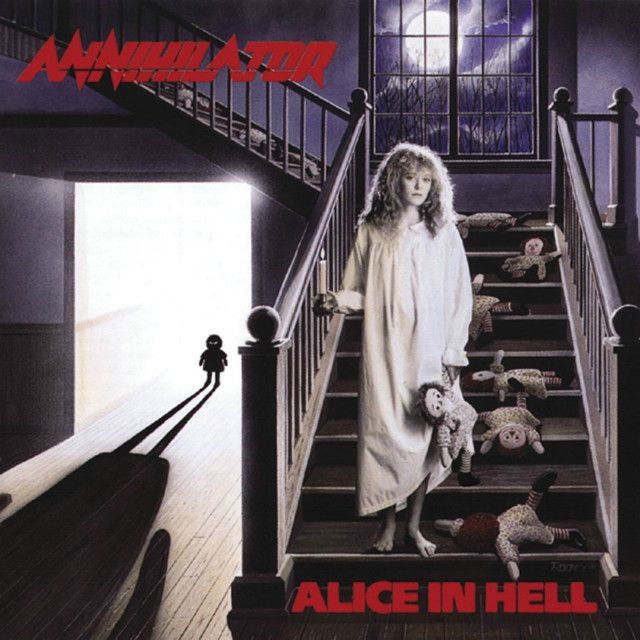
Wicked Mystic by Annihilator
The meaning of Wicked Mystic Annihilator centers on a simple but unsettling idea: evil is not only outside people. It can live inside them, waiting for fear, weakness, or anger to let it grow. In this song, Annihilator turns that idea into a dark metal warning about temptation, hatred, and moral collapse.
"Wicked Mystic" - Annihilator
Lives on this powerful entity to thrive on pain and fear
A derelict of heavenly gods, a feeling from within
Loading lyrics...
Unable to load lyrics
We're unable to display the lyrics at this time. Please try again later.
A Metal Warning About Inner Corruption
At its core, the song describes a destructive force that survives through history, feeding on human pain and fear. The opening makes that clear by presenting something ancient and persistent, almost like a spiritual parasite. When the lyrics mention pain and fear
, they suggest that darkness becomes stronger when people are most vulnerable.
Interpretation: They are not only describing a demon-like being. They may also be describing hatred itself as a force that moves through generations. That reading fits the repeated focus on weakened minds, broken morals, and the failure to resist.
This is what gives the song its power. It is less about one event and more about a condition of being human: the risk that bitterness, cruelty, and rage can take root if people stop fighting them.
Watch the official Wicked Mystic
music video
The “Wicked Mystic” as Symbol
The title phrase is the song’s biggest mystery, and that mystery seems intentional. A “mystic” usually suggests hidden knowledge or spiritual power. By calling it Wicked mystic
, the song twists that idea into something corrupt and dangerous.
Interpretation: The title can be read in at least two ways:
- a supernatural evil presence that tempts people
- a poetic name for the dark impulse already inside the soul
The lyrics support both readings. They use religious and spiritual language, but they also keep returning to inner states like hatred, weakness, and corrosion. That makes the song feel both cosmic and psychological at once.
How the Verses Build the Theme
The verses move in a clear pattern. First, they introduce an old, powerful evil. Next, they show who is most at risk: those with weak resolve or too much curiosity. Then they widen the message, saying even the holy are not safe.
That is why lines like the dark side has awakened
matter. The song is not saying evil suddenly appears from nowhere. It suggests that it wakes up when people surrender their moral strength.
One of the sharpest moments is the idea that even in sacred spaces, curiosity can become dangerous. The song does not condemn curiosity in a simple way. Instead, it seems to warn that when people toy with darkness, they may lose control of it.
Hatred Is the Real Villain
The clearest statement in the song comes when it says Hatred lurks in all of us
. That line shifts the track from fantasy imagery to blunt human truth. Suddenly, the “wicked mystic” is not just an outside force. It is tied to everyday emotion.
This is a key part of the meaning of Wicked Mystic Annihilator. The track argues that hatred is universal potential, not a rare defect found only in villains. By adding that no one is exempt, the song becomes less about judgment and more about vigilance.
Interpretation: They may be suggesting that evil succeeds when people pretend they are above it. In other words, the most dangerous lie is believing they could never fall into rage, cruelty, or moral decay.
Why the Chorus Feels Like a Spell
The chorus is short, repetitive, and forceful. That matters. In heavy music, repetition can feel like a chant, and here it gives the title a ritual quality.
When the song pairs the title with ideas like battle is forsaken
, the chorus becomes a warning about surrender. If people stop resisting darkness, the song implies, darkness does not merely remain present—it expands.
That is why the hook lands so hard. It sounds like a name being summoned, but it also sounds like a diagnosis. The evil has a label now, and the listener has been told where to find it.
How Annihilator’s Sound Carries the Message
Annihilator are widely known as a Canadian thrash metal band led by Jeff Waters, whose work often blends speed, precision, and melodic detail. That larger band identity is well documented in band histories and discographies, including AllMusic and Encyclopaedia Metallum.
That style fits this song’s message. Thrash metal is built for conflict: tight riffs, hard accents, and relentless momentum. Even without quoting much of the lyric, listeners can hear the struggle in the music. The guitars likely do what the words describe—press forward, attack, and refuse comfort.
Jeff Waters is also credited as a writer here, alongside Jody Anne Weil. That matters because Waters has long shaped Annihilator’s sound, and his guitar-focused writing often turns abstract themes into something physical and tense. In a song about corrosion, temptation, and awakening darkness, a sharp metal arrangement makes the ideas feel immediate rather than distant.
Final Reading: Evil as Choice and Drift
The strongest reading of the song is that it treats evil as both a choice and a drift. People may not invite darkness in clear, dramatic ways. Sometimes they simply fail to fight it. Sometimes moral codes weaken, anger grows, and corrosion begins quietly.
That makes the song more interesting than a simple horror tale. It is really a warning about the human condition. The monster may be mystical, but the danger is ordinary: fear, hatred, and the ease of giving up.
For listeners asking about the meaning of Wicked Mystic Annihilator, the answer is that the song turns inner moral struggle into a dark, theatrical metal vision. It says the battle against evil is ongoing, personal, and never fully finished.
Disclaimer: This interpretation is based on the lyrics provided and general artist context. As with many metal songs, listeners may reasonably hear different meanings in the imagery and symbolism.







