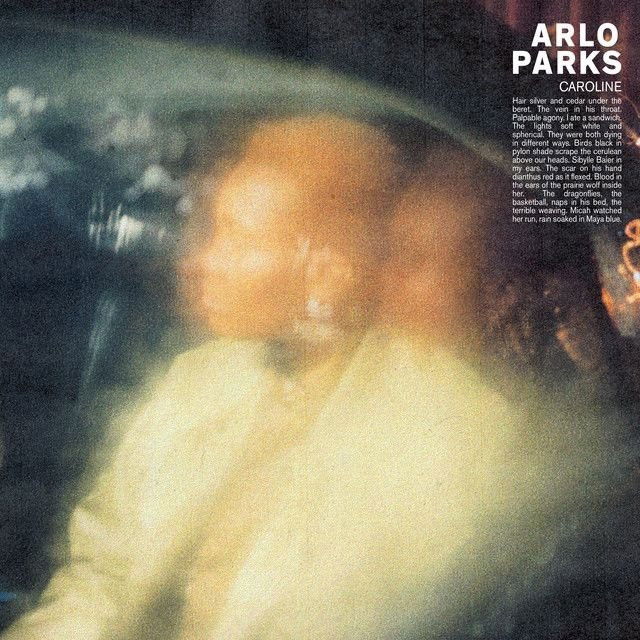
Caroline by Arlo Parks
A breakup seen from the curb
The meaning of Caroline Arlo Parks starts with a very simple scene: someone waiting for a bus, watching a couple implode. That ordinary setting matters. Parks turns a brief public argument into a study of heartbreak, distance, and the stories people invent when they see pain up close.
"Caroline" - Arlo Parks
Watched a fight between a artsy couple escalate
Strawberry cheeks flushed with defeated rage
Loading lyrics...
Unable to load lyrics
We're unable to display the lyrics at this time. Please try again later.
Factually, Parks described the song as an exercise in people-watching and said it explores how something once healthy can suddenly fall apart, as noted by NME. The song was released on November 23, 2020, as a single from her debut album Collapsed in Sunbeams.
What makes the track special is not just the drama. It is the tenderness. Parks does not mock either person. They observe both people closely, noticing shame, panic, and the way anger can hide hurt.

Watch the official Caroline
music video
The story moves from witness to emotional participant
At first, the narrator is clearly watching from outside. The opening places them at a bus stop, taking in the details of an argument that is already in motion. The couple are described through tiny visual clues, and those clues do a lot of emotional work.
Parks notices strawberry cheeks
and a spilled coffee, which quickly paints embarrassment, frustration, and loss of control. None of those details are random. They show a relationship breaking in a public place where every movement feels exposed.
Why the shifting perspective matters
One of the song’s smartest moves is that it stops feeling like pure observation. As the verses continue, the language edges closer to the boyfriend’s inner panic. He seems to believe that if Caroline would just listen, things could still be saved.
Interpretation: This shift makes the listener feel trapped inside the breakup rather than just watching it. Parks begins as a witness, then imagines the emotional logic of the people involved. That blurring reflects how empathy works: seeing someone in pain can pull a stranger into the scene.
The chorus is a loop of regret
The central refrain repeats I tried
again and again. Before that line becomes a hook, Parks has already shown the emotional wreckage around it. So the repetition does not sound confident. It sounds desperate.
That matters for the meaning of Caroline Arlo Parks. The chorus is not a clear defense. It is the sound of someone trying to convince another person, and maybe themselves, that effort should have been enough.
Caroline
I swear to God, I tried
That short block carries the whole song’s emotional tension. It turns a public fight into a plea for absolution. The speaker wants to be understood, but repetition cannot repair the damage.
Small images reveal a bigger emotional collapse
Parks is a vivid writer, and this song works because each image points to a wider theme. The woman runs through Oxford Street, the crowd becomes part of the chaos, and the man is left trying to steady himself.
A few key motifs stand out:
- public space versus private pain
- objects breaking or being thrown
- breath as a symbol of calm and failed communication
- movement through crowds as emotional isolation
When the song mentions Oxford Street
, it places the breakup in one of London’s busiest areas. That makes the collapse feel even lonelier. Even in a crowd, both people are sealed inside their own hurt.
The line about shards of glass
turns emotion into something physical. Interpretation: Parks suggests that disappointment is not soft or abstract. It cuts, stays lodged inside, and changes how a person sees the other.
Miscommunication is the real villain
On the surface, the song is about one bad fight. Underneath, it is about what happens when two people stop hearing each other. More than once, the lyrics circle around the idea of taking a breath and listening.
That repeated thought suggests the breakup was not caused by one event alone. It was likely built from many failed conversations, many moments where both people felt unseen. In that sense, Caroline is less about blame than about emotional timing. One person is trying to explain while the other has already hit a breaking point.
Interpretation: The song implies that relationships can end before either person fully admits they are ending. By the time one partner says, in effect, slow down and hear me, the other may already be gone.
Sound and arrangement make the sadness hit harder
“Caroline” sits in Parks’ blend of indie soul, contemporary R&B, and soft alternative pop. The production, shaped with frequent collaborator Gianluca Buccellati, is gentle and spacious rather than explosive. That choice is crucial.
Instead of matching the fight with loud drums or sharp turns, the track glides. The vocals stay intimate. The harmonies bloom around the chorus, giving the repeated plea a fuller ache. Songfacts notes Parks drew harmony inspiration from the Beatles’ “This Boy,” which fits the chorus’s swelling release.
The result is contrast: the music feels warm while the story feels wounded. That gap deepens the emotion. It tells listeners that heartbreak does not always arrive with noise. Sometimes it arrives in a soft voice, after the worst part has already happened.
Why the song stays with listeners
Part of the song’s reception came from how relatable its setup is. Many people have seen strangers argue in public and instantly sensed a whole unseen history behind it. Critics responded to that melancholy power; Redbrick called the song tragic and emotionally striking.
What listeners often remember most is that Parks refuses easy answers. Caroline may be hurt. The man may be sincere. Both may be trapped in a moment where sincerity no longer helps.
Final takeaway
The meaning of Caroline Arlo Parks is about witnessing love fail in real time and recognizing how quickly intimacy can turn into distance. Through close detail, restrained production, and a chorus built on regret, Parks makes a passing street scene feel painfully universal.
All interpretations here are informed readings, not definitive statements of intent. Songs like “Caroline” stay powerful because they leave room for listeners to hear their own heartbreak in the silence between the lines.







