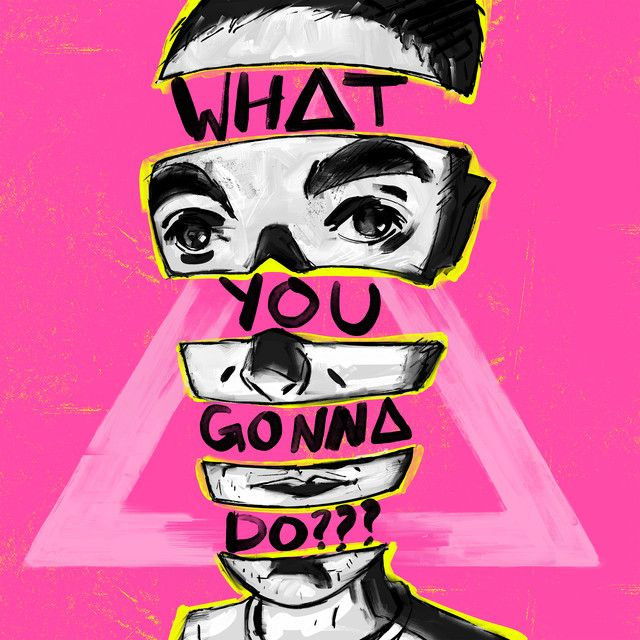
Why Bastille's 'WHAT YOU GONNA DO???' Hits Hard
The meaning of WHAT YOU GONNA DO??? Bastille, Graham Coxon comes down to a sharp question: what happens when someone, or something, has the power to hold everyone's attention? The song turns that question into a warning about screens, public influence, and the way modern life can shape identity from the outside in.
"WHAT YOU GONNA DO???" - Bastille, Graham Coxon
Takin' it the wrong way
Shiny on the surface
Loading lyrics...
Unable to load lyrics
We're unable to display the lyrics at this time. Please try again later.
Released by Bastille with Graham Coxon and written by Dan Smith, Graham Coxon, and Mark Crew, the track pairs anxious lyrics with a tense, punchy sound. Even without long storytelling, it sketches a world where people are watched, nudged, entertained, and changed by what they consume.
The Song's Core Message Is About Power and Attention
At its center, the song is about control. Not always direct control, but the softer kind that comes through media, image, and constant digital contact. The repeated challenge in the hook asks what someone will do once they have an audience fully locked in.
That idea shows up early in short, vivid lines. One character looks polished but is damaged underneath, captured in the contrast between shiny on the surface
and rotten on the inside
. Another hides behind technology and calls that connection. Together, those snapshots suggest a culture that looks connected and confident, but may be lonelier and more manipulated than it admits.
Watch the official WHAT YOU GONNA DO???
music video
Johnny, Sally, and the Modern Self
The verses introduce two figures who feel less like fully detailed people and more like types. Johnny is heading the wrong way, suggesting confusion, drift, or a life steered by bad signals. Sally stays indoors and uses a screen as protection, claiming she is fine because her online world tells her so.
Interpretation: Johnny and Sally may represent two sides of modern digital life:
- the person moving fast without direction
- the person hiding in curated online comfort
- the person whose inner life does not match the surface
The song never mocks them outright. Instead, it shows them as symptoms of a bigger system. That system rewards attention, encourages constant reaction, and can blur the line between real feeling and performed identity.
The Chorus Turns Observation Into a Challenge
The hook is what gives the song its force. After describing how attention gets captured, the chorus asks, in effect, what the holder of that power plans to do with it. The phrase you got us listening
matters because it admits surrender before pushing back.
This is not just about a single manipulative person. It can apply to influencers, politicians, tech platforms, news outlets, artists, or anyone who can direct mass attention. The next phrase, what you gonna do with it?
, sounds accusatory because it suggests responsibility. Attention is not neutral in this song. It is a tool that can be used to exploit, divide, distract, or empty people out.
Anxiety, Validation, and the Fear of Being Shaped
One of the strongest parts of the lyric is how it links control to emotion. The song suggests that media power does not just inform people. It gets inside them. That is why the line make me paranoid
feels so central. The speaker is not only watching the system. They are being affected by it.
A brief section captures that pressure well:
Love me, hate me, fill the void
So who am I? You decide
These words point to a world where identity is built through reaction. Approval and outrage start to do the same job: both keep the machine going. Interpretation: the song may be arguing that modern culture teaches people to seek any response at all, even if that response leaves them emptier.
How the Sound Reinforces the Meaning
The production helps sell the message. Bastille often mixes pop immediacy with darker themes, and this track leans into tension. The beat feels urgent, the rhythm pushes forward, and the vocal delivery sounds tight rather than relaxed. That restless energy mirrors the constant pull of feeds, headlines, and alerts.
Graham Coxon's contribution matters here too. His style, known from Blur and his solo work, often brings rough edges and nervous momentum. That kind of guitar presence fits a song about overstimulation and pressure. Instead of sounding smooth and comforting, the track feels wired, which supports its critique of a culture built on tapping, scrolling, and reacting.
A Bigger Reading Beyond Social Media
The easiest reading is that this is a song about screen addiction and online identity. That reading is well supported by phrases like tap and scroll
and the mention of online friendship.
But the song may also be broader than that. Interpretation: it can be heard as a question about leadership and public influence in general. Anyone who commands attention, whether through entertainment, politics, or outrage, has a choice about how to use that power. The song keeps asking the same question because it never receives a trustworthy answer.
That ambiguity is part of what makes the track effective. It feels current without tying itself to one app, one villain, or one event. The pressure it describes is wider than social media alone.
Why the Song Still Connects
The meaning of WHAT YOU GONNA DO??? Bastille, Graham Coxon resonates because it names a feeling many listeners already know: being plugged in, observed, and emotionally steered while trying to figure out who they are. Its lyrics are simple, but the ideas underneath are not.
Rather than offering a solution, the song holds a mirror up to a world addicted to attention. It asks who has the power, who gives it away, and what that exchange is doing to people inside.
Disclaimer: This interpretation is based on the released lyrics, credited writers, and the song's musical presentation. As with any song, meaning can vary by listener.







