
Waiting for an Invitation by Benji Hughes
A song about passivity, pride, and growing older
The meaning of Waiting for an Invitation Benji Hughes comes into focus fast: it is a song about people who keep waiting for life to validate them. Instead of acting, they hope someone else will call, choose, praise, or rescue them.
"Waiting for an Invitation" - Benji Hughes
Like a million cemetery lawns
I don't even try anymore
Loading lyrics...
Unable to load lyrics
We're unable to display the lyrics at this time. Please try again later.
Benji Hughes frames that idea with humor, but the humor has a sting. The song looks at loneliness, faded cool, and the fear of becoming irrelevant. It also gives a blunt warning. If a person keeps waiting for permission, you're gonna wait a long time
.
That line is the song's center of gravity. Everything in the verses points back to it.
Watch the official Waiting for an Invitation
music video
Three scenes, one hard lesson
Each verse offers a different type of person. Together, they create a wider picture of disappointment.
In the first verse, the speaker looks at romance and social life through a tired, almost ghostly lens. The image of women passing by is compared to graveyard lawns and headstones. That is a startling way to show emotional burnout. The person in the song does not sound excited by beauty or possibility anymore. They admit they don't even try anymore
, which suggests defeat before anything has even begun.
The second verse turns toward music culture and faded fame. A band, or perhaps an old scene, is stuck in nostalgia. Fans want a reunion, but the song mocks the idea that the past can simply be revived. Hughes pushes this even further with write your fans an apology letter
. The joke lands because it is cruel and honest at once: some returns never happen, and some dreams overstay their welcome.
The third verse shifts to lovers. Here, desire becomes cosmic and absurd. People try to force destiny itself, as if love should obey their timetable. The warning about not pulling too hard on the stars shows how desperate control can damage the very thing someone wants. Across all three scenes, the same problem appears: people wait, push, or complain instead of meeting reality as it is.
How the chorus changes the whole song
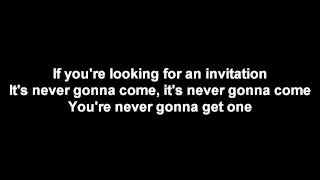
The chorus is simple, repetitive, and merciless. It says that if someone is waiting for an invitation
, none may ever come. In plain terms, the song rejects the fantasy that the world will officially welcome a person into love, relevance, or belonging.
This is not just social advice. It is existential advice. The song suggests that adulthood often means realizing there is no grand ceremony. Nobody arrives with a golden ticket. Nobody confirms that the party is ready for them.
It's never gonna come
You're never gonna get one
That short refrain feels harsh because it removes illusion. But it can also sound freeing. If there is no invitation, then a person is no longer required to wait.
The role of age in the lyric
One of the sharpest details is the repeated reminder that the characters are too old
. This does not seem like a literal claim about age alone. Interpretation: it works more as a spiritual condition. They have become too old in attitude—too fixed, too proud, too attached to old scripts.
The song is not mocking aging itself. It is mocking the refusal to adapt. People who still expect the world to treat them like the main character of an earlier chapter may feel stranded when the attention fades.
That makes the song especially effective. It is not just about youth versus age. It is about whether people can keep moving when old fantasies stop working.
Benji Hughes's style matters here
Hughes is known for eccentric songwriting, mixing wit, sadness, and left-turn imagery. That wider artistic profile helps explain why this song feels both playful and cutting. On his acclaimed album A Love Extreme, he often balanced emotional sincerity with absurd detail, and this song uses the same basic strength even in a leaner form.
The writing here is compact but vivid. Cemetery lawns, crying stadiums, and planets slipping out of line all turn private disappointment into big visual drama. That exaggeration matters. It makes ordinary insecurity feel mythic, which is funny, but also painfully recognizable.
How the sound likely carries the message
Factually, the song is identified here as alternative, and that label fits the lyric's mix of sarcasm and vulnerability. Even without a detailed production breakdown in the provided context, the composition suggests a hook-driven arrangement built to make the repeated chorus feel inescapable.
Interpretation: if the music leans bright or catchy, that contrast would deepen the meaning. A tuneful, almost communal chorus can make a lonely message hit harder. Repetition in the final stretch likely mirrors the mental loop of a person who keeps waiting instead of acting.
That is one reason the song's structure works so well. The verses build strange little portraits, then the chorus keeps flattening them into the same truth.
A useful way to read the song today
For modern listeners, the song can also sound like a critique of status anxiety. People often wait for signals from scenes, industries, friend groups, or romantic partners. They want to be picked. Hughes turns that desire into a trap.
Interpretation: the song's deepest message may be that self-respect begins where passive longing ends. The person who stops waiting may not get the party they imagined, but they regain agency.
That is why the track still feels relevant. Its warning applies to art, dating, aging, and ambition all at once.
Final takeaway
The meaning of Waiting for an Invitation Benji Hughes is less about one story than one pattern: people waiting for outside approval long after it has stopped serving them. Its images are funny, bleak, and wise in equal measure.
In the end, the song sounds like tough love. It tells listeners that the invitation may never arrive, and that their real life starts the moment they stop expecting it.
Disclaimer: This interpretation is based on the lyrics provided, available artist context, and critical reading of the song's imagery and structure. Like many songs, it can support more than one valid meaning.








