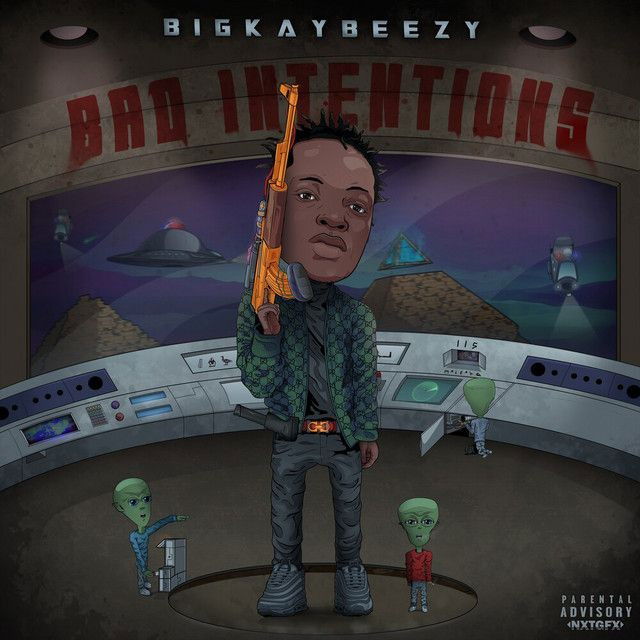
Why “BookBag 2.0” Hits Harder Than It Sounds
They come for the flex, stay for the survival code. “BookBag 2.0” pairs BigKayBeezy’s raw energy with Polo G’s razor-focused storytelling to deliver a street manifesto that doubles as a warning. For readers looking up the meaning of BookBag 2.0 BigKayBeezy, Polo G, this breakdown unpacks its symbols, voice, and sound.
"BookBag 2.0" - BigKayBeezy ft. Polo G
Added like ten to the clip 'cause it look bad
Don't give a fuck if you pissed, nigga, get mad
Loading lyrics...
Unable to load lyrics
We're unable to display the lyrics at this time. Please try again later.
Street Code, Not School Supplies
At its core, the song flips a school image into a life-or-death statement. The “bookbag” isn’t for notebooks—it carries protection. When they say added like ten to the clip
, the message is simple: preparation over panic. The hook frames a world where respect is enforced, not requested, and where boundaries are guarded.
Interpretation: The title points to teenage life turned inside out. A backpack should signal learning; here it signals defense. That tension gives the song its bite.

Watch the official BookBag 2.0
music video
Who’s Talking, and Who’s Being Addressed?
The verses speak in first person, but the target shifts. Some lines challenge rivals who are runnin' your mouth
; others instruct their own circle on loyalty and readiness. The tone is confrontational but also managerial—like someone running operations rather than chasing clout. Polo G’s verse widens the lens, weaving personal history and city-wide reputation into the same thread.
A Quick Timeline of the Action
- The narrator stakes ground and warns off threats with the “bookbag” image.
- They call out disloyalty—
breakin' the code like a Kit-Kat
—as the biggest offense. - Consequences follow: ambushes in traffic, raids on opponents, and public examples for those who test them.
- Polo G shifts between memory and momentum, implying old choices still shape new moves.
Interpretation: The song isn’t telling one linear story; it’s a cycle—provocation, response, control—repeated until someone breaks it or pays the price.
What the Hook Really Means
The hook is a thesis. It compresses the song’s logic—be ready, move first, don’t slip. By tying that logic to a school item, it frames youth under pressure. The refrain’s repetition emphasizes routine: danger isn’t rare; it’s expected. That normalizing effect is part of the track’s chill.
Symbols and Motifs, Decoded
- Breaking the code:
breakin' the code like a Kit-Kat
uses candy to make betrayal feel trivial and cruel. It’s a joke with sharp edges. - Sports as strategy:
pull up, we scorin' like Damian Lillard
equates retaliation with clutch shooting—quick, accurate, decisive. - Social media bravado:
make him dance like he makin' a Triller
mocks those who posture online, flipping viral dance culture into a grim punchline. - Life-to-death pipeline:
from Cadillac trucks to a Cadillac hearse
compresses the rise-and-fall arc into one brand, hinting at how fast success can turn fatal. - Food and cash puns (broccoli, lettuce) and fast-food heat (“hot and ready”) frame money, drugs, and weapons as everyday items—objects in a constant hustle.
Interpretation: Jokes and pop-culture nods aren’t just flair; they make hard truths easier to say and easier to hear, while showing how youth culture and danger collide in the same space.
How the Sound Does the Talking
The production leans on a dark, minor-key piano loop, deep 808s, crisp claps, and rapid hi-hats—classic drill and trap ingredients. The tempo gives the verses room to punch, and the mix keeps the vocals present so every bar lands. BigKayBeezy attacks with a serrated cadence; Polo G smooths the flow without losing intensity. That contrast keeps listeners locked and underlines the “2.0” upgrade: same menace, tighter execution.
Alternate Readings Worth Considering
- Interpretation: It’s pure bravado. The swagger, the punchlines, and the relentless pace are built to dominate playlists and parties, with the violence treated as genre convention.
- Interpretation: It’s cautionary. The backpack image, the code-breaking warnings, and the hearse line point to a cycle where pride and fear cost lives. The song wears armor; the imagery reveals why the armor exists.
Takeaway
“BookBag 2.0” is a flex with context. It shows how young artists turn pressure into posture, and posture into power, while never letting go of the rules that keep them alive. That blend—threat, humor, precision—is why it hits harder than it sounds.
Disclaimer: Song meanings are subjective. This article offers one informed interpretation based on lyrics, delivery, and context.








