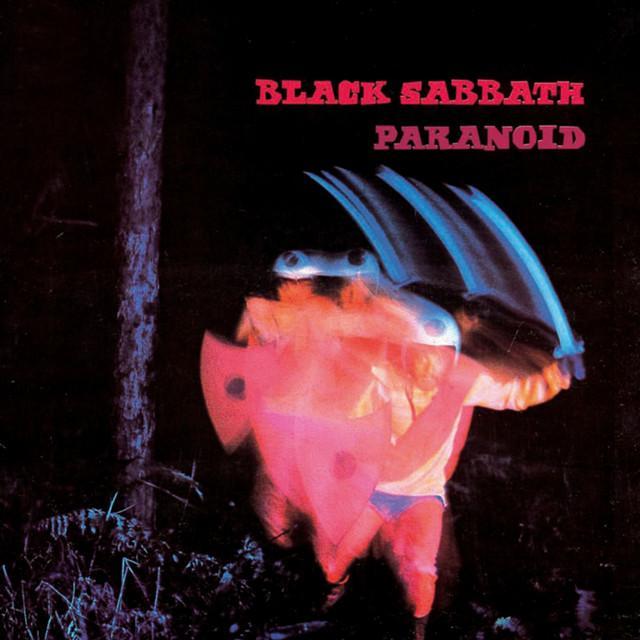
Paranoid by Black Sabbath
A song written as a quick studio filler became one of rock’s clearest portraits of a mind in distress.
"Paranoid" - Black Sabbath
Provided by LyricFindFinished with my woman 'cause
She couldn't help me with my mind
People think I'm insane becauseLoading...Loading lyrics...
Unable to load lyrics
We're unable to display the lyrics at this time. Please try again later.
Why This Song Still Hits So Hard
When people search for the meaning of Paranoid Black Sabbath, they usually find a surprise: the song is not just about generic madness or a spooky heavy-metal image. It is a compact, direct look at anxiety, depression, and emotional isolation.
Released in August 1970 as the lead single from Paranoid, the track became Black Sabbath’s first UK Top 10 hit, reaching No. 4, and it remains one of their defining songs. It was recorded at Island Studios in London and produced by Rodger Bain. Research on the song’s history consistently notes how quickly it came together and how much larger its impact became than the band expected.

Watch the official Paranoid
music video
A Mind That Cannot Settle
At the center of the song is a speaker who feels cut off from relief. They push people away, not because they do not care, but because they cannot explain what is happening inside. Early on, the line couldn't help me with my mind
frames the problem clearly: this is inner pain, not just relationship drama.
The next key idea is social misunderstanding. When the singer says others think they are unstable because they are always downcast, the song shows a gap between appearance and reality. People see the frown; they do not see the suffering underneath.
This is what makes the lyric powerful. It is simple, but it captures how mental distress can look rude, distant, or strange from the outside.
What the Verses Reveal
The verses build a pattern of restless thought. The phrase nothing seems to satisfy
describes more than boredom. It suggests a person who cannot feel settled, pleased, or calm no matter what they try.
That feeling grows into fear with lose my mind
. The song does not spend time on detailed backstory. Instead, it puts the listener inside a fast-moving mental state where every thought circles back to discomfort.
Then comes one of the song’s clearest cries for help: Occupy my brain
. In plain language, the speaker wants relief from obsessive thinking. They are not asking for adventure or romance. They are asking for silence in their own head.
Depression, Paranoia, or Both?
Fact: Geezer Butler later said the song was basically about depression, adding that at the time he did not really separate depression from paranoia and linked both feelings to marijuana use and the emotional crash after it. That later comment is important because it helps explain why the title and the lyrics do not match in a neat clinical way.
Interpretation: The song works best as a portrait of overlapping states. It sounds like depression because the speaker feels numb and unable to connect. It also sounds like paranoia because the world feels hostile, confusing, and mentally crowded.
That overlap is exactly why the song still feels real. Many listeners know what it means to feel sad, wired, detached, and misunderstood all at once.
The Most Important Emotional Turn
The song’s most painful moment may be the admission that joy no longer feels reachable. The phrases Happiness I cannot feel
and love to me is so unreal
do not just describe heartbreak. They describe emotional numbness.
This matters because the song is not saying life has no value. It is saying the speaker cannot access that value. Near the end, they urge others to enjoy life, while admitting they feel unable to do the same. That creates the song’s tragedy: they understand what should matter, but they cannot feel it.
Make a joke and I will sigh
you will laugh and I will cry
This brief contrast shows how far removed the speaker feels from normal social emotion. Other people live in one reality; they seem trapped in another.
How the Sound Carries the Meaning
A huge part of the meaning of Paranoid Black Sabbath comes from the music. The song is short—about 2 minutes and 48 seconds—but it feels urgent from the first second. Tony Iommi’s famous riff is clipped, fast, and repetitive in a way that mirrors anxious thinking.
Geezer Butler’s bass and Bill Ward’s drums keep the track moving with almost no room to breathe. Ozzy Osbourne’s vocal does not sound theatrical or distant. It sounds immediate, like someone trying to explain their state before it gets worse.
The production also matters. The performance is lean and direct, which fits a song written quickly in the studio. That lack of polish helps the message. The song does not feel decorated; it feels exposed.
The Strange History Behind a Classic
One of rock’s best ironies is that “Paranoid” was reportedly written as a last-minute filler track. Butler recalled that the band needed a short song, Iommi created the riff, and the lyric came together fast. Yet this “filler” became the song many fans most closely associate with Black Sabbath.
That happened partly because its structure is so sharp. Unlike the band’s longer, darker epics, “Paranoid” delivers its emotion in one burst. It is catchy enough for radio, but troubled enough to still sound dangerous.
Final Take
Interpretation: “Paranoid” is about a person trapped between racing thoughts and emotional emptiness. It turns private suffering into a hard, fast rock song that sounds as unsettled as the mind it describes.
That is why it lasts. It is not heavy for the sake of heaviness. It is heavy because it gives fear, numbness, and alienation a sound.
Disclaimer: Song meaning is interpretive. This article combines documented band comments with close reading of the lyrics and music.







