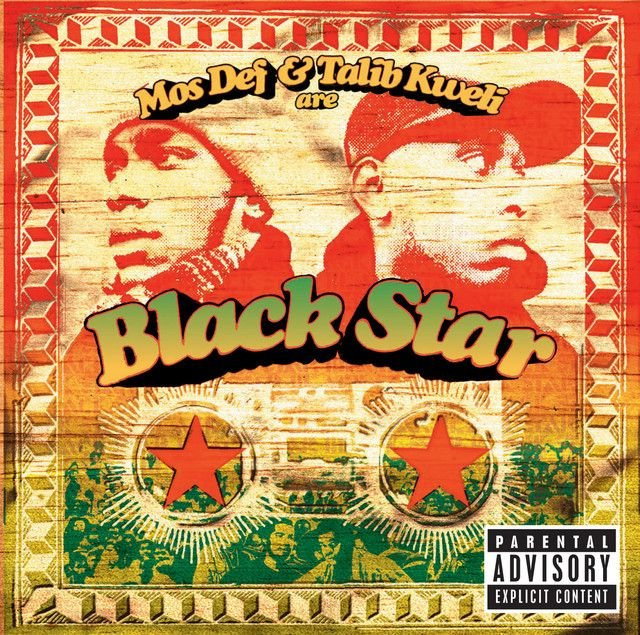
Definition by Black Star
Why This Song Still Hits
The meaning of Definition Black Star starts with a challenge: can rap be sharp, competitive, and proud without feeding the violence around it? Released in 1998 as the lead single from Black Star's debut album, the song gave Mos Def and Talib Kweli a way to show lyrical skill while also calling out the deadly mood hanging over hip-hop after the murders of Tupac Shakur and The Notorious B.I.G.
"Definition" - Black Star
All nice and peace and true, follow me now, we say
Say Hi-Tek yes you're ruling hip-hop
Loading lyrics...
Unable to load lyrics
We're unable to display the lyrics at this time. Please try again later.
That double purpose matters. “Definition” is a boast track, a scene report, and a moral statement all at once. Black Star are not stepping away from rap battle energy. They are trying to redefine it.
A New Standard for What Rap Can Be
At the factual level, the song is a 1998 single by Black Star, produced by Hi-Tek and built around a sample of Boogie Down Productions' The P Is Free
. Its chorus also echoes the spirit of “Stop the Violence,” linking Black Star to an earlier generation of socially minded rap. It became an underground breakthrough and still reached No. 60 on the Billboard Hot 100, according to Wikipedia's chart summary.
Interpretation: the title “Definition” suggests that Mos Def and Talib Kweli are trying to define hip-hop again, or at least defend its best values. They present rap as language, ethics, local identity, and craft—not just commerce or chaos.
Brooklyn Is More Than a Backdrop
A huge part of the song's meaning comes from place. They repeatedly return to Brooklyn, not as a postcard image but as a lived space full of pride, danger, memory, and survival. When Kweli mentions murals of Biggie and the smell of the streets, he paints a neighborhood where beauty and grief sit side by side.
This is why lines about daily movement feel so important. The city is not abstract. It is where people hustle, mourn, compete, and try to stay alive. A phrase like Brooklyn, New York City
is not just geography. It is an identity claim.
Interpretation: Black Star use Brooklyn to ground their message. They are saying that rap values come from real communities, and those communities pay the price when violence becomes normal.
Bragging With a Purpose
Like many great rap songs, “Definition” is full of swagger. Mos Def opens by praising their own precision, energy, and chemistry. Kweli follows by insisting that many MCs misunderstand what the craft is really about. He even jokes that MC does not mean what weak rappers think it means.
That confidence is not empty. It supports the larger argument. Black Star are saying that true lyricism should be judged by thought, style, control, and substance. In that sense, a phrase like best alliance in hip-hop
is both a boast and a mission statement.
They want to win, but they want to win cleanly—through skill. Their verbal aggression replaces physical aggression. That is one of the song's smartest moves.
The Chorus Turns the Song Darker
The hook sounds catchy, but its message is serious. After the celebratory count-in, the song reminds listeners that it is dangerous to be a emcee
. Then it points directly to the killings of Tupac and Biggie.
They shot Tupac and Biggie
Too much violence in hip-hop
This is the emotional center of the record. The verses enjoy rap competition, but the chorus keeps pulling the listener back to reality. The game is exciting, yet the stakes are deadly.
Interpretation: the song does not reject competition. It rejects the way competition can spill into real-world bloodshed. That balance is why “Definition” feels mature rather than preachy.
Street Detail and Social Warning
Kweli's verse is especially good at turning observation into warning. He describes ordinary city life and then suddenly shifts into danger: teachers writing kids off, neighbors pretending they never saw the signs, bodies being carted away, and fear becoming routine. Even the joke-like moments have pressure behind them.
This is where the song expands beyond rap culture. It is about how violence shapes a whole environment. Young people are judged early, threatened often, and mourned too late.
A brief phrase like be a visionary
captures that push against fatalism. Black Star are asking listeners to think ahead, grow up, and refuse the scripts that streets and industries can force onto them.
How the Beat Supports the Message
Hi-Tek's production is key to the meaning of Definition Black Star. The beat is warm, dusty, and classic, but it still moves with urgency. By sampling Boogie Down Productions, the track connects Black Star to a lineage of conscious rap without sounding like a museum piece.
The drums hit hard enough for a cipher, while the loop feels reflective. That combination lets the song carry two moods at once: celebration and concern. Mos Def and Talib Kweli also sound different in useful ways. Mos is fluid and theatrical; Kweli is more tight, dense, and cutting. Together, they model the “alliance” they boast about.
A Song About Redefinition, Not Purity
One easy reading is that Black Star are simply attacking mainstream rap. That reading is partly true, but it is too small. They are not saying fun, toughness, or braggadocio should disappear. They are saying those things need direction.
Interpretation: “Definition” is less about purity than responsibility. Black Star love hip-hop enough to criticize what hurts it. Their answer is not silence. It is better art, deeper thought, and stronger community ties.
Final Take on Its Lasting Meaning
The lasting power of “Definition” comes from how many jobs it does at once. It celebrates lyrical greatness, honors Brooklyn, mourns rap's losses, and argues for a healthier culture. That mix keeps the song alive decades later.
For many listeners, the meaning of Definition Black Star is simple: hip-hop should be competitive, creative, and socially awake. Black Star prove that a rap anthem can still carry conscience.
Disclaimer: This article offers interpretation based on the lyrics, production, and documented context. Different listeners may reasonably hear the song in different ways.








