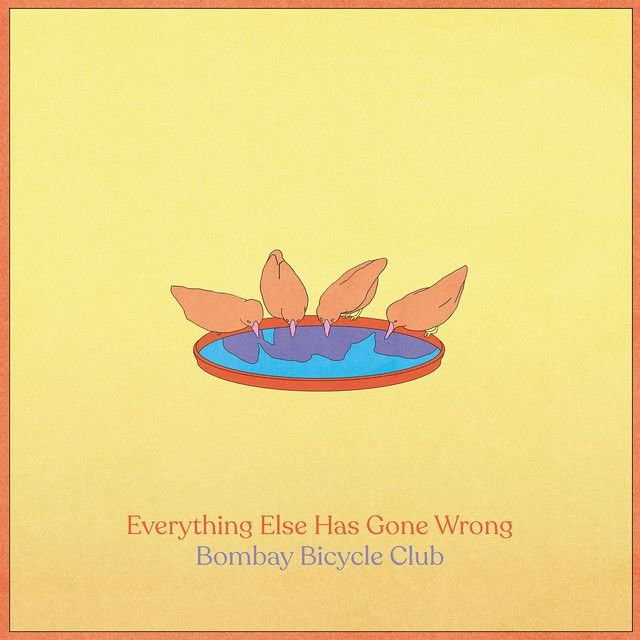
Why 'Let You Go' Feels So Hard to Escape
For listeners searching for the meaning of Let You Go Bombay Bicycle Club, the song lands in a very human place: the moment when love is still alive, but stability is gone. It does not tell a neat story with a clear ending. Instead, it circles confusion, touch, memory, and the fear of release.
"Let You Go" - Bombay Bicycle Club
All the branches bear
Waiting for the snow to melt
Loading lyrics...
Unable to load lyrics
We're unable to display the lyrics at this time. Please try again later.
Bombay Bicycle Club are known for shifting between indie rock, folk, and electronic textures, a flexibility noted in standard band histories and discographies. Their catalog has often balanced movement with melancholy, which makes this song feel right at home in their wider style. The band returned from hiatus in 2019, and the acoustic version of “Let You Go” later appeared in the Two Lives EP era in 2020.
At the Center Is a Relationship in Suspension
The core feeling is not simple breakup. It is the stretch right before it, or maybe right after it, when neither person fully knows what to do. The repeated plea Don't you let me let you go
turns the title into a contradiction. They are not asking for freedom. They are asking to be stopped from making a loss permanent.
That tension matters. Interpretation: the song suggests that separation is not always chosen with confidence. Sometimes people drift, freeze, or fail each other while still wanting closeness. The line about the roads still bending implies that the future keeps changing shape, and the speaker cannot read where it leads.
Watch the official Let You Go
music video
Broken Branches, Snow, and Embers
The opening imagery frames the song in damaged nature. When it mentions All the boughs were broken
and waiting for the snow to melt, it evokes a scene after strain or storm. The relationship seems hurt, but not erased. There is still hope that something can be found once the cold season passes.
That is a key part of the song’s emotional logic. The images are bleak, but not hopeless. Snow melts. Embers fade, but they also glow. At the crossroads, one person appears paused between choices, almost looking past the present and into some clouded future.
Interpretation: these symbols suggest a bond that has already been damaged, yet both people remain emotionally inside it. The song is less about one dramatic ending than about waiting to see whether warmth can return.
Touch and Distance Happen at Once
One of the song’s most striking moves is the way it repeats physical language. The word Touching, touching
sounds intimate, but it is also fragmented. It does not feel secure or grounded. It feels like contact that cannot hold still.
That same effect appears in the murmured pairing Washing you
and Washing me
. The image can suggest cleansing, dissolving, or being carried along by emotion. Instead of giving the listener a stable scene, the song offers sensations that blur together.
No, no, no, no
Don't you let me let you go
All the while, the roads are bending
Still I don't know
This is the emotional peak. The plea is direct, but the ending of the thought is uncertainty. Even in the hook, they cannot fully explain the path ahead.
The Strange Power of Repetition
The long repetition of Things you know
can sound hypnotic, but it also feels loaded with frustration. It hints at unspoken history. There are things both people understand without saying, and those things may be exactly what keeps the relationship complicated.
Interpretation: this section may represent memory overload or emotional paralysis. Instead of moving the story forward, the song gets stuck in a loop. That matters because the song itself becomes an experience of indecision. The listener is not only told about confusion; they are made to feel it.
How Bombay Bicycle Club’s Sound Carries the Meaning
Bombay Bicycle Club have long moved across indie rock, folk, and more experimental textures, and that restless musical identity helps explain why a song like this can feel both intimate and unstable. The band’s history, lineup, and genre range are well documented in public sources, as is their return from hiatus before the 2020 Two Lives EP period.
In performance and arrangement, “Let You Go” works through layering and repetition rather than dramatic release. The phrases cycle like anxious thoughts. The soft, almost trance-like motion gives the song a floating quality, while the chorus sharpens the emotional stakes.
The acoustic release context also matters. During the Two Lives period, the band recorded largely from Jack Steadman’s home during the pandemic era, with proceeds supporting music charities. That stripped setting suits a song about trying to hold onto fragile connection. Without heavy production, the emotional hesitation becomes even more exposed.
Artist Context Makes the Song Hit Harder
Jack Steadman, credited here as the writer, has often brought a searching, melodic style to the band’s work. Bombay Bicycle Club formed in London and have built a career on stylistic movement rather than one fixed sound. That makes “Let You Go” feel especially fitting: it is a song about motion without certainty.
There is also a larger career echo here. This is a band that has written often about transition, distance, memory, and emotional drift. So even if no definitive statement from the band explains the track line by line, the song fits their broader habit of turning unstable feelings into vivid, physical images.
A Clear Takeaway From an Unclear Moment
The meaning of Let You Go Bombay Bicycle Club is best understood as a portrait of resistance to loss. The song lives in the seconds when a person knows something is slipping away but still wants to stop it. Broken branches, glowing embers, bending roads, and repeated touches all point to the same truth: love can feel closest just when it is becoming hardest to keep.
That ambiguity is part of its power. It does not offer closure because the speaker does not have closure.
Disclaimer: This interpretation is based on the lyrics, release context, and the band’s broader style. As with most poetic songs, listeners may hear different meanings in the same lines.








