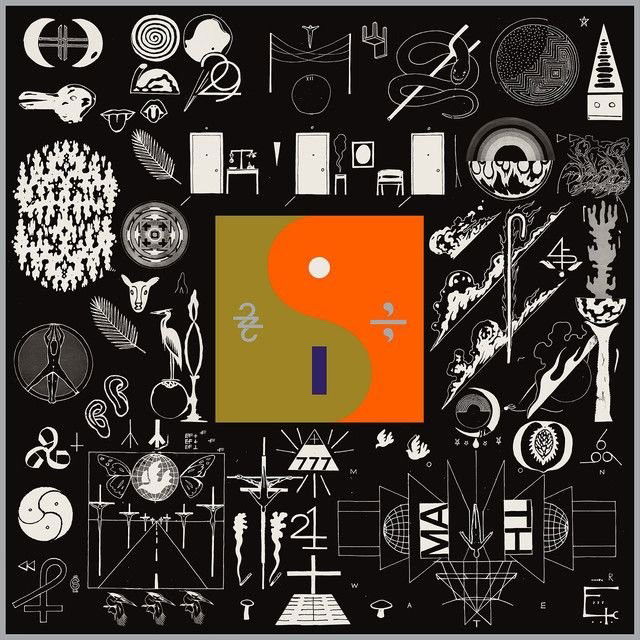
21 M◊◊N WATER by Bon Iver
A Song That Feels Like a Mist
The meaning of 21 M◊◊N WATER Bon Iver starts with uncertainty. This is one of the shortest and most mysterious tracks on 22, A Million, the 2016 album where Bon Iver pushed far past folk into fractured electronics and coded imagery. According to the album credits and release information, the song was written by Justin Vernon and S. Carey and appears on the same record that remade Bon Iver’s sound around samples, vocal processing, and cut-up language.
"21 M◊◊N WATER" - Bon Iver
The math behind it
It's moon water
Loading lyrics...
Unable to load lyrics
We're unable to display the lyrics at this time. Please try again later.
Rather than tell a full story, the song creates a state of mind. Its repeated images of paths, math, and water suggest a person trying to understand life while also giving up on neat answers. That tension matters: the song sounds like thought dissolving into feeling.
Watch the official 21 M◊◊N WATER
music video
What the Lyrics Seem to Be Reaching For
At a basic level, the song circles around things that can be measured and things that cannot. The opening idea contrasts The math ahead
with The math behind it
. In plain terms, that sounds like a person looking forward and backward, trying to calculate where they are and how they got there.
But every attempt at order leads to moon water
, a phrase that feels deliberately slippery. Water changes shape. Moonlight is reflected, not solid. Put together, the image suggests something beautiful but hard to hold. Interpretation: the song may be saying that life resists full explanation. People can analyze their past and future, but what they are left with is a dreamlike, unstable truth.
That idea grows stranger with Remomrize numb
. The wording sounds broken on purpose, as if “remember,” “memorize,” and emotional numbness are all colliding. Instead of a clean sentence, they get damaged language. That fits the song’s core theme: the mind wants order, but the emotional self keeps blurring it.
Paths, Distance, and the Urge to Escape
A key line introduces motion and hiding. When the song says I'd hide Berlin
, it drops a real place into an otherwise abstract lyric. Berlin can suggest distance, history, reinvention, or escape. Even without a fixed meaning, the line gives the song a sudden human impulse: they want to run, conceal, or start over.
That movement becomes clearer when the lyric shifts from math to path. The song mentions the way forward and the way behind, then turns both into the same liquid mystery. In other words, whether they think in numbers or in journeys, the answer does not become more stable.
The path ahead
The path behind it
It all returns to moon water.
This is the article’s strongest clue to the emotional center. Interpretation: they may be facing a spiritual crossroads, only to realize that clarity will not arrive in a logical form.
Why the Repetition Matters So Much
The song is tiny, but it repeats its main phrases like a chant. That repetition is important because it changes the words from statements into atmosphere. By the time listeners hear moon water
again and again, it no longer feels like an object. It feels like a condition.
Bon Iver often uses repetition not to simplify meaning but to deepen mystery. On 22, A Million, many songs work this way: they present fragments, then let sound and recurrence carry the emotion. Here, the effect is almost hypnotic. They are not arguing a point; they are sitting inside confusion until it becomes almost peaceful.
How the Production Shapes the Meaning
The production is a huge part of the song’s meaning. On 22, A Million, Bon Iver used heavy vocal processing, digital textures, and layered arrangements to break away from the cabin-in-the-woods sound of earlier releases. In “21 M◊◊N WATER,” that approach makes the song feel half-human and half-signal.
The track drifts rather than drives. Its blurred tones and manipulated vocals create a floating sensation, which matches the central image of water. There is no hard rhythmic landing, so the listener never feels fully grounded. That matters because the song is about unstable understanding.
Factual context: the album marked a major sonic shift for Bon Iver, widely discussed in release materials and reviews at the time. Interpretation: this song may be one of the purest examples of that shift, because it treats sound itself like a fog around the words.
Bon Iver Context Helps Explain the Abstraction
Justin Vernon has often written in a way that values mood, sound, and emotional truth over literal narrative. That does not mean the words are random. It means they are built to suggest, not pin down. On 22, A Million, numbers, symbols, and fragmented phrases appear across the album, making “21 M◊◊N WATER” part of a larger language system.
Seen in that context, the song’s title itself matters. The number 21 sits beside a stylized version of “moon,” already turning plain language into code. The title tells listeners not to expect a diary entry. They are entering a symbolic world where meaning arrives through echoes.
Two Strong Ways to Read the Song
There are at least two persuasive readings of the meaning of 21 M◊◊N WATER Bon Iver:
- Interpretation: a song about failed certainty. The references to math and paths suggest systems of control. “Moon water” then becomes the opposite: fluid, mystical, impossible to measure.
- Interpretation: a song about healing through surrender. Instead of defeating confusion, they let themselves drift inside it. The numbness and searching do not vanish, but they soften.
Both readings fit because the song never fully resolves itself. That open-endedness is part of its appeal.
The Lasting Takeaway
What makes this track memorable is not plot but feeling. It captures the moment when a person reaches for logic and finds mystery instead. The lyrics are fragmented, the sound is vaporous, and the repeated images turn uncertainty into something almost holy.
For many listeners, that is the real meaning of 21 M◊◊N WATER Bon Iver: not a puzzle to solve, but a mood of surrender, distance, and fragile insight.
Disclaimer: This interpretation is based on the song’s lyrics, sound, and Bon Iver’s broader artistic context. Because the writing is highly abstract, other readings are possible.









