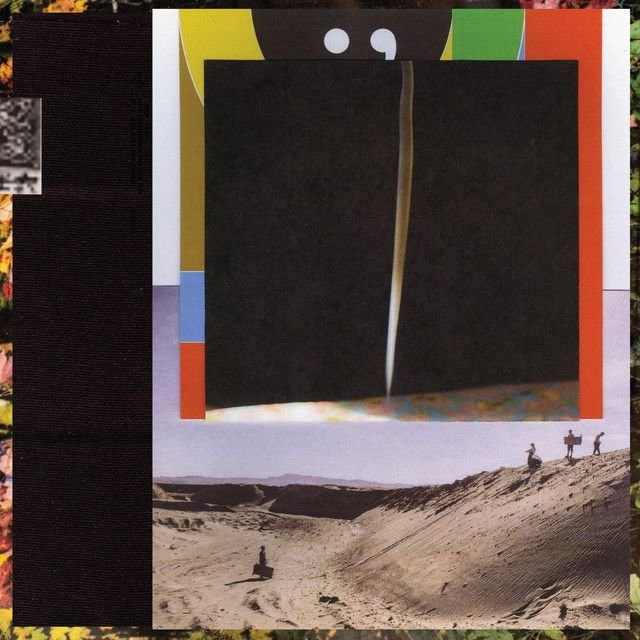
Marion by Bon Iver
A Small Song With a Big Emotional Ache
The meaning of Marion Bon Iver starts with a feeling of incompleteness. This is a very short song, but it carries a large emotional weight. In just a few lines, Bon Iver sketches a relationship that seems real enough to hurt, yet too fragile to hold together.
"Marion" - Bon Iver
Well, I thought that this was half a love, love
Follow to the rising sea
Loading lyrics...
Unable to load lyrics
We're unable to display the lyrics at this time. Please try again later.
On the surface, the song sounds like someone realizing they misunderstood what they had. The repeated phrase half a love
is the key. It suggests a bond that was never whole, mutual, or steady. They believed they were inside a real romance, but now they see it was only partial—emotionally uneven and headed toward collapse.
That makes “Marion” less about a full story and more about a painful moment of recognition. It captures the instant when hope gives way to clarity.

Watch the official Marion
music video
Where the Song Sits in Bon Iver’s World
“Marion” appears on Bon Iver’s 2019 album i,i, a record that mixes warmth, fragmentation, and reflection. Bon Iver is the project led by Justin Vernon, whose writing often leaves space for emotion rather than giving listeners a neat plot.
That context matters here. Compared with some of the album’s layered and experimental tracks, “Marion” feels stripped back. Its sparseness helps the song land as something intimate and unfinished, almost like a thought caught in the throat.
The song is credited to Justin Vernon and Rob Moose. Moose, known for string arrangements and subtle textures, fits naturally into a track like this, where detail matters more than size. Factually, the song’s writing credits and album placement help explain why it feels both delicate and carefully shaped.
The Core Message Hiding in Repetition
The song repeats itself on purpose. Instead of moving through many scenes, it circles one emotional truth: the speaker thought this was love, but only now sees that it was incomplete.
When they return again and again to thought that this was
, the effect is almost self-correcting. It sounds like someone replaying the past in their head. They are not just describing heartbreak. They are revising their own memory of it.
This is what gives the track its sting. The pain is not only that love ended. The pain is that the love may never have been equal in the first place.
Why “Half” Matters So Much
The idea of “half” points to imbalance. One person may have been more invested, more hopeful, or more willing to call the bond love. The phrase half of a love
suggests a relationship made of missing pieces.
Interpretation: This can be heard in two ways:
- One-sided love, where one person gave more than the other.
- A damaged relationship, where love existed but could not fully grow.
Both readings fit the song’s emotional logic. Bon Iver leaves that gap open on purpose.
Water, Motion, and Emotional Drift
One of the song’s most striking images is rising sea
. Even in a tiny lyric, that image does a lot of work. Water in Bon Iver songs often suggests change, force, and loss of control. A sea that rises does not wait for anyone. It overwhelms.
Here, the image can suggest emotions getting bigger than the relationship can handle. It may also hint at being pulled somewhere unavoidable, as if the speaker followed feeling instead of facts.
Follow to the rising seaWell, I thought that this washalf of a love
In this brief passage, movement and realization come together. They followed something forward, but what they reached was not security. It was the truth that the relationship was unstable from the start.
The Final Line Changes the Song’s Balance
The closing thought, fallin' to the right
, is easy to miss, but it matters. After all the repetition, this line introduces motion in a more physical, bodily way. It feels off-center.
Interpretation: “Falling to the right” may suggest losing balance while trying to steady oneself. It can also imply a drift they cannot fully control. Either way, the image deepens the song’s sense of disorientation. They are not standing firmly inside love. They are tilting out of it.
That final line also keeps the song from becoming too simple. Instead of ending with a conclusion, it ends with instability.
How the Sound Carries the Meaning
A big part of the meaning of Marion Bon Iver comes from how it sounds. The production is minimal, with a tender vocal and a hushed arrangement. Rather than building to a dramatic peak, the song stays close to the listener.
That restraint matches the lyric. A louder or fuller production might have turned the track into a grand breakup statement. Instead, Bon Iver makes it feel private, almost like a memo to the self.
Vernon’s voice is especially important. He sings with softness, but also with strain. That mix makes the repeated words feel less like a hook and more like someone trying to accept something they do not want to accept. In the larger story of Bon Iver’s catalog, that blend of fragility and abstraction is familiar, but “Marion” is one of its purest examples.
Why the Song Stays With Listeners
Part of the reason “Marion” connects is that many people know this feeling. They look back on a relationship and realize they were naming it more generously than it deserved. The song gives that painful correction a simple form.
It also trusts silence. Bon Iver does not explain every detail, and that makes the track more relatable, not less. Listeners can place their own unfinished relationships inside it.
The Last Word on “Marion”
At its heart, the meaning of Marion Bon Iver is about recognizing that love was incomplete all along. Its few lines, repeated carefully, turn confusion into insight.
Interpretation: The song is not just mourning a breakup. It is mourning the gap between what they hoped love was and what it really became.
Disclaimer: This interpretation is based on the song’s lyrics, sound, credits, and public context. As with many Bon Iver songs, ambiguity is part of the art, so other readings may also be valid.









