Why "Little Toy Guns" Hits So Hard
The meaning of Little Toy Guns Carrie Underwood comes down to one painful idea: children often suffer from words they did not say and cannot stop. The song turns a family argument into a child’s emotional battlefield, then asks a simple question. What if cruel words sounded loud but caused no real harm?
"Little Toy Guns" - Carrie Underwood
She held on to that heart shaped locket
Staring at a family flawless
Loading lyrics...
Unable to load lyrics
We're unable to display the lyrics at this time. Please try again later.
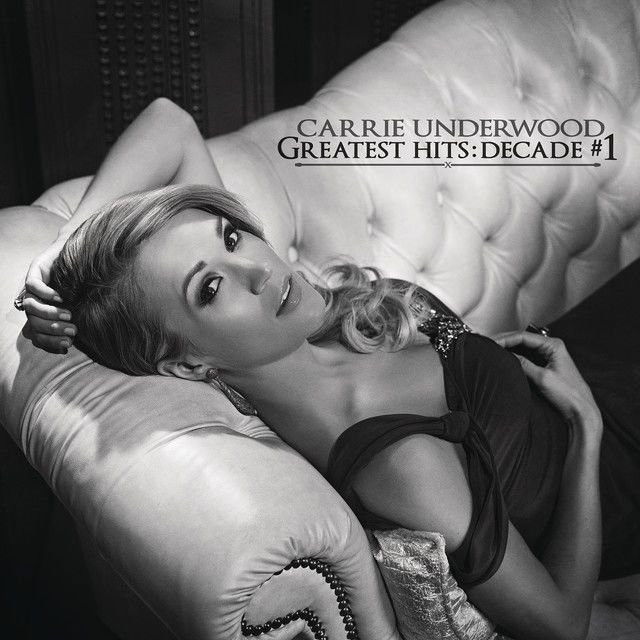
Released in 2015 as a single from Greatest Hits: Decade #1, the song was written by Carrie Underwood, Chris DeStefano, and Hillary Lindsey, and produced by Mark Bright. It was also nominated for Best Country Solo Performance at the Grammy Awards. Those facts matter because this was not just filler on a hits package. It was treated like an important new statement in Underwood’s catalog.
A Child at the Center of the Storm
At the story level, the song opens on a girl hiding while her parents fight. The details are domestic and familiar, which makes them more upsetting. A locket, a family photo, and a house full of noise show the gap between the happy image of family life and the reality inside the walls.
Underwood explained the premise directly in a 2014 interview, saying the song is about a little girl hearing her parents fight and wishing their words were not real. That plain summary is useful because it keeps the interpretation grounded: this is a song about verbal damage, not just about conflict in general.
The key image is the title metaphor, little toy guns
. The child wishes words could act like harmless playthings instead of real weapons. The chorus builds that wish with phrases like no sting
and no damage done
, turning emotional pain into something listeners can picture right away.

Watch the official Little Toy Guns
music video
How the Lyrics Turn Words Into Weapons
The song’s best writing choice is its point of view. It stays close to the child’s experience without making the language too complex. That is why the song lands so fast. It does not lecture about trauma; it shows a young person trying to make sense of it.
The verses connect home life to war play. The child imagines a world where the adults wave a truce, stop keeping score, and leave the fighting behind. In that sense, the song is not about actual guns. It is about how speech can wound as deeply as any physical blow.
One short moment captures the emotional center:
I wish they didn't cut like a knife
I wish they didn't break you inside
Those lines make the metaphor plain. The song is not only about hearing angry words. It is about what those words do after they land.
The Chorus Explains the Whole Message
The chorus is memorable because it sounds catchy while carrying a heavy idea. That contrast is the point. The child keeps wishing that spoken anger would be just bang bang
, all noise and no injury.
Interpretation: this repeated wish feels almost like self-protection. Since the child cannot stop the adults, they can only imagine a different set of rules. In that imagined world, language loses its sharp edge.
The phrase rolling off your tongue
matters too. It suggests how easily hurtful things can be said. The song argues that words are often used carelessly by people who forget someone else is listening.
Why the Sound Feels Bigger Than the Scene
One reason the song stands out in Underwood’s catalog is its musical tension. Underwood said it was a “tempo-driven” song and a “juxtaposition” between dark story content and rocking energy. That is exactly what listeners hear.
Instead of a soft ballad, the production pushes forward with a dramatic country-rock pulse. Critics often described the arrangement as heavy, orchestral, and bombastic. That larger sound gives the child’s feelings full scale. In a small room, the fight may be private. In the song, it feels huge.
This is why some writers compared it to Underwood’s “Blown Away.” Both songs place a young female figure in a threatening home environment and use forceful production to express fear and urgency. But “Little Toy Guns” is less about escape from danger and more about the invisible wounds left by speech.
Carrie Underwood’s Context Matters
This song fits a pattern in Underwood’s work. They often record songs with vivid stories, strong women or girls at the center, and a mix of country tradition with pop-rock drama. Here, that style helps translate family pain into mainstream radio form without watering it down.
Commercially, the song connected. It reached No. 6 on Billboard’s Hot Country Songs chart and No. 2 on Country Airplay, and it was later certified Platinum by the RIAA. That reception suggests the message was widely understood. Listeners did not hear it as just a clever metaphor; they heard something emotionally true.
The music video pushes that further. It shows a girl escaping into a fantasy world where she becomes a heroic figure who can restore peace. That ending is gentler than the lyrics alone, but it highlights the same need: when adults create chaos, children often survive through imagination.
The Deepest Meaning of "Little Toy Guns"
So what is the final meaning of Little Toy Guns Carrie Underwood? Factually, it tells the story of a child hearing parents fight and wishing their words could not hurt. Interpretation: beneath that story, the song is about how kids absorb conflict, how language can become emotional violence, and how innocence tries to protect itself.
It is also quietly hopeful. The song never says damage is impossible, but it does imagine peace. It dreams of lowered weapons, even if those weapons are only words.
That is why the track still resonates. It understands that some of the deepest scars are not visible, and some of the loudest battles happen at home.
Disclaimer: This interpretation mixes verified background with critical reading of the lyrics, sound, and video. Meaning can vary from listener to listener.