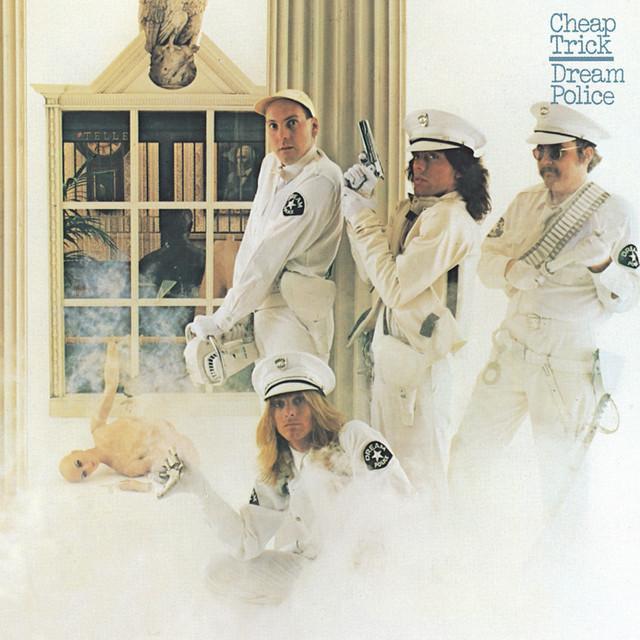
Why 'Dream Police' Feels Like a Pop Nightmare
Cheap Trick’s “Dream Police” is one of those songs that sounds fun on first listen and uneasy on the second. That contrast is the key to the meaning of Dream Police Cheap Trick: it turns fear, sleeplessness, and the sense of being watched into a bright, punchy rock single.
"Dream Police" - Cheap Trick
They live inside of my head
The dream police
Loading lyrics...
Unable to load lyrics
We're unable to display the lyrics at this time. Please try again later.
Released in September 1979 as the title track of the band’s fourth studio album, the song was written by Rick Nielsen and produced by Tom Werman. It reached No. 26 on the Billboard Hot 100 and became one of the band’s best-known singles. Those facts matter because the song proves Cheap Trick could package a nervous, strange idea inside a mainstream hit.Wikipedia
The Central Idea Hiding in Plain Sound
At its core, the song describes a mind under pressure. The narrator is not just having a bad dream. They feel trapped by forces that seem to live in their own thoughts, return at night, and threaten punishment.
The chorus gives that fear a face with the phrase live inside of my head
. Instead of a real police force, the song imagines inner panic as something organized, relentless, and powerful. The idea becomes even stronger when the narrator fears they are coming to arrest me
. That language turns anxiety into authority.
Interpretation: The “Dream Police” can be heard as intrusive thoughts, guilt, or paranoia. They may also represent social judgment—the fear that people are talking, watching, and waiting for a mistake.

Watch the official Dream Police
music video
A Nightmare About Surveillance
Rick Nielsen gave listeners a useful clue when he said the song was an attempt to take “a quick bit of REM” and put it into pop form. He also said it was about Big Brother watching you
.Wikipedia That comment points to a second layer in the lyrics: surveillance.
The verses build that feeling carefully. The narrator worries that rumors are spreading, that sleep will not be safe, and that someone is listening all the time. When the lyric says they’re listening to me
, the fear is no longer limited to dreams. It spills into waking life.
That is what makes the song effective. It captures the moment when stress stops feeling temporary. Nighttime does not bring rest. Instead, sleep becomes the place where fear grows teeth.
How the Lyrics Escalate the Panic
The song’s structure is simple, but it keeps raising the pressure. It moves in three clear steps:
- The narrator names the threat.
- The threat invades sleep and thought.
- The threat becomes judge, watcher, and punisher.
A key line is those men inside my brain
. It makes the song feel both theatrical and personal. The image is almost comic on paper, but in performance it sounds desperate.
There is also a clever tension between the silly title and the real emotion underneath it. “Dream Police” sounds campy, almost like a late-night TV idea. But the emotions are serious: helplessness, dread, and mental overload. That mix is a Cheap Trick specialty.
Why the Music Sells the Meaning
A big reason the meaning of Dream Police Cheap Trick lands so well is the arrangement. Critics have long pointed to its power-chord attack, Tom Petersson’s surging bass, Carlos’s pounding drums, and the dramatic string section.Wikipedia The band does not treat the nightmare like a whisper. They make it loud and immediate.
Those strings are especially important. Earlier versions reportedly used keyboard arpeggiator parts, but the final recording replaced them with real strings, which add a stabbing, cinematic tension.Songfacts The effect feels close to horror-movie music, giving the song a jumpy edge without slowing its momentum.
Robin Zander’s vocal is just as crucial. Nielsen once explained that Cheap Trick wrote “personality songs” so Zander could inhabit a character and shape the emotion through tone.American Songwriter That is exactly what happens here. He sounds catchy, then threatened, then nearly cornered.
A Pop Song Wearing a Paranoid Mask
One reason the track has lasted is that it never chooses between fun and fear. It is both. Some critics have described it as an Orwellian nightmare with a tongue-in-cheek streak, while others praised how it fused hard rock force with pop breaks.Wikipedia That balance helps explain why the song still feels fresh.
Interpretation: The humor is not there to weaken the message. It makes the fear more believable. Real anxiety often sounds irrational from the outside, even while it feels overwhelming inside.
The song’s history adds to that effect. It dates back before its 1979 release and evolved over time, eventually arriving as the opening statement on the album Dream Police.Songfacts By then, Cheap Trick had the hooks to make strange ideas feel radio-ready.
The Lasting Meaning of “Dream Police”
In the end, “Dream Police” is about what happens when the mind turns against rest. It imagines fear as an authority that never sleeps, never stops watching, and never leaves. The narrator does not just dread dreams; they dread judgment itself.
That is why the song still works. It speaks to insomnia, social paranoia, and the modern fear of surveillance, all while delivering one of late-’70s rock’s sharpest hooks. Cheap Trick made a nervous song feel enormous.
Disclaimer: This interpretation separates documented facts from informed reading. As with most songs, listeners may hear different meanings based on their own experience.








