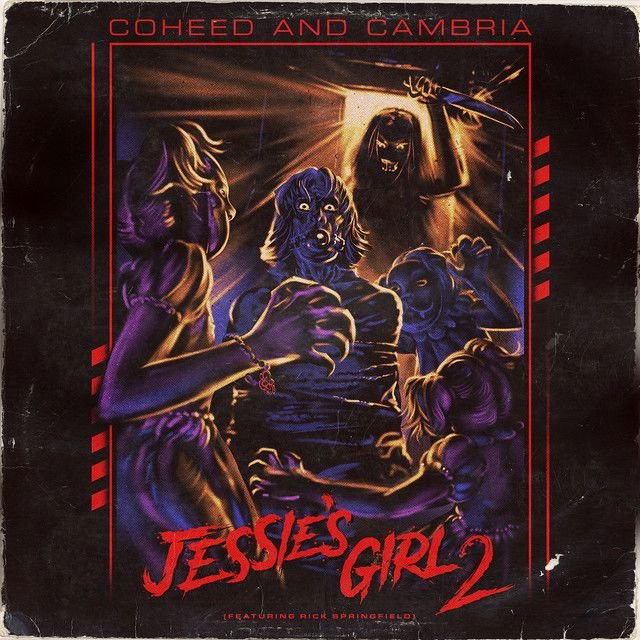
How “Jessie’s Girl 2” Turns Fantasy Into Regret
The meaning of Jessie's Girl 2 Coheed and Cambria, Rick Springfield starts with a clever idea: what if the guy from the original hit finally got Jessie’s girl, only to learn that his dream was a mistake? That twist gives the song its bite. Instead of celebrating forbidden desire, it turns the old fantasy into a cautionary tale.
"Jessie's Girl 2" - Coheed and Cambria ft. Rick Springfield
And I got my wish
You see, Jessie saw it fitting
Loading lyrics...
Unable to load lyrics
We're unable to display the lyrics at this time. Please try again later.
Coheed and Cambria teamed up with Rick Springfield for the track, making the sequel idea more than a joke. It becomes a conversation between eras of rock: Springfield’s early-’80s pop-rock classic and Coheed’s dramatic, modern style. Together, they frame the song as both homage and takedown. According to Rick Springfield’s official site and Coheed and Cambria’s official site, the collaboration was presented as a direct continuation of the famous premise.
A Sequel That Punishes the Original Wish
At the most basic level, the song is about consequences. The narrator gets what he once wanted, but the relationship becomes chaotic, controlling, and miserable. Early on, the lyric admits that he did something selfish when he decided to take what’s his
. That matters because the song never paints him as innocent.
Instead, it suggests he helped create the mess. He wanted someone who belonged to his friend, and now he has to live with the fallout. When the song says the hidden side of Jessie’s girl is that she is out of her mind
, it flips the original hit’s longing into fear and regret.
Interpretation: The song is not just mocking Jessie’s girl. It is also mocking the narrator’s fantasy. He thought desire alone would justify betrayal, but the sequel says desire can be shallow, impulsive, and blind.
Watch the official Jessie's Girl 2
music video
The Narrator’s Voice: Guilty, Bitter, and Trapped
One reason the story works is that the speaker sounds both angry and ashamed. He admits, in effect, that he probably earned some of this pain. The line about what kind of friend was I?
points back to the moral problem at the center of both songs.
That self-awareness deepens the meaning of Jessie's Girl 2 Coheed and Cambria, Rick Springfield. This is not simply a revenge song or a breakup song. It is about a person realizing that an old act of envy damaged several lives, including his own.
The chorus keeps returning to I don’t love you no more
. On the surface, it is a breakup statement. Underneath, it sounds like someone trying to talk himself into freedom. The repeated phrase feels less confident each time, which makes the song emotionally sharper.
The Plot Twist That Changes Everything
Midway through, the song opens up its biggest idea: Jessie may have seen the disaster coming. The narrator starts to suspect that his friend did not fight very hard because he knew what this woman was really like. That possibility gives the story a dark comic edge.
Here is the emotional center of the song:
We’re married now, house, job, three kids
Dreaming of what life could have been
Those lines show that the problem is bigger than a bad romance. The narrator feels locked into a whole adult life built on the wrong decision. He is not just regretting a stolen relationship. He is grieving the future he imagines he lost.
Why the Humor Matters So Much
The song is funny, but the humor is strategic. The reference to 867-5305
is a clear wink to another famous pop song, and that self-awareness keeps the track from becoming too heavy. It reminds listeners that this is a theatrical sequel built on rock history.
Still, the jokes do not erase the bitterness. They make it easier to swallow. Coheed and Cambria often use heightened storytelling, and that instinct fits perfectly here. Their style turns regret into something almost cinematic rather than purely confessional. Information about the band’s narrative-driven approach is reflected across their official materials.
How the Sound Sells the Story
Musically, the song uses bright, driving rock energy to contrast with the ugly emotional reality. The guitars feel punchy and immediate, while the vocals carry a mix of annoyance, panic, and wounded pride. That contrast is important: the song sounds fun even when the lyrics describe a life going wrong.
Springfield’s presence adds legitimacy and irony. His voice connects the song to the original fantasy, while Coheed’s bigger, more dramatic attack gives the sequel extra tension. The production pushes the hook forward like a classic sing-along, but the narrative underneath is about being stuck.
Interpretation: That mismatch between catchy sound and ugly truth may be the point. The original desire was catchy too. It sounded simple. The sequel reveals the emotional cost hidden inside that simplicity.
The Bigger Theme Beneath the Gimmick
The lasting appeal of the meaning of Jessie's Girl 2 Coheed and Cambria, Rick Springfield is that it says something real about envy. People often want what looks exciting from the outside. They imagine that taking it will solve their unhappiness.
This song argues the opposite. The object of desire may be misunderstood, and the act of stealing someone else’s happiness may poison the result from the start. The narrator is stranded in the consequences of a fantasy that never deserved his trust.
In that sense, the sequel is about growing up. It takes the hot jealousy of youth and rewrites it as middle-aged regret. That is why the final effect is both comic and sad.
Final Take: A Smart Pop-Rock Reckoning
“Jessie’s Girl 2” works because it does more than continue a story. It judges the original obsession while still enjoying the fun of the reference. They turn a famous crush song into a lesson about guilt, illusion, and the danger of wanting what belongs to someone else.
That is what gives the track its staying power: it is catchy enough to feel playful, but sharp enough to leave a bruise.
Disclaimer: This article offers an interpretation of the song based on its lyrics, performance, and public context. Different listeners may reasonably hear it differently.








