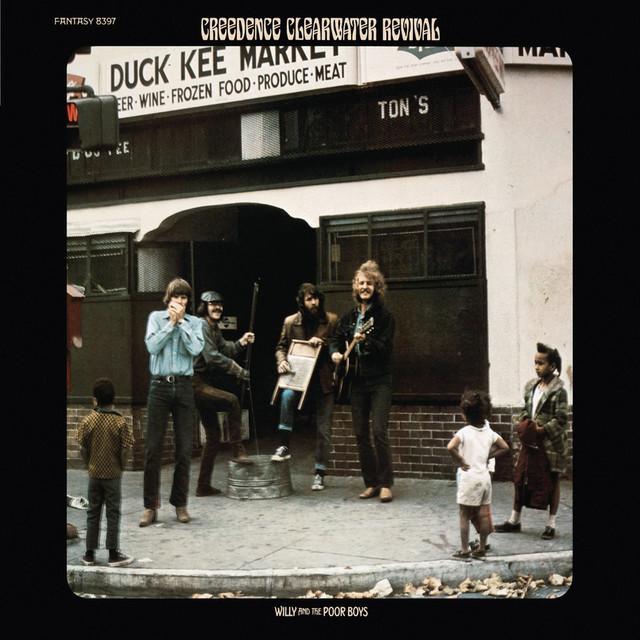
Why 'Down On The Corner' Feels So Free
The meaning of Down On The Corner Creedence Clearwater Revival starts with a simple scene: a small band plays outside, people gather, and everyday life gets brighter for a few minutes. On the surface, the song is cheerful and direct. It sounds like a street-party invitation.
"Down On The Corner" - Creedence Clearwater Revival
Over by the courthouse they're starting to unwind
Four kids on the corner trying to bring you up
Loading lyrics...
Unable to load lyrics
We're unable to display the lyrics at this time. Please try again later.
But that easy mood hides something important. The song celebrates music that belongs to ordinary people, not fancy venues or stars far away. In just a few verses, Creedence Clearwater Revival turns a street corner into a place of community, creativity, and escape.
A Street Corner Becomes a Stage
The song paints a vivid picture of evening settling in near a courthouse, where local musicians are starting up. They are not rich, polished entertainers. They are a homemade group with character, humor, and energy.
That matters to the song’s message. When the chorus points listeners down on the corner
and out in the street
, it places music in public life. This is not private art for elites. It is shared culture, right there where people live, work, and walk home.
The band name, Willy and the Poor Boys, also shapes the meaning. It suggests modest means, but not defeat. They may be "poor" in money, yet the song presents them as rich in spirit, style, and showmanship.
Watch the official Down On The Corner
music video
What the Song Is Really About
At its core, the track is about the power of live music to bring people together. It shows how a rough, simple performance can create joy without needing much money or status.
A key detail is the repeated invitation to tap your feet
. The point is not deep analysis inside the song itself. The point is participation. People do not just watch. They smile, gather, dance, and become part of the event.
Interpretation: The song can also be heard as a quiet statement about class and authenticity. Creedence often drew on roots music styles, and this track honors working-class entertainment. Instead of glamorizing luxury, it celebrates resourcefulness and fun made from almost nothing.
The Story Moves in Small, Lively Beats
Even though it feels loose and casual, the lyric has a clear sequence:
- Evening arrives and the musicians gather.
- Each player gets introduced through a different sound.
- The crowd reacts with delight.
- People are welcome whether or not they can pay.
- The corner becomes a local attraction.
That structure helps explain why the song feels so warm. It moves from setup to performance to shared joy. When the lyric says people come all around
, it suggests the music has a magnetic force. A tiny corner becomes the center of town.
Why the Instruments Matter So Much
One reason the meaning lands so clearly is the instrumentation. The lyric names a harmonica, washboard, gut bass, kazoo, and Kalamazoo guitar. Those are earthy, old-time sounds, tied more to jug bands and folk-blues traditions than to slick late-1960s rock.
This choice is not accidental. Creedence built much of their identity around American roots forms, mixing rock with blues, country, swamp pop, and folk textures. On the album Willy and the Poor Boys, this song works almost like a mission statement: great music does not need polish to feel alive.
The production supports that idea. John Fogerty, who wrote the song and helped shape the band’s sound, keeps things tight, upbeat, and accessible. There is bounce in the rhythm, a bright singalong chorus, and a playful arrangement that mirrors the scene being described. The music sounds like people making the best kind of noise together.
Joy With a Democratic Spirit
One of the song’s smartest details is its attitude toward money. The lyric explains that listeners do not need cash just to stand there and enjoy it, though a small tip is welcome. That distinction is important.
You don't need a penny
just to hang around
That brief moment shows the band as generous, not demanding. The corner is open to everyone. If someone has a nickel, great. If not, they still belong.
Interpretation: This can be read as the song’s deepest value. Art is shown as communal before it is commercial. Payment matters, because working musicians need support, but the first goal is fellowship.
Artist Context Sharpens the Meaning
Creedence Clearwater Revival released the song in 1969, a huge year for the band. They were producing hit after hit, yet their image stayed far from psychedelic excess. According to the Rock Hall, the group became known for concise, rootsy songs that sounded grounded in older American traditions.
That context helps explain why "Down On The Corner" feels so convincing. CCR were already stars, but the song imagines music at ground level. Instead of praising celebrity, it praises the local band, the handmade groove, and the crowd on the sidewalk.
There is also a charming tension here. A major hit single tells listeners to admire a humble street act. That contrast gives the song some of its lasting appeal. It is big-time rock music pretending, very lovingly, to be homegrown busking.
The Chorus Is More Than a Hook
The chorus is catchy enough to remember after one listen, but it also carries the whole theme. By returning again and again to the same location, the song turns place into meaning. The corner is not random. It symbolizes a shared public world where strangers can briefly become a community.
That is why the chorus feels bigger than the plot. It is not only about one fictional band. It is about what happens when music interrupts routine and makes space for pleasure.
Final Take on the Song’s Meaning
The meaning of Down On The Corner Creedence Clearwater Revival is joyful, but not lightweight. It celebrates ordinary people making art, sharing it freely, and lifting a neighborhood for the price of a nickel—or nothing at all.
Their song endures because it treats music as a common good. It is funny, vivid, and easy to sing, but underneath that charm is a warm belief: sometimes the best show in town is the one happening outside, with simple instruments and open hearts.
Disclaimer: This interpretation combines widely accepted context with informed reading of the lyrics and sound. As with any song, listeners may hear meanings beyond the ones discussed here.








