Television Rules the Nation by Daft Punk
The meaning of Television Rules the Nation Daft Punk comes through in a very direct way: they take one simple statement and repeat it until it starts to feel bigger, colder, and more unsettling. On the surface, the song seems almost too minimal to analyze. But that minimalism is exactly what gives it force.
"Television Rules the Nation" - Daft Punk
Television, rules the nation
Television, rules the nation
Loading lyrics...
Unable to load lyrics
We're unable to display the lyrics at this time. Please try again later.
Daft Punk released the track on Human After All, the duo’s third studio album, where it appears as the eighth song. Factually, the song is credited to Thomas Bangalter and Guy-Manuel de Homem-Christo, and it became part of the duo’s famous Alive 2006/2007 live sets, where it was blended with other songs for even greater intensity.
A Tiny Lyric With a Huge Idea
The song’s whole message is built around the repeated phrase Television, rules the nation
. Daft Punk do not develop it through verses, characters, or plot. Instead, they hammer the line until it starts to sound less like a lyric and more like a slogan, warning, or command.
That matters because television is not just a device here. Interpretation: it stands for mass media itself—the kind of screen-based power that shapes what people watch, fear, buy, and believe. By refusing to say much else, the duo suggest that media dominance can flatten everything into one repeating signal.
In other words, the song does not describe control. It performs control.
Watch the official Television Rules the Nation
music video
Why Repetition Is the Real Story
Many pop songs use repetition for catchiness. Daft Punk use it here for pressure. Each return of rules the nation
feels a little more forceful, as if the listener is hearing the same broadcast over and over until resistance fades.
That is a key to the meaning of Television Rules the Nation Daft Punk. The song mirrors how media works in public life: one message, repeated enough times, can begin to feel natural or true. The lyric is short, but the structure turns it into a comment on persuasion, branding, and passive consumption.
Interpretation: They may also be pointing to how television once acted as a central authority in home life. Before social media fragmented attention, TV often decided the shared mood of a country—what stories mattered, what faces were familiar, and what ideas got airtime.
The Human After All Context Matters
This track makes even more sense inside Human After All. That 2005 album is one of Daft Punk’s starkest records. Its songs often revolve around repeated phrases, machine-like grooves, and uneasy ideas about technology and identity.
Even the album’s title suggests tension between people and systems. Within that frame, Television
becomes one more machine that shapes human behavior. It is not just entertainment. It is a tool that trains attention.
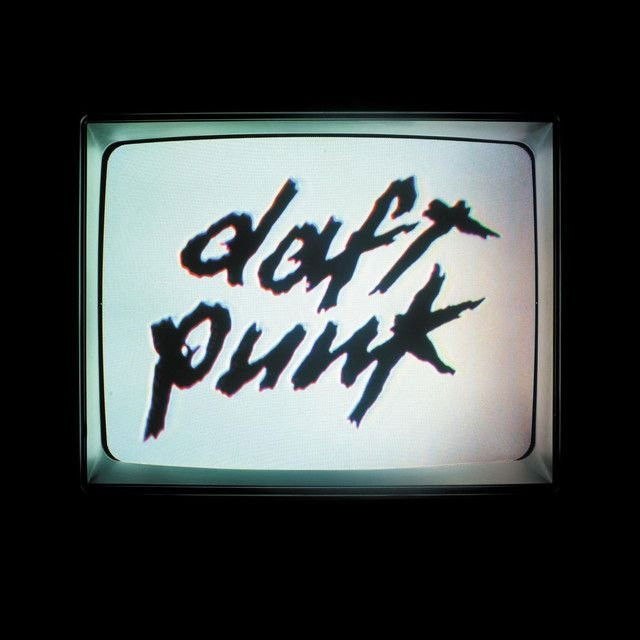
The visual language around the song supports that reading too. As documented by fan and archival sources, the album artwork itself features a television screen motif, and a planned single release never fully materialized despite a video being produced. The song later gained extra life onstage during the Alive 2006/2007 era, where Daft Punk fused it with other tracks in a louder, more overwhelming form.
How the Sound Delivers the Warning
The production is crucial. This is not a warm, emotional arrangement. It is tight, mechanical, and locked into a hard dance pulse. The beat feels industrial, while the vocal treatment sounds detached and robotic.
That sonic design gives the line rules the nation
a chilling effect. If the phrase had been sung softly with acoustic instruments, it might have sounded thoughtful or reflective. Here, it sounds programmed.
This is one of Daft Punk’s smartest tricks as producers: they make the music embody the idea. The groove loops with very little release, which creates a sense of confinement. The listener is pulled into repetition the same way modern media pulls people into cycles of watching, scrolling, and absorbing.
A Live Version That Made the Point Bigger
On the Alive 2006/2007 tour, Daft Punk mixed this song with tracks like “Around the World” and “Crescendolls.” That mash-up approach intensified the theme because it turned repetition into spectacle. In concert, the song became less like a critique from a distance and more like a full sensory takeover.
More Than TV: A Broader Reading
Although the title names television, the song now feels wider than that. In the streaming and smartphone era, its idea can apply to almost any screen-based platform. The medium has changed, but the central concern remains: who controls attention controls culture.
Interpretation: That is why the track still feels current in the United States today. It can be heard as a comment on cable news, advertising, viral media, or algorithm-driven habits. Television is the original symbol, but the deeper target may be mediated reality itself.
There is also a small irony in how dance music works. Club records are built to grab the body through rhythm and repetition. Daft Punk use that same power while quietly asking listeners to notice how easily repetition can rule them.
Why the Song Still Hits
What makes this track memorable is not lyrical complexity. It is precision. Daft Punk strip the idea down to its bones and let rhythm do the rest. The result is catchy, severe, and strangely prophetic.
For anyone asking about the meaning of Television Rules the Nation Daft Punk, the clearest answer is this: they turn a single sentence into a critique of media power. By repeating it until it feels unavoidable, they show how mass communication can dominate public life without needing many words at all.
That is part of why the song endures. It sounds like a dance track, but it behaves like a warning signal.
Disclaimer: This interpretation is based on the song’s lyrics, sound, and known album context. As with many Daft Punk songs, some meanings remain open to listener interpretation.






