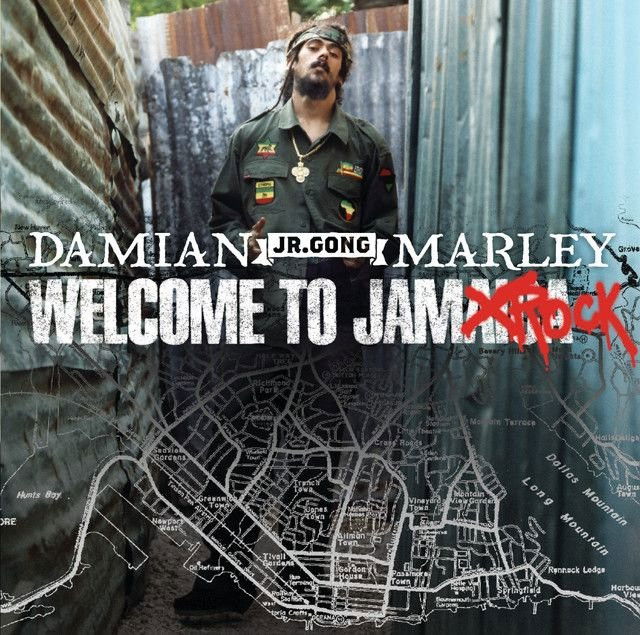
Welcome To Jamrock by Damian Marley
Damian Marley turns a tourist slogan into a warning. That reversal is the key to the meaning of Welcome To Jamrock Damian Marley: it is less a party anthem than a blunt report from the streets.
"Welcome To Jamrock" - Damian Marley
Provided by LyricFindOut in the streets, they call it murder
Welcome to Jamrock, camp where the thugs dem camp at
Two pound ah weed inna van backLoading...Loading lyrics...
Unable to load lyrics
We're unable to display the lyrics at this time. Please try again later.
A Welcome Sign That Isn’t Warm
The meaning of Welcome To Jamrock Damian Marley starts with contrast. On the surface, the title sounds inviting. But the song quickly flips that idea and shows a Jamaica far removed from resorts and beach ads.
Damian Marley uses Jamaica as both a real place and a symbol. Factually, the 2005 single was released as the lead track from Welcome to Jamrock and became one of his biggest crossover hits, later winning the Grammy for Best Urban/Alternative Performance, according to widely cited release information and award records.
Interpretation: The title acts like irony. They are not welcoming listeners into paradise; they are forcing them to see what gets hidden.

Watch the official Welcome To Jamrock
music video
The Real Story Behind the Streets
The verses focus on violence, drugs, poverty, and political failure. Early on, Marley frames the streets with the chilling phrase out in the streets
and the repeated word murder
. He is not using these images for shock alone. He is describing everyday danger as normal life.
Just as important, he contrasts this with outsiders who only know Jamaica as a vacation spot. When he mentions people moving like tourist
, the point is not simply to mock visitors. It is to expose how easy it is to enjoy the island without seeing the fear and struggle many residents face.
This is why the song feels so sharp. It attacks the polished image of Jamaica as carefree and sunny while showing a place shaped by scarcity, armed survival, and grief.
Beyond Crime: A Song About Systems
The song is not only about street violence. It also points to the systems behind that violence. Marley describes poor communities, weak education, and leaders who deceive people during elections and then disappear.
That political anger matters. He suggests that when opportunity is limited, many young people are pushed toward weapons and street life. In other words, the song does not treat violence as random. It presents it as the result of neglect.
Interpretation: This makes the track broader than a local crime narrative. They are describing a cycle: poverty narrows choices, power fails to help, and the streets become a substitute authority.
One key phrase is ghetto education's basic
. In simple terms, Marley argues that young people are being failed long before they pick up guns. The line shifts blame away from individuals alone and toward broken institutions.
How the Chorus Changes the Meaning
The chorus is memorable because it sounds like a chant, but its message is harsh. When Marley repeats Welcome to Jamrock
, he is not celebrating. He is forcing the listener to enter a reality they may prefer to ignore.
That hook works because it does two things at once:
- It sounds catchy and open.
- It carries dread once the verses explain what “Jamrock” contains.
So the chorus becomes a trapdoor. What begins as an invitation becomes a social indictment.
Sound That Feels Like Warning
Production is a big part of the song’s force. The track blends reggae and hip-hop energy, helping it hit both Caribbean and U.S. audiences. Reports on the song’s background note that it draws from Ini Kamoze’s World-A-Music
and a classic rhythm lineage associated with Sly and Robbie.
That history matters because the beat feels rooted in reggae tradition while still sounding aggressive and modern. The bass and drum pattern stay steady, but Marley’s delivery is clipped, intense, and almost journalistic. He does not drift across the beat; he presses into it.
Interpretation: That tension between groove and threat mirrors the song’s meaning. Jamaica is musically rich and culturally vibrant, but that beauty exists alongside danger and instability.
Marley’s Voice in Context
Damian Marley is Bob Marley’s son, but this song is not just inherited protest. It has its own angle. Where Bob Marley often leaned toward spiritual uplift and unity, Damian here sounds more like an eyewitness reporter, naming what polite conversation avoids.
Still, there is a moral center. Near the middle of the song, he points toward Rastafari and a higher standard beyond the violence. That does not solve the crisis, but it gives the track an ethical frame. The song is angry, yet it is not hopeless for the sake of drama.
This balance helps explain why the record traveled so widely. It reached the U.S. Billboard Hot 100 and the UK Top 20, and it has stayed visible through games, covers, and pop culture reuse. Listeners heard not just a local story, but a song about what happens when tourism, image, and inequality collide.
One of the Sharpest Lines in the Song
The clearest summary comes in this short section:
Poor people ah dead at random
Political violence, can't done
Those lines condense the song’s whole mission. First, they center ordinary people as victims. Second, they say the violence is not ending on its own. Marley is not describing a temporary bad night. He is describing a social emergency.
Final Take on the Message
The meaning of Welcome To Jamrock Damian Marley is a demand for honesty. The song tears down fantasy and replaces it with testimony about crime, poverty, corruption, and the daily cost paid by the poor.
Interpretation: At its core, the song asks listeners to see Jamaica as a full reality, not a brand. Its power comes from that refusal to look away.
Disclaimer: This interpretation combines documented song context with close reading of the lyrics and sound. As with any art, some meanings remain open to listener interpretation.








