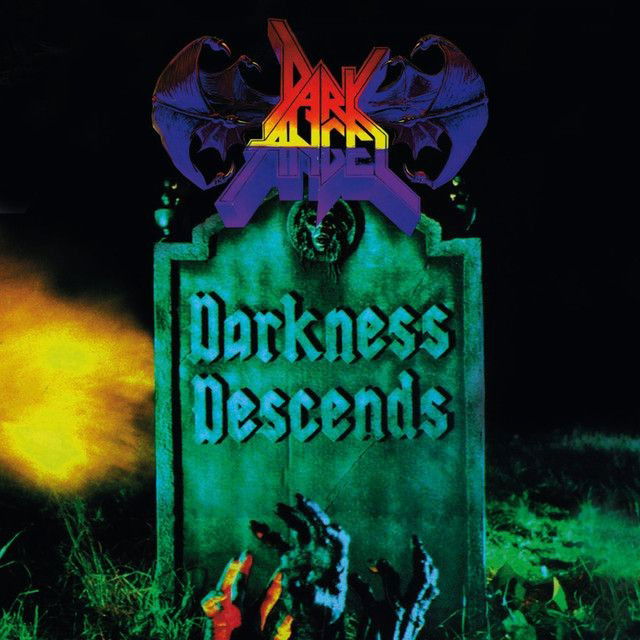
Darkness Descends by Dark Angel
The meaning of Darkness Descends Dark Angel starts with a brutal premise: a world so corrupted that judgment no longer looks like justice. It looks like annihilation.
"Darkness Descends" - Dark Angel
Provided by LyricFindThe world now stands ancient, showing her age
Antique, senile, archaic
Peroration impending, not one to assuageLoading...Loading lyrics...
Unable to load lyrics
We're unable to display the lyrics at this time. Please try again later.
A Thrash Song That Feels Like a Death Sentence
Dark Angel released "Darkness Descends" on their 1986 album of the same name, their second studio record. The album came out on November 17, 1986, and was produced by Randy Burns and the band during sessions in Hollywood and Venice, California, according to album reference material gathered by Wikipedia.
Factually, the title track is tied to the Dark Judges from Judge Dredd. The key hook, paraphrased through the song's famous courtroom logic, turns a city into a guilty party and life into the offense itself. That comic-book source matters because it explains why the lyrics sound less like a personal confession and more like a public execution.
Watch the official Darkness Descends
music video
What the Song Is Really Saying
At its core, the meaning of Darkness Descends Dark Angel is about total collapse: moral, social, and physical. The lyrics open with a civilization that feels old, worn out, and doomed. From there, the song piles on plague, fear, and ruin until the whole setting seems beyond rescue.
Interpretation: They use apocalypse as a way to dramatize a deeper fear: what happens when power loses all mercy. The song's world is not just ending by accident. It is being condemned.
That idea becomes clearest in the chorus, with the phrases This city is guilty
and The sentence is death
. Even without quoting more, the message is plain. The city is judged by forces that see human existence as a stain, not something worth saving.
The Narrator's View From Inside the Ruins
The song does not speak in a warm, personal voice. It sounds like an observer standing inside a mass nightmare, reporting what they see as the walls close in. That distance gives the lyrics a cold, almost documentary force.
Instead of focusing on one victim, the song describes whole populations. Phrases like Pandemic winds
and the soon-to-be dead
widen the frame. This is not one death. It is a system of death.
A Quick Map of the Song's Story
The narrative moves in a grim sequence:
- The world is introduced as ancient and failing.
- Fear spreads through disease, prophecy, and social collapse.
- Judgment arrives in the chorus as an official sentence.
- Fire, decay, and contamination consume the population.
- The ending shifts from dread to certainty: the future is gone.
That structure matters because it makes the song feel inevitable. Each section removes another hope of escape.
Why the Chorus Hits So Hard
The chorus is short, but it reframes everything around it. The verses describe symptoms of collapse; the chorus names the logic behind that collapse. In other words, death is not random here. It is policy.
Death
This city is guilty
The crime is life
Darkness Descends
Because that hook is so stripped down, it lands like a verdict stamped onto the whole song. Interpretation: They are not only depicting horror. They are exposing how terrifying moral certainty becomes when it is held by violent, inhuman judges.
Fire, Rot, and Contamination as Symbols
The song's images keep changing, but they all point to the same theme. Fire suggests inner rage turned outward. Rot suggests that the world was already decaying before the final blow. Contamination suggests that evil spreads faster than anyone can contain it.
Later images like ruins fall
and children die clutching their dreams
make the horror broader and sadder. The first shows public collapse. The second makes the loss intimate. The result is a song that is not only vicious but tragic.
Interpretation: Even in its comic-inspired framework, the lyrics can be read as a warning about authoritarian violence. When rulers decide that ordinary life is corrupt, genocide can be dressed up as order.
How the Music Carries the Meaning
Musically, "Darkness Descends" belongs to the peak era of American thrash metal. The album is widely regarded as an essential thrash release and has been cited as influential on later death, doom, and groove metal scenes, as summarized by Wikipedia.
That context helps explain the song's impact. The riffs are fast and razor-edged. Don Doty's vocal delivery sounds more barked than sung, which fits the song's panic. Gene Hoglan's drumming, on his first Dark Angel album, pushes the track with a sense of constant attack.
There is also a useful production detail here. Hoglan later said the band had actually slowed down in the studio compared with how fast they played live, and he was self-critical about how tight the album sounded in retrospect, according to the same source. Even so, that rawness works for the song's meaning. It makes the track feel unstable, like civilization cracking in real time.
Why This Song Still Matters
Part of the song's staying power comes from its double identity. On one level, it is a savage piece of genre storytelling rooted in Judge Dredd. On another, it taps into real fears about plague, collapse, fanatic judgment, and the ease with which people can be declared disposable.
That is why the meaning of Darkness Descends Dark Angel still connects with listeners. The song is extreme, but its fear is recognizable. It asks what kind of world appears when empathy disappears.
Final Verdict on the Song's Meaning
"Darkness Descends" is about a society facing extermination under a logic that treats life as guilt. Through images of disease, fire, decay, and legal punishment, Dark Angel build a world where apocalypse feels both theatrical and disturbingly believable.
Interpretation disclaimer: This reading combines documented context about the song's Judge Dredd inspiration with close analysis of the lyrics and sound. As with most songs, listeners may hear different meanings within the same imagery.








