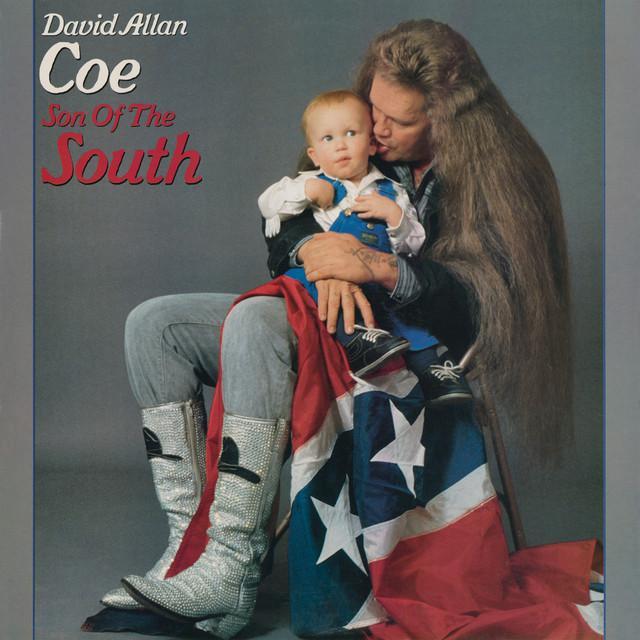
Son of the South by David Allan Coe
A Loud Identity at the Center
When people search for the meaning of Son of the South David Allan Coe, they usually want to know if the song is just rowdy fun or something deeper. The clearest answer is that it is a self-portrait built out of attitude. Rather than telling a complex plot, the song piles up details that define a certain kind of Southern, outlaw-minded masculinity.
"Son of the South" - David Allan Coe
I'm into Lynyrd Skynyrd
The Allman Brothers and David Allan Coe
Loading lyrics...
Unable to load lyrics
We're unable to display the lyrics at this time. Please try again later.
That matters because David Allan Coe was not just any country singer. He was a major figure in the outlaw country world, known for a rebellious image and a career that mixed country with blues and rock. According to his biography, that public persona often helped him stand out while also making him a polarizing figure.

Watch the official Son of the South
music video
More Than Bragging, Less Than Confession
On the surface, the song sounds like a brag. The speaker names favorite artists, vehicles, alcohol, and habits, then wraps it all into one banner: son of the south
. But the list is doing real work. It shows how identity can be performed through taste and behavior.
Interpretation: the song is not only saying, “This is what they like.” It is saying, “This is the tribe they belong to.” Musical heroes such as Hank Jr., Lynyrd Skynyrd, the Allman Brothers, Willie, Waylon, George, and Merle become badges of membership. In that sense, Southernness here is cultural before it is geographic.
The Chorus as a Mission Statement
The chorus is the song’s clearest key. When the singer calls themself a redneck
and a rock-n-roll son of the south
, they are claiming labels that polite mainstream culture may reject. Instead of running from those labels, the song turns them into a point of pride.
It also draws a line against trends the singer sees as soft or artificial. The phrase new wave disco bands
is less a serious music review than a symbol of outside culture. The song sets up a contrast: raw, loud, rural, and mechanical on one side; fashionable and urban on the other.
That clash gives the chorus its force. The repeated hook does not develop new ideas. It hardens the same identity over and over until it feels like a slogan.
Southernness Through Objects and Motion
The verses are full of symbols. A Harley, a pickup, a cowboy hat, whiskey, and back-road speed all help build the world of the song. None of these objects are random. They stand for freedom, toughness, and a refusal to be polished.
There is also constant motion. The speaker wants to drink, drive, race, and ride. Even the line about wanting to jam some gears
turns movement into personality. They are not calm or reflective. They define themself through action.
The song’s main symbols
- Cars and motorcycles: freedom, danger, and control
- Alcohol: rough living and anti-pretension
- Clothing and hats: visible pride in a chosen identity
- Named artists: a Southern musical lineage
How the Sound Likely Carries the Meaning
Even without needing full production notes, the style is easy to place. This is country built to lean toward Southern rock: blunt rhythm, barroom energy, and a vocal delivery that sounds more lived-in than polished. That fits Coe’s larger catalog, which often blended country, blues, and hard-edged performance styles.
Interpretation: the roughness is part of the message. A cleaner arrangement would weaken the song. The point is not beauty. The point is swagger.
A sing-along chorus also matters here. The hook is simple enough for a crowd to shout back, which turns a personal claim into a communal one. That is one reason songs like this last: they let listeners step into the role for three minutes.
Artist Context Changes the Reading
Context is important with Coe. By the mid-1970s and 1980s, he was known as one of country music’s wild outsiders, with a biker image, long hair, and a reputation for resisting Nashville polish. The 1986 album Son of the South also drew backlash for its cover and imagery, which shaped how audiences viewed the project.
That does not mean every line in the song carries the same weight. Factually, the song itself is mostly a performance of rebellious identity, not a careful political argument. But listeners do not hear songs in a vacuum. Coe’s image, his controversies, and the era’s culture wars all affect the meaning people hear.
A Character, a Persona, or the Real Man?
There are at least two fair readings.
First, the song can be heard as a fairly direct extension of Coe’s persona. He famously blurred the line between life and stage character, so a song like this sounds like a declaration of self.
Second, it can be heard as a stylized role. The details are so stacked and exaggerated that the speaker begins to feel like a mythic version of the Southern outlaw male rather than an ordinary person.
long haired redneckrock-n-roll son of the south
Those lines show how the song turns identity into a brand. It is broad, memorable, and made for repetition.
Why the Song Still Connects
The lasting appeal of the meaning of Son of the South David Allan Coe is not subtle poetry. It is recognition. Fans hear a defense of regional pride, anti-elite feeling, and musical cross-pollination between country and rock.
At the same time, other listeners may hear a song trapped inside an aggressive stereotype of manhood. Both reactions are understandable. The song invites that split because it is so blunt.
Final Take on Its Message
In the end, “Son of the South” is about building identity through culture, noise, and defiance. It treats Southernness as something performed through sound, style, and loyalty to a certain code.
Interpretation disclaimer: Song meaning is never completely fixed. This reading is based on the lyrics, Coe’s public career, and the album’s cultural context, but different listeners may reasonably hear it in different ways.






