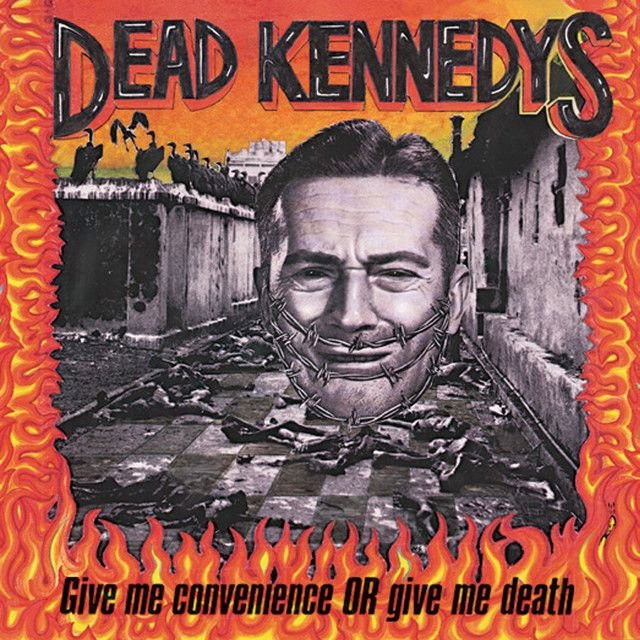
How Dead Kennedys Turned a Hit Into a Weapon
Dead Kennedys did not just cover a classic. They turned it inside out. That is the fastest way to understand the meaning of I Fought the Law Dead Kennedys: they took a well-known song about punishment and rebuilt it as a punk attack on power escaping consequences.
"I Fought the Law" - Dead Kennedys
I fought the law and
I won
Loading lyrics...
Unable to load lyrics
We're unable to display the lyrics at this time. Please try again later.
The original song was written by Sonny Curtis in 1958 and first recorded by the Crickets, later becoming a major hit for the Bobby Fuller Four in 1966. That version reached No. 9 on the Billboard Hot 100, which helps explain why its hook was already burned into pop culture before Dead Kennedys got to it. Their rewrite later appeared on Give Me Convenience or Give Me Death after earlier circulation in 1986, though the band had played it live for years.
A Chorus Flip That Changes Everything
The key move is simple and brutal. Older versions revolve around the criminal losing. Dead Kennedys replace that moral ending with I fought the law
and then the shocking punch line I won
.
That tiny change turns regret into bragging. It also turns a catchy old refrain into a political accusation. The singer is not ashamed. They sound protected.
Interpretation: the song is arguing that some people, especially insiders, do not face justice the way ordinary people do. The final boast, I am the law
, pushes that idea to its ugliest extreme.
Watch the official I Fought the Law
music video
The Real Target Behind the Lyrics
This version is widely understood as a rewrite from the point of view of Dan White after the 1978 murders of San Francisco Mayor George Moscone and Supervisor Harvey Milk. Jello Biafra rewrote most of the lyrics to make the narrator sound smug, violent, and unrepentant.
That context matters. Without it, the song can sound like random provocation. With it, lines about killing George and Harvey
become direct political satire aimed at the White case and the fury surrounding the verdict.
The song’s most famous joke, Twinkies are the best friend
, points to the media shorthand known as the “Twinkie defense.” That label simplified a more complex diminished-capacity argument, but the phrase became a symbol of how absurd many people felt the trial had become.
A Narrator Made to Sound Rotten
The voice in the song is deliberately ugly. They drink, boast, talk about sex, and treat murder like a career move. Later, they brag about writing a book and cashing in.
This is not confession in a sympathetic sense. It is performance. The band makes the speaker sound shallow and proud, which helps the satire land.
You can get away with murder
if you got a badge
That brief moment says the song’s larger message plainly. It is not only about one killer. It is about institutional protection.
The Bigger Theme: Corruption as a System
At its core, the song is about unequal justice. One line says the law don't mean
much if someone has the right friends. Even without quoting the rest, the idea is clear: rules are not applied evenly.
That is why the song still feels sharp. It is grounded in a specific San Francisco tragedy, but its target is larger than one case. Dead Kennedys suggest a whole civic culture in which police loyalty, political status, and public myth can shield violent people.
Interpretation: the song can also be heard as an attack on American respectability. The narrator sounds like someone society still makes excuses for, even after something unforgivable.
Why the Sound Matters as Much as the Words
Dead Kennedys keep the basic familiarity of the original, but their punk approach hardens it. The tempo feels impatient. The guitars sound wiry and tense. Jello Biafra’s vocal delivery is nasal, theatrical, and taunting rather than sorrowful.
That matters because the music never asks for pity. It pushes the satire forward. A smoother or sadder arrangement might have made the story feel reflective. This version feels accusatory.
There is also power in the contrast. Listeners may know the old hook from the Bobby Fuller Four or The Clash. When Dead Kennedys twist that hook, recognition itself becomes part of the joke. The audience expects one moral ending and gets the opposite.
Why the Song Stayed Controversial
Dead Kennedys often mixed black humor with direct political critique, so this track fits their wider style. But it also stood out because it turned a familiar pop-rock standard into a very local, very angry piece of protest.
For some listeners, that makes it one of their smartest covers. For others, it feels deliberately offensive. Both reactions are part of the design. The song is supposed to sound outrageous because the band believed the real scandal was the public system behind the case, not the lyrics mocking it.
The Lasting Meaning of the Song
The meaning of I Fought the Law Dead Kennedys is not subtle: they present a narrator who commits horror and still claims victory. By changing only a few core ideas in a famous song, the band expose how law can fail when power protects its own.
Their version lasts because it is catchy, cruel, and politically precise at the same time. It is less a cover than a hijacking. They use an old hit to ask a hard question: what happens when the law does not lose control, but chooses who gets spared?
That is why the song still lands. It is about one case, but also about a wider fear that justice can be bent by friendship, badges, image, and privilege.
Disclaimer: This article offers an interpretation based on the song’s lyrics, public history, and documented context. Meanings can vary by listener.









