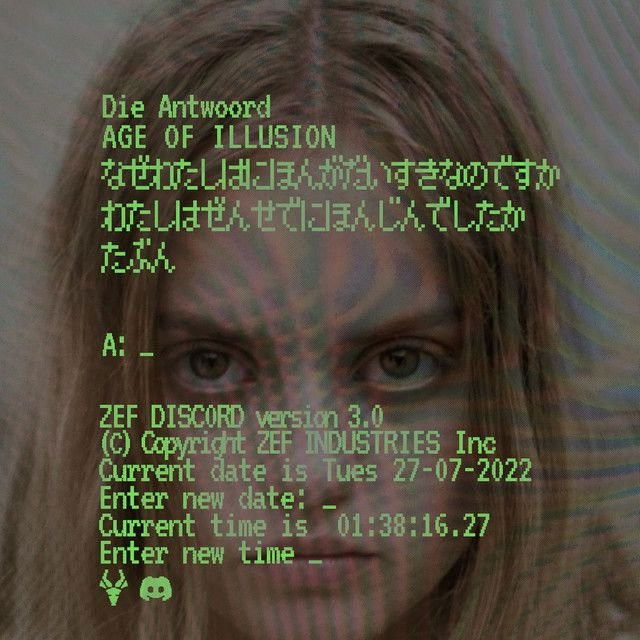
Age Of Illusion by Die Antwoord
A glossy world where everything looks perfect—why does it feel eerie? That tension sits at the heart of the meaning of Age Of Illusion Die Antwoord. The song builds a candy-colored utopia, then quietly hints it’s propped up by chemicals, cosplay, and denial.
"Age Of Illusion" - Die Antwoord
Illusion
The age of
Loading lyrics...
Unable to load lyrics
We're unable to display the lyrics at this time. Please try again later.
It’s the age of Illusion The age of Illusion
What This Candy-Coated World Really Says
Interpretation: The track sketches a fake paradise where, on the surface, Everyone is beautiful
and Everything is fine
. Those lines sound reassuring, but repeated like a mantra, they feel forced—like an ad or a feed where nothing bad is allowed.
Under that sheen, a darker engine hums. The promise that Everyone is famous
hints at social media’s dream economy: clout for all, if you perform. The invitation to pop another blue pill
suggests sedation, denial, or a curated calm. This is not joy; it’s maintenance.

Watch the official Age Of Illusion
music video
Who’s Talking, and To Whom?
The narrator shifts between hype-leader and participant. They sell the trip, but they also sample it. When they brag about big black pupils
, the mask slips. The “we” of the song feels like a crowd under the same spell—listeners, fans, and characters inside the fantasy.
Interpretation: That dual voice mirrors modern life. People both build illusions (filters, brands, good vibes only) and take shelter inside them.
Snapshots of the Surreal: A Quick Timeline
- The hook claims a new era—an “age” defined by appearances and escape.
- Verses tour a pastel utopia: beauty everywhere, chill vibes, endless parties.
- The fantasy deepens with fairies, “water babies,” and borrowed languages—playful, weightless, unreal.
- The mask cracks: pills, pupils, repetitions that start to sound like coping, not celebration.
By the end, the loop hasn’t broken. That’s the point. Illusions rarely announce an exit.
The Chorus as Hypnosis, Not Comfort
The refrain works like a spell. It repeats until it becomes background, almost white noise. Interpretation: That’s how illusions operate—quiet, catchy, and hard to notice. You hum along before you ask what you’re humming.
Symbols That Do the Heavy Lifting
- Blue pills: Evasion and emotional anesthesia. It nods to pop culture’s “take the pill” choice and to real-world overmedication.
- Everyone is beautiful/famous: Algorithmic happiness. A culture where metrics stand in for meaning.
- Big black pupils: The body tells the truth; stimulants dilate even when the smile stays.
- Fairies, water babies, face paint: Childlike whimsy, but also regression—adults dressing innocence over anxiety.
- Japanese phrases: Globalized fantasy and identity play. Interpretation: It’s not about Japan itself; it’s about the pleasure of slipping into a stylized self.
Together, the images build a Disney-bright stage set that hides the cables in the walls.
How the Sound Makes the Illusion Feel Real
The production leans into repetition: a steady beat, sugary synth textures, and a chant-ready hook. The arrangement is sparse enough to feel clean yet insistent enough to be trance-like. Interpretation: That push-pull mirrors the theme—simple pleasures that risk becoming numbing routines.
Vocals sit upfront, almost childlike in tone, which sweetens the unsettling lines. The mix leaves space around the words so each claim of perfection lands clearly. The result is a pop-ritual vibe—catchy enough to entice, ritualistic enough to trap.
Alternate Reads: Satire or Secret Wish?
- Satire: The song mocks “good vibes only” culture, exposing how performance and pills prop up the smile. Evidence lies in the contrast between utopian claims and bodily tells like
big black pupils
. - Confession: It’s also a craving for escape. Interpretation: Maybe the fantasy is a shelter they hate needing, but still need. The warm production suggests the comfort is real, even if it’s borrowed.
Both readings can be true. The duality is the art.
Why It Hits Now
For U.S. listeners, the meaning of Age Of Illusion Die Antwoord lands in a time of curated wellness, micro-fame, and burnout. The song doesn’t judge individuals. It questions the system that offers pills, filters, and fame-chasing as default fixes.
Takeaway
Age Of Illusion stages a bright, friendly masquerade and asks what’s behind the mask. The answer isn’t a monster—it’s emptiness, stress, and sedation dressed as happiness. That’s why the hook sticks: illusions usually come with a great beat.
—
Disclaimer: This analysis reflects interpretation based on publicly available lyrics and common listening cues. Meanings can vary for each listener.








